Zimbabwe’s Dr Marjorie Mupandare takes up WHO leadership role in São Tomé and Príncipe

Much of the work that protects public health takes place before an emergency makes the headlines. It involves preparing health workers, identifying gaps in services and helping institutions respond when communities need them most.
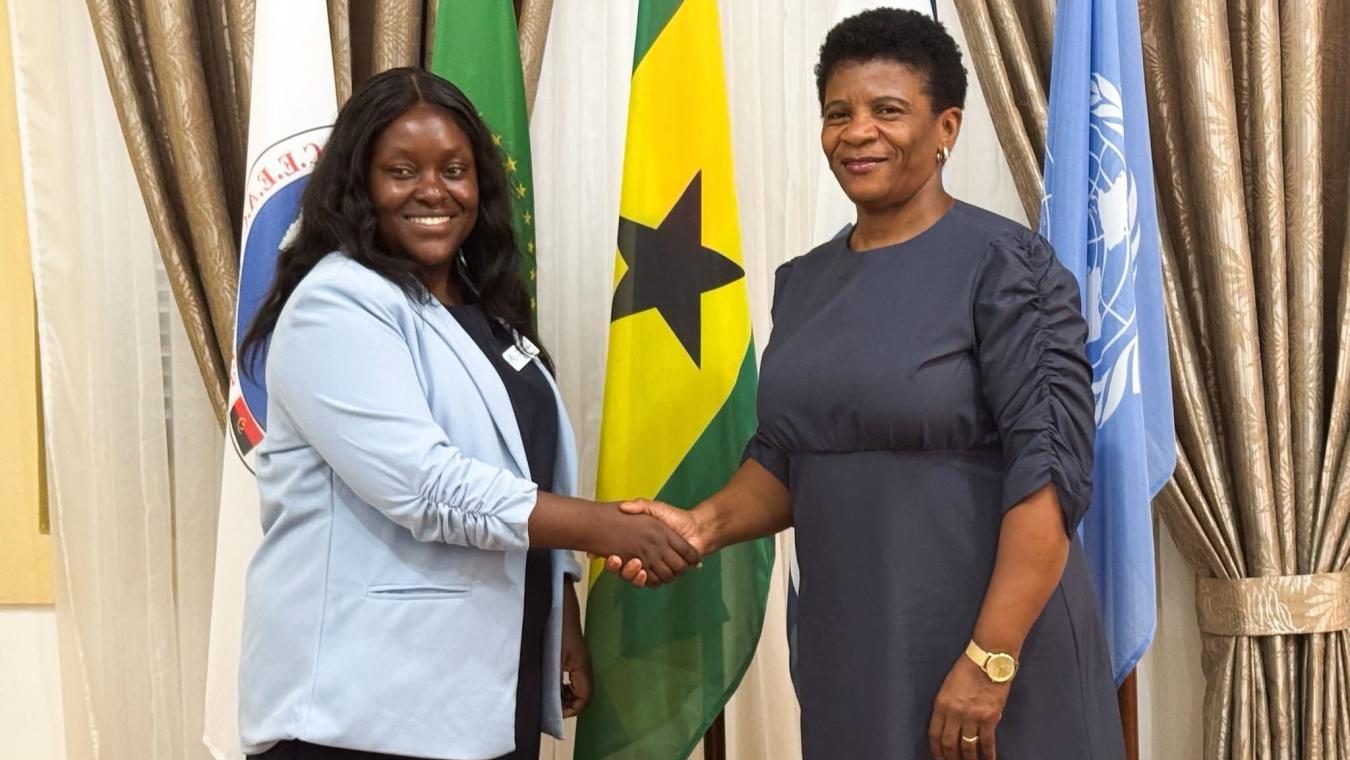
That work has shaped the career of Zimbabwean public health specialist Dr Marjorie Mupandare, who officially began her mission as the World Health Organization’s Representative in São Tomé and Príncipe on 3 November 2026.
She presented her credentials to the country’s Minister of State for Foreign Affairs, Cooperation and Communities, Ilza Amado Vaz, marking the start of her leadership of the WHO country office. The foreign ministry said Vaz emphasised WHO’s importance as a strategic partner in strengthening the national health system and called for closer cooperation.
For Mupandare, the appointment follows a career spanning Africa, Asia and the Middle East. According to WHO, her experience includes leadership positions with the organisation, the International Organization for Migration, the United Nations Office for the Coordination of Humanitarian Affairs and the World Food Programme. Immediately before this appointment, she served as Regional Incident Manager for the Sudan Humanitarian Response at WHO’s Eastern Mediterranean regional office.
Her professional journey also has strong connections to Portuguese-speaking Africa. Between 2015 and 2021, she worked with WHO in Guinea-Bissau, supporting preparedness and responses to health threats including Ebola, Zika and COVID-19. She subsequently served as Head of Office for the UN Office for the Coordination of Humanitarian Affairs in Mozambique, coordinating the humanitarian response to the crisis in Cabo Delgado. Both assignments are highlighted in the São Toméan foreign ministry’s announcement of her arrival.
These are experiences that connect the technical demands of public health with the practical difficulties of organising assistance during a crisis.
Her work has extended beyond the African continent. A WomenLift Health profile, published before her latest appointment, records her service as a Humanitarian Assistance Advisor with the International Organization for Migration in Afghanistan. The profile also describes experience responding to outbreaks and coordinating assistance during humanitarian crises and sudden-onset disasters.
Behind those institutional titles is a career that has required considerable movement and adaptation. WomenLift Health’s profile offers a lighter glimpse of that experience: having worked in more than 15 countries, Mupandare could say thank you and order food in more than seven languages. It is a small detail, but one that gives a human dimension to a professional life spent crossing borders.
Her academic journey has been similarly international. She holds a doctorate in public health from the University of Hertfordshire, a Master of Public Health from the University of Roehampton, and a master’s degree in international studies from Ewha Womans University in South Korea. WomenLift Health also lists an honours degree in development studies from Zimbabwe’s Midlands State University.
In São Tomé and Príncipe, she joins a health partnership with an established programme of reforms. WHO’s overview of its 2024–2025 biennial report identifies advances in primary healthcare, district health management and emergency preparedness. Among the developments was the adoption of the country’s first National Health Financing Strategy, covering 2025–2032. The report also highlights progress towards eliminating lymphatic filariasis.
These developments provide an important backdrop to her appointment. Her assignment begins within a continuing national effort, involving health authorities, local professionals and development partners, to make services more accessible and better prepared for future demands.
One recent initiative illustrates the practical work already underway.
On 2 November, the day before Mupandare formally assumed her duties, WHO announced that 15 health professionals had completed São Tomé and Príncipe’s fourth Frontline Field Epidemiology Training Programme. Over three months, participants developed skills in disease surveillance, outbreak investigation, data analysis, public health communication and emergency response, combining classroom learning with activities in their workplaces.
The programme was led by the Ministry of Health with WHO support and cooperation from Brazil’s Ministry of Health. Particularly significant was the involvement of national professionals: most tutors were graduates of earlier cohorts who had returned to help train their colleagues.
The progression—from receiving training to teaching others—offers a concrete example of how health capacity can grow within a country. It also shows why international health leadership depends on recognising and supporting expertise that already exists locally.
WHO has announced that Mupandare will work with the government, development partners, UN agencies, civil society and communities to advance national health priorities. Her previous experience also includes leading Skillshare International’s Mozambique operations, supporting development programmes and institutional capacity building.
For Zimbabwean readers, her appointment offers a story of professional achievement with an international reach. It places a Zimbabwean specialist at the head of a WHO country office, bringing experience accumulated across different institutions and regions into another African setting.
The deeper significance, however, lies in the responsibility that accompanies the recognition. Public health leadership ultimately concerns the people who rely on services: whether a warning is recognised, whether staff have the support they need and whether plans lead to practical improvements.
Mupandare’s appointment makes visible a career built around those responsibilities. As she begins her work in São Tomé and Príncipe, the next chapter will unfold through the partnerships she helps sustain and the national health priorities she supports.