Women Miners in Mberengwa Face Harassment, Economic Abuse in Male-Dominated Illegal Mining Sector

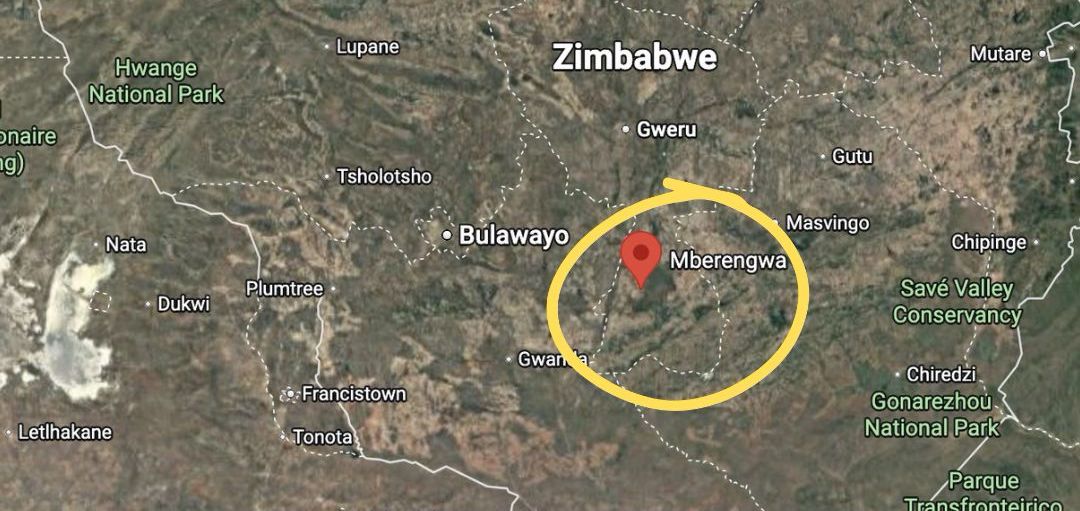
ZIMBABWE: Driven by the need to earn money to meet basic household needs, Chenesai has turned to illegal gold mining at C Mine in Mberengwa, hoping to make a living from the minerals extracted from the ground. But the search for economic survival has exposed her to a different struggle: confronting men who believe women have no place in mining.
“Men tell us that women should be at home cooking and changing babies’ nappies instead of engaging in mining,” Chenesai said.
Her experience reflects the hostility women encounter in an industry where male miners use deeply entrenched cultural beliefs to question their participation and undermine their economic independence.
For Busi, the discrimination comes with threats and intimidation. She said some men blame women for poor mining returns, accusing them of bringing bad luck to mining operations.
“You women are bringing us bad luck; that is why we are struggling to make money. Leave this place, otherwise we will take your gold ore (matombo) by force and you can go and look for them,” Busi recounted the words used by male miners.
The harassment does not end with verbal abuse. The two women also reported that men sometimes forcibly take the ore they have extracted, depriving them of the proceeds from their labour.
After spending time and energy extracting minerals, the women risk losing their earnings to male counterparts who use intimidation to assert control over mining resources.
Their accounts expose how gender discrimination intersects with economic vulnerability in illegal mining environments, where women must defend both their right to participate and their ability to benefit from their work.
Patriarchal beliefs drive women out
The belief that women bring misfortune to mining operations reflects patriarchal attitudes that continue to shape women’s participation in Zimbabwe’s mining communities.
Some men associate women’s presence at mining sites, particularly during menstruation, with the disappearance of gold or declining mineral production. Such beliefs have been used to justify excluding women from mining activities and restricting their access to productive resources.
Yet women contribute to different stages of mineral extraction and processing, including digging, crushing, washing, panning and sorting ore.
Despite their involvement, their contribution often attracts discrimination rather than recognition.
Research conducted by Tariro Youth Development Trust and published through the Advancing Learning and Innovation on Gender Norms (ALIGN) platform in July 2021 documented similar experiences among women in Mberengwa, Zvishavane and Shurugwi.
The study surveyed 300 participants across the three districts, including 54 women in Mberengwa. It found that 68 percent of women and girls surveyed in Mberengwa had experienced some form of gender-based violence.
Across the three districts, 77 percent of women working in the artisanal and small-scale mining sector reported experiencing violence.
The research identified physical violence, sexual abuse, emotional abuse, economic exploitation and forced labour among the forms of violence affecting women.
It also found that patriarchal beliefs and unequal power relations allowed some men to use their influence to intimidate women and restrict their participation in mining.
One female participant in Mberengwa told researchers that men regarded women as bearers of bad omens and punished those who entered mining shafts and open-cast pits.
The findings provide important background to the experiences described by Chenesai and Busi, although the 2021 research covered other mining sites and does not establish the prevalence of abuse at C Mine.
Economic abuse behind the mineral trade
The alleged seizure of women’s ore highlights another dimension of gender-based violence: economic abuse.
For women who depend on illegal mining to support themselves and their households, losing extracted minerals means losing the financial reward for their labour.
The imbalance of power between male and female miners can make it difficult for women to challenge such practices, particularly where mining activities take place outside formal regulatory structures.
A separate mining sector situational report published by the Zimbabwe Environmental Law Association (ZELA) in April 2022 also identified patriarchal beliefs, economic vulnerability and unequal power relations as drivers of gender-based violence in mining communities, including Mberengwa.
The report documented how myths surrounding menstruation and women’s participation in mineral extraction reinforce discrimination and restrict women’s economic opportunities.
It also highlighted the difficulties women encounter when seeking protection and assistance in mining environments.
Illegal mining adds another layer of vulnerability because participants may lack formal mining rights and established workplace protection mechanisms. This can make reporting abuse and pursuing disputes over mineral ownership more complicated.
16 Days of Activism: Ensuring justice for women miners
The experiences at C Mine come as Zimbabwe commemorates the 2026 16 Days of Activism Against Gender-Based Violence, running from November 25 to December 10.
This year’s theme, “UNiTE to End Violence Against Women and Girls: Ensure Justice, Protect Survivors, End Impunity,” calls for stronger protection of survivors, improved access to justice and accountability for perpetrators.
The campaign challenges institutions and communities to address violence beyond domestic settings, recognising that women also experience discrimination, intimidation and economic abuse in workplaces and other public spaces.
For women in illegal mining, ensuring justice means having accessible channels to report threats, harassment and the alleged seizure of their mineral proceeds.
Protecting survivors requires creating safe environments where women can participate in economic activities without fear of retaliation.
Ending impunity requires confronting harmful cultural beliefs and ensuring that perpetrators of violence are held accountable.
Zimbabwe’s Constitution provides for human dignity, personal security, equality and protection against discrimination under Sections 51, 52 and 56. Section 80 further guarantees women’s rights.
However, the experiences reported by Chenesai and Busi raise questions about how effectively these protections reach women operating in informal and illegal mining environments.
The Zimbabwe Gender Commission, citing the 2023–2024 Zimbabwe Demographic and Health Survey, reported that 27 percent of women aged 15–49 had experienced physical violence, while nine percent had experienced sexual violence in their lifetime.
Although these figures do not specifically measure violence in mining communities, they demonstrate the wider challenge of protecting women from abuse.
Beyond awareness campaigns
Addressing gender-based violence in illegal mining requires more than commemorative events and public awareness campaigns. It demands sustained action to challenge discriminatory attitudes, protect women’s economic interests and strengthen access to justice.
Law enforcement agencies, local leadership, mining authorities and organisations working on women’s rights have a role in addressing violence and ensuring that women can report abuse without fear of intimidation.
Community awareness programmes must also challenge the belief that mining is exclusively a man’s occupation and confront the use of superstition to justify women’s exclusion.
For Chenesai and Busi, however, the immediate concern remains their ability to work without being insulted, threatened or deprived of the minerals they extract.
Their experiences expose a contradiction at the heart of women’s economic participation: while women turn to mining to support themselves, the same environment can subject them to discrimination and exploitation.
As the 2026 16 Days of Activism campaign calls for justice, survivor protection and an end to impunity, the experiences of women at C Mine raise a critical question: who protects women when the very spaces they depend on for survival become sites of intimidation and economic abuse?
Until women can participate in mining without fear of harassment, threats or losing the proceeds of their labour, the promise of economic empowerment will remain out of reach for many in Mberengwa.
The fight against gender-based violence must reach the mines, where women are demanding not special treatment, but the freedom to work, earn and live with dignity.