US – DFC Commits 1.5 billion Across Africa to Secure Supply Chains

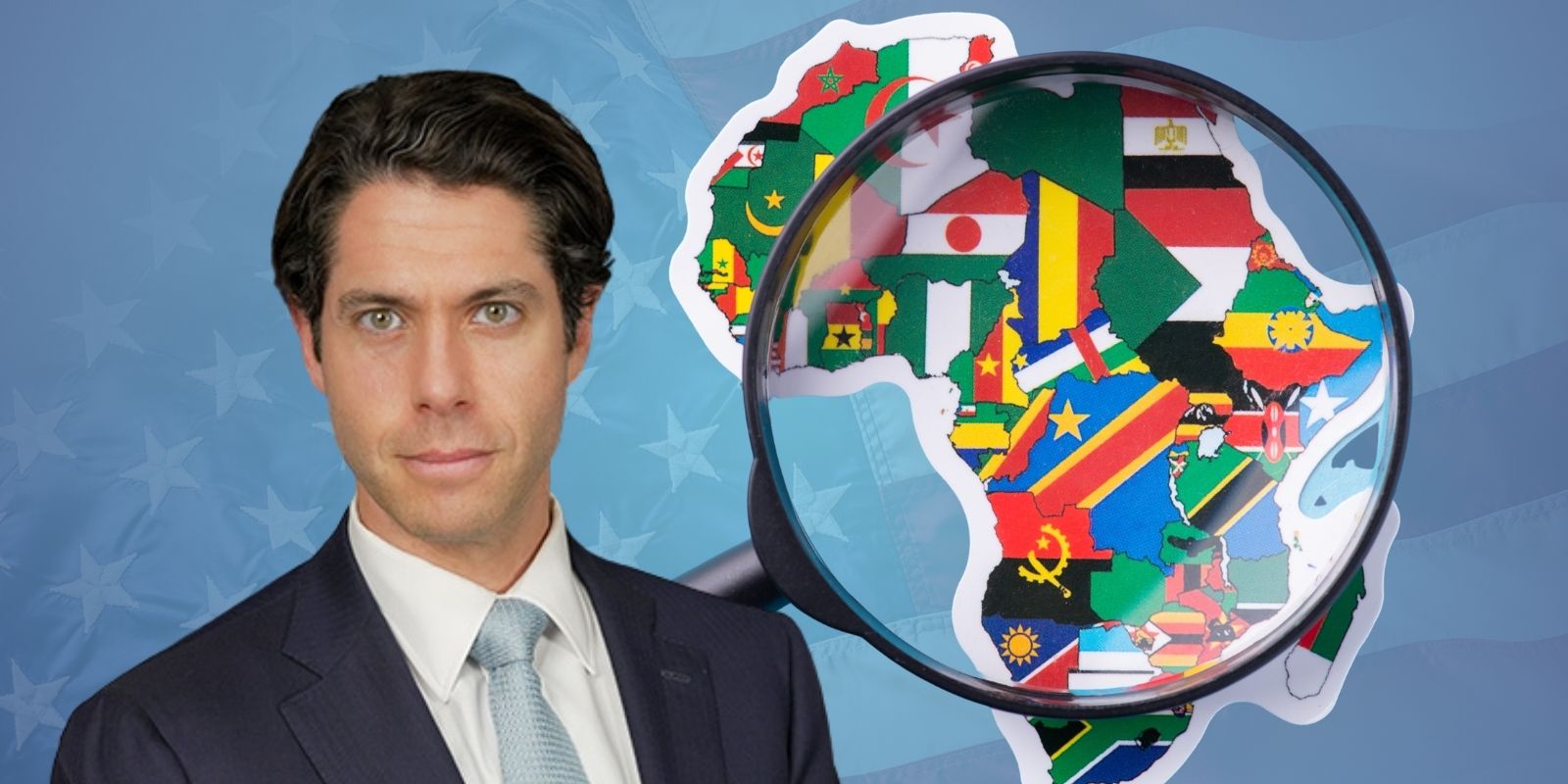
On July 15, 2026, in Washington, D.C., Ben Black, Chief Executive Officer of the U.S. International Development Finance Corporation (DFC), delivered opening remarks before the House Foreign Affairs Committee at a hearing entitled “Ending Supply Chain Dependency: Aligning Tools, Capital, and Partnership.” Speaking on behalf of the United States Government’s international investment arm, Black outlined how DFC is mobilizing private capital to strengthen American economic statecraft and secure supply chains in regions across the world, including Africa. He emphasized that following bipartisan reauthorization in December 2025 under President Donald Trump, DFC now possesses $205 billion in investment capacity, enabling it to deploy debt, equity, and insurance across technology, energy, and critical minerals. Black explained that this expanded capacity allows DFC to intervene in vulnerable supply chains globally, with a particular focus on regions vital to U.S. economic security such as the Western Hemisphere, East Asia and the Pacific, Central Asia, Eastern Europe, the Middle East, and Africa.
Black reported that since reauthorization, DFC has rebuilt its pipeline to more than 340 deal opportunities totaling $78 billion across agriculture, healthcare, financial services, energy, technology, and critical minerals. He stressed that Africa is a central focus of this pipeline, citing the $553 million loan to restore the Lobito Atlantic Railway as a flagship project. This railway corridor connects the mineral‑rich Democratic Republic of Congo and Zambia to the port of Lobito in Angola, thereby creating a western‑aligned source of critical minerals and reducing shipping costs by as much as thirty percent. Black noted that this investment is part of the $1.5 billion DFC has committed across Africa since his confirmation as CEO, underscoring the continent’s importance to U.S. supply chain resilience and global economic security. He explained that industrialization, which has historically been the greatest force for lifting populations out of poverty, depends on reliable energy. To this end, DFC’s Board approved $1.5 billion in June for energy infrastructure projects across South and Southeast Asia, ensuring that U.S. liquefied natural gas and American equipment power the energy needs of strategic regions. While this investment is outside Africa, Black emphasized that the same model of energy‑driven industrialization is being applied to African economies through DFC’s financing.
In his remarks, Black also highlighted DFC’s role in countering adversarial influence. He pointed to a recent agreement in Kazakhstan, Central Asia, where DFC supported one of the country’s largest telecom networks to expand access to U.S.‑aligned service providers, thereby challenging China’s Digital Silk Road. He explained that similar strategies are being applied in the Western Hemisphere and Africa to prevent Chinese digital infrastructure from entrenching influence. In addition, Black described DFC’s $600 million contribution to the $1.8 billion Critical Minerals Consortium with Orion Resource Partners, alongside an additional $900 million approved to expand Orion’s pipeline of mining and minerals opportunities. He stated that this initiative directly addresses China’s chokehold on critical minerals, which has implications for African countries such as the Democratic Republic of Congo, Zambia, and South Africa, where mineral resources are central to global supply chains. Black further referenced the U.S.‑Ukraine Reconstruction Investment Fund (URIF), a $150 million joint fund mobilizing private investment in Ukraine’s recovery, noting that this model could serve as a blueprint for similar reconstruction and resilience financing in African regions affected by conflict or instability.
Throughout his testimony, Black framed DFC’s mission within the tradition of American economic statecraft, citing Alexander Hamilton’s vision of strong financial institutions, the construction of the Panama Canal, and the Marshall Plan, which rebuilt Europe after World War II. He argued that DFC’s approach—anchored in private investment, disciplined capital markets, and strategic finance—offers African nations and other allies a superior alternative to adversarial models. Black concluded by asserting that the Trump Administration’s restoration of American economic statecraft, coupled with DFC’s expanded capacity, will guarantee success in securing supply chains, advancing development, and countering adversaries. His remarks made clear that Africa is not peripheral but central to U.S. strategy, with Angola, Zambia, and the Democratic Republic of Congo already benefiting from DFC’s financing, and other African nations positioned to engage with DFC’s investment model in the future.