SADC Nations Unite at Exercise UHURU 2026

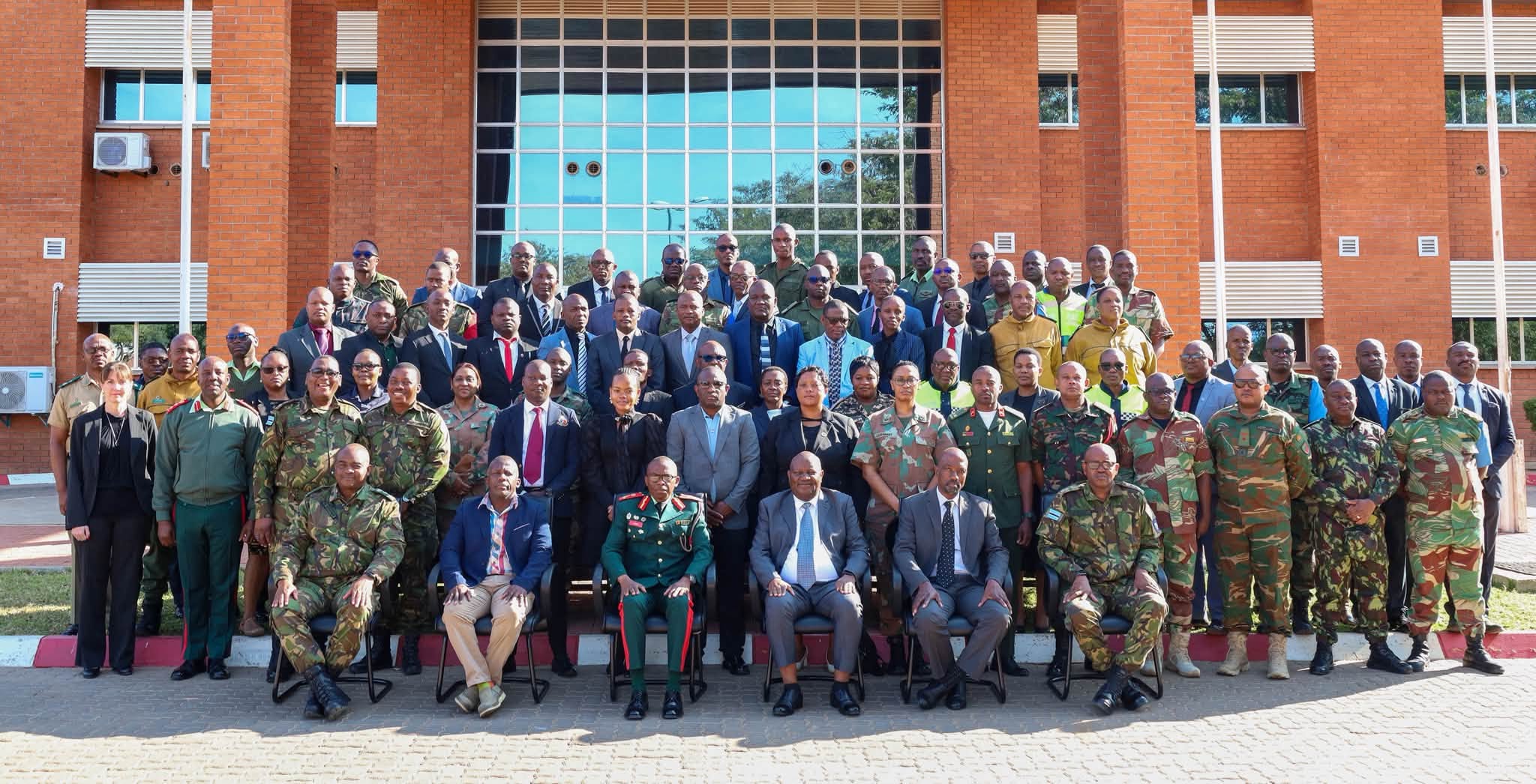
The Botswana Defence Force (BDF), through its Defence Command and Staff College (DCSC), has officially opened Exercise UHURU 2026, a Combined Joint African Exercise that symbolizes Africa’s growing commitment to regional cooperation, integration, and interoperability in Peace Support Operations. This exercise, hosted in Botswana, is not just a military drill but a strategic initiative that brings together staff colleges from across the Southern African Development Community (SADC). Participating nations include Botswana, Angola, Malawi, Mozambique, Namibia, South Africa, Tanzania, Zambia, and Zimbabwe. Their collective presence reflects the recognition that Africa’s peace and security challenges are shared, and therefore demand shared solutions.
The official opening was marked by a keynote address from Brigadier Dr Lucky Steven Thaga, Commandant of the Defence Command and Staff College, who emphasized the importance of Exercise UHURU in enhancing participants’ understanding and application of the Integrated Mission Planning Process (IMPP). He explained that the IMPP is central to modern peace operations, ensuring that missions are not only well‑planned but also adaptable to the fluid realities of conflict zones. In his words, the exercise prepares officers to effectively plan and operate in complex and evolving environments, where peace support operations demand foresight, flexibility, and collaboration. His remarks underscored the broader vision of UHURU: to build a cadre of African officers who can lead multinational missions with confidence and competence.
The exercise is significant because it reflects the regional dimension of security. Africa’s challenges are rarely confined within national borders. Instability in Mozambique’s Cabo Delgado province, for instance, has implications for neighboring countries, while piracy in the Indian Ocean affects trade routes across Southern Africa. Refugee flows, transnational organized crime, and terrorism are inherently cross‑border issues. By training together, SADC nations build the trust and interoperability necessary to respond collectively. This cooperation is not only military but also political, reinforcing the principle that African problems require African solutions. Exercise UHURU therefore strengthens the institutional capacity of SADC as a regional bloc, aligning with the African Union’s Peace and Security Architecture (APSA), which emphasizes regional standby forces and joint operations.
Another innovative aspect of Exercise UHURU 2026 is its inclusion of representatives from government and non‑governmental organisations. This reflects the reality that peace support operations are no longer purely military endeavors. Successful missions require the integration of humanitarian actors, development agencies, and civil society groups. NGOs often play critical roles in providing humanitarian assistance, monitoring human rights, and supporting post‑conflict reconstruction. Their involvement in UHURU ensures that military officers understand how to coordinate with civilian partners, avoiding duplication of effort and ensuring that operations are both effective and ethical. This multi‑agency approach is essential in contemporary peace operations, where legitimacy and sustainability depend on the ability to integrate diverse actors into a coherent mission framework.
Adding a practical dimension to the exercise are media students from Limkokwing University of Creative Technology, who are participating in simulated roles as media professionals. Their involvement reinforces the critical role of strategic communication and media engagement in modern operations. In today’s information environment, perception often shapes reality. If local populations perceive peacekeepers as outsiders or aggressors, the mission is likely to fail. Conversely, effective communication can build trust, legitimacy, and support. By simulating the role of journalists, the exercise highlights the importance of managing narratives, countering misinformation, and maintaining transparency. This is particularly relevant in Africa, where misinformation and propaganda have often been used to undermine peace operations.
Exercise UHURU is also part of a broader effort to strengthen professional military education (PME) across Africa. PME is essential for developing officers who are not only tactically proficient but also strategically minded. Through initiatives like UHURU, staff colleges across SADC are able to share best practices, harmonize curricula, and build networks of professional relationships that will endure beyond the exercise itself. This investment in education pays dividends in the long run. Officers trained in joint exercises are more likely to approach future missions with a spirit of cooperation and adaptability. They are also better prepared to assume leadership roles in multinational operations, whether under the auspices of the African Union, the United Nations, or regional coalitions.
The broader implications of Exercise UHURU 2026 extend beyond the immediate training objectives. It signals that African nations are serious about building the capacity to manage their own security challenges. This has several important consequences. First, it reduces dependence on external actors such as Western militaries, which have historically played dominant roles in African peace operations. Second, it enhances the legitimacy of African‑led missions in the eyes of local populations, who are more likely to trust forces drawn from neighboring countries than those from distant continents. Third, it strengthens regional identity through shared training and cooperation, fostering a sense of solidarity among SADC nations. Finally, it improves preparedness for emerging threats such as cyber warfare, climate‑induced conflicts, and pandemics, which require innovative and coordinated responses.
The exercise also reflects a growing recognition of the importance of strategic foresight in African security. Peace operations are no longer reactive; they must be proactive, anticipating challenges before they escalate into crises. By training officers to think strategically, Exercise UHURU contributes to the development of a new generation of African leaders who can navigate the complexities of modern conflict. This is particularly important in a continent where security challenges are often intertwined with political, economic, and social factors. Effective peace operations require not only military skill but also political acumen, cultural sensitivity, and an understanding of development dynamics.
In conclusion, Exercise UHURU 2026 represents a significant step forward in Africa’s journey toward collective security. By integrating military training with multi‑agency cooperation, strategic communication, and professional education, the exercise lays the foundation for more effective peace support operations across the continent. It embodies the principle that peace is not the responsibility of one nation or one institution, but a shared endeavor requiring cooperation, innovation, and resilience. Through initiatives like UHURU, Africa is building the capacity to manage its own security challenges, reducing dependence on external actors, and strengthening its regional identity.
The Botswana Defence Force and its regional partners have demonstrated through Exercise UHURU 2026 that Africa is ready to take ownership of its security future. The exercise is not just a training event; it is a statement of intent, a declaration that African nations are prepared to work together to safeguard peace and stability. In a world where security challenges are increasingly complex and interconnected, initiatives like UHURU are not optional—they are essential. They represent the hope of a continent determined to chart its own path toward peace, security, and prosperity.