When Love Becomes a Prison: Crystabel Chikayi’s Powerful Debut, Stillbirth of Love

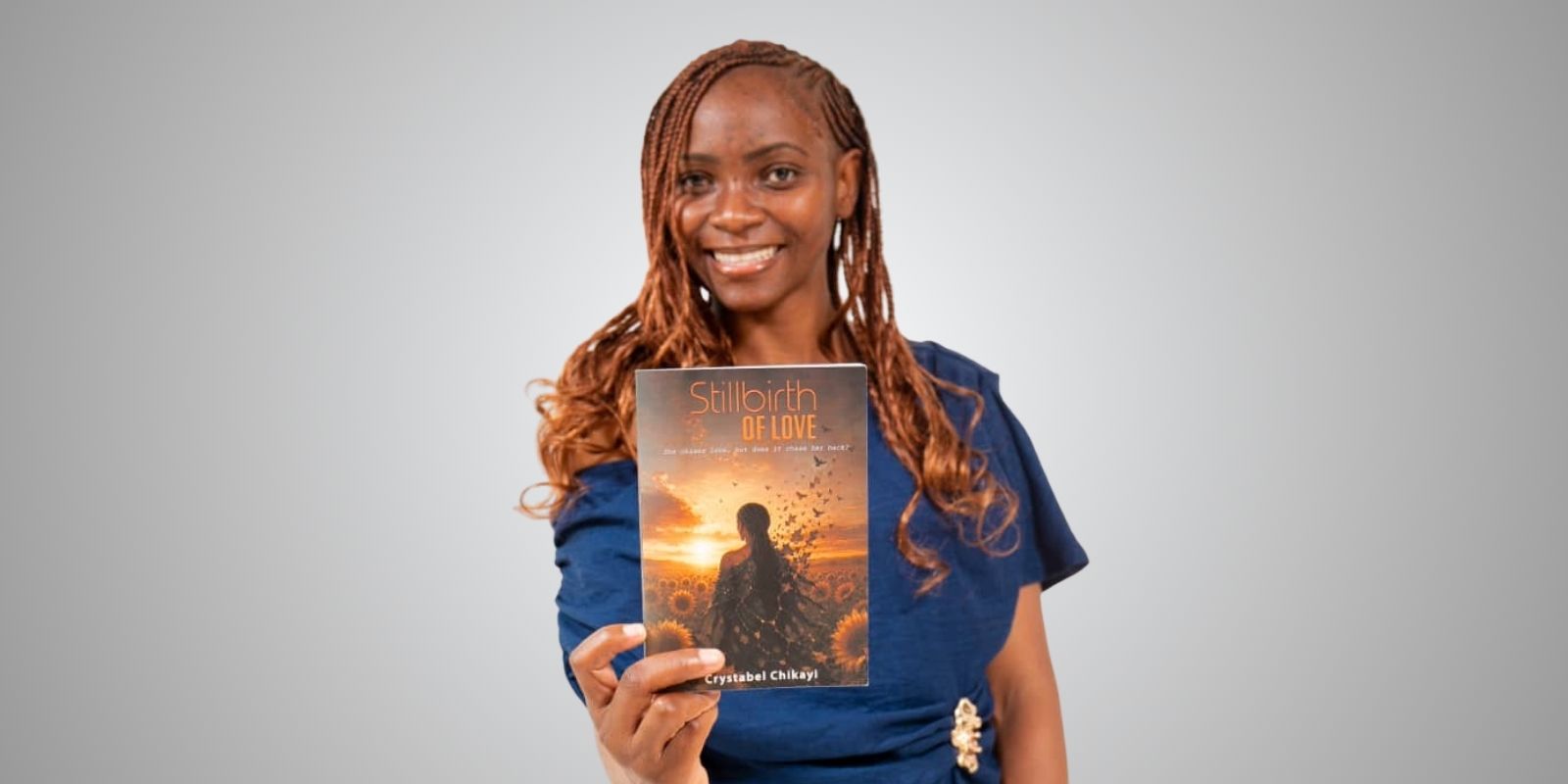
I have never wanted to throw a book at the wall as I did with Crystabel Chikayi’s debut book, Stillbirth of Love. It reminded me of those horror movies you want to drag a character out of their skull to save them. I found myself occasionally shouting, “Hey, let me out of that abusive marriage!”
The action starts with the first word to the last, tracing how emotions can evolve from lust to hatred. One wonders how people change from being human beings to animals through their actions.
Stillbirth of Love, the debut book by author and businesswoman Crystabel Chikayi, evokes a range of emotions. Driven by a deep passion for storytelling, Chikayi has taken a bold step into publishing with a story that confronts one of society’s most painful realities: domestic violence and the women who remain trapped in abusive relationships long after the love they once knew has been suffocated by fear, control and violence.
An excerpt from the book paints this vividly: Mucha’s plan had failed dismally, in fact, it made everything worse. It could have been lighter a crime if Hlupho had only poked her mother or had only been known for all the abuse he put her through which her family had no proof of. But beating her father! This was a nightmare; he had humiliated her to the last dot. This had to be where she drew the line, having her father admitted at the hospital after being brutally beaten by a son-in-law; Hlupho had really outdone himself this time.
Chikayi takes them directly into the reality of abuse, employing graphic and deeply descriptive storytelling that makes the violence against women and children feel painfully immediate. Her words have the power to make readers angry, uncomfortable and, at times, desperate to shout at the pages.
And perhaps that is precisely the point. Because Stillbirth of Love asks the hardest questions.
Why does a woman stay when she is being beaten?
Why does she return after promising herself she will never go back?
Why does she protect the person hurting her?
Why does she remain silent?
Is leaving an abusive relationship really as easy as outsiders make it sound?
For those looking from the outside, leaving can appear to be the obvious answer. But Chikayi’s storytelling forces readers to confront the complicated realities that often keep women in abusive marriages. There are many excuses among them fear of the unknown, financial dependence, children’s reactions, manipulation, isolation, shame, threats and the psychological grip that abuse can create. Everyone has their own fair of story to share.
“When I wrote this book I was also trying to find answers to the questions and I came up with many answers which are not really enough. I realised that sometimes, the person who is being hurt is also desperately holding on to the hope that the person they fell in love with will return,” Chikayi explained.
The title itself carries a haunting metaphor which suggest that something that was once alive, and had the potential to grow and flourish, but its life was lost before it could fully become what it was meant to be.
Chikayi writes with the courage to expose what many would rather keep behind closed doors. Through her characters and their experiences, she brings readers face-to-face with the devastating consequences of violence—not only on women, but also on children who witness, endure or grow up within environments where violence becomes part of everyday life.
“Our culture romanticises suffering and makes the woman feel as if it’s normal to go through affliction in marriage. With statements like musha mukadzi meaning women should be resilient as they are the foundation of a home and that also means they should be resilient towards abuse. Culture suggest that a woman must keep sacrificing herself to save a marriage,” Chikayi highlighted the plight of some marriages pitying them against the abusers.
The book powerfully reminds us that love is beautiful but it should never come with a cost to one’s voice, identity, and safety. Perhaps the most powerful message emerging from Stillbirth of Love is that breaking the silence can be the beginning of reclaiming one’s life.
“Some relationships don’t end because love was never there. They end because abuse suffocated it. Breaking the silence can be the first step toward bringing yourself back to life,” was the ultimate lesson Chikayo wanted people to take away from the book.
For Chikayi, this debut novel marks more than the publication of a book. It represents a willingness to use storytelling as a mirror that reflects a reality many families know but few are willing to discuss openly.



Perfection
A very interesting read on a very controversial topic. Can’t wait to read this one!
This is such a powerful and thought provoking review. Stillbirth of Love appears to confront the painful realities of abuse without romanticising the suffering that many people silently endure. The questions raised in this article are particularly important because leaving an abusive relationship is often far more complicated than outsiders assume. Congratulations to Crystabel Chikayi on using storytelling to address such a difficult but necessary conversation. May this book reach the people who need its message most. 👏🏽
Excellent teaching, those being abused open up and the abusers must learn something out of this book
Wow, these are issues that people are going through everyday and do not talk about. Having this book will help to remove the stigma and the fear, and bring courage.
The book is certainly promising to be a great read, and I can’t wait to get my hands on it.
This book needed to be written. Thank you Crystabel for giving voice to what so many keep silent about. Painful but necessary, and full of hope. Women need to read this and know they are not alone.
Oh my … what a review. I’m already intrigued to immerse myself into this masterpiece…. If Sympathy says it’s a masterpiece there is no arguing.
Am so proud of Chikayi for taking this bold step of publishing her book but more so for tackling a topic that is only whispered about by many.
I can’t wait to get my copy and all the best dear.
Beautiful piece. Looking forward to reading it through. Well done Crystabel.
Powerful book
It is worrying how most of us women have normalized abuse. We even have the saying that men are the same. The devil you know is better than the devil you don’t know. In sesotho they say “Le pele lina le baji” meaning “Even where you go you’ll still find pain”. They will tell you to stay for kid’s sake, ignoring the fact that staying in a toxic or Still Born love affect the kids. They can never be happy if their parents are not happy. They will also think that is what marriage is like. Thank you for breaking the silence, may God continue to bless you and give you wisdom to speak your truth.
Ohhh Sympathy this is an awesome review, my heart is full. Thank you
Interesting . Can’t wait for the launch/ release of this masterpiece
The book makes me a bit enraged but sad for those who have lost their voices with the hope of rekindling love that is gone. It reminds me of the need to make a name for myself before settling for marriage and to be independent.
An insightful eye opening reality that needed to be told.
This is such a powerful and eye-opening read. ❤️ I honestly can’t wait to read the whole book because so much of this is deeply relatable. Sometimes people carry stories and pain that the world never gets to see.
Please consider creating a support group for these women and children as well. They need a safe space to feel heard, supported, understood and reminded that they are not alone. 🙏🏽❤️ What a beautiful impact that could make in so many lives.
This is such a beautiful read. Keep flying high Chrissy.
Very profound theme there, i can’t wait to read the whole book. Indeed, we dot not need to romanticize issues of abuse as a society. What is not good and normal is still not good. Thank you so much Cryst for such relatable issues. It is really eye-opening!
Woow such a powerful book indeed. Let’s stop normalizing what really abnormal. Society might see it as a normal gesture but what’s wrong is wrong. Stop romanticizing abusive love. Love shouldn’t hurt. Fight for what’s good and right. Well done my friend Crystabel(Kirrie)🤭. Keep going on high and high. Neither the sky should be the limit.
Love is a beautiful but it shouldn’t come with a cost over your safe place voice or your identity as a person. This beautiful read is really an eye opener that we should not die hurt and bleed behind closed doors. Let’s voice out, break the silence, break the cycle, stand up stand out and speak your truth. Women this is for us. 👏🏽👏🏽👏🏽