South Africa Takes Over SADC Council of Ministers Chairship

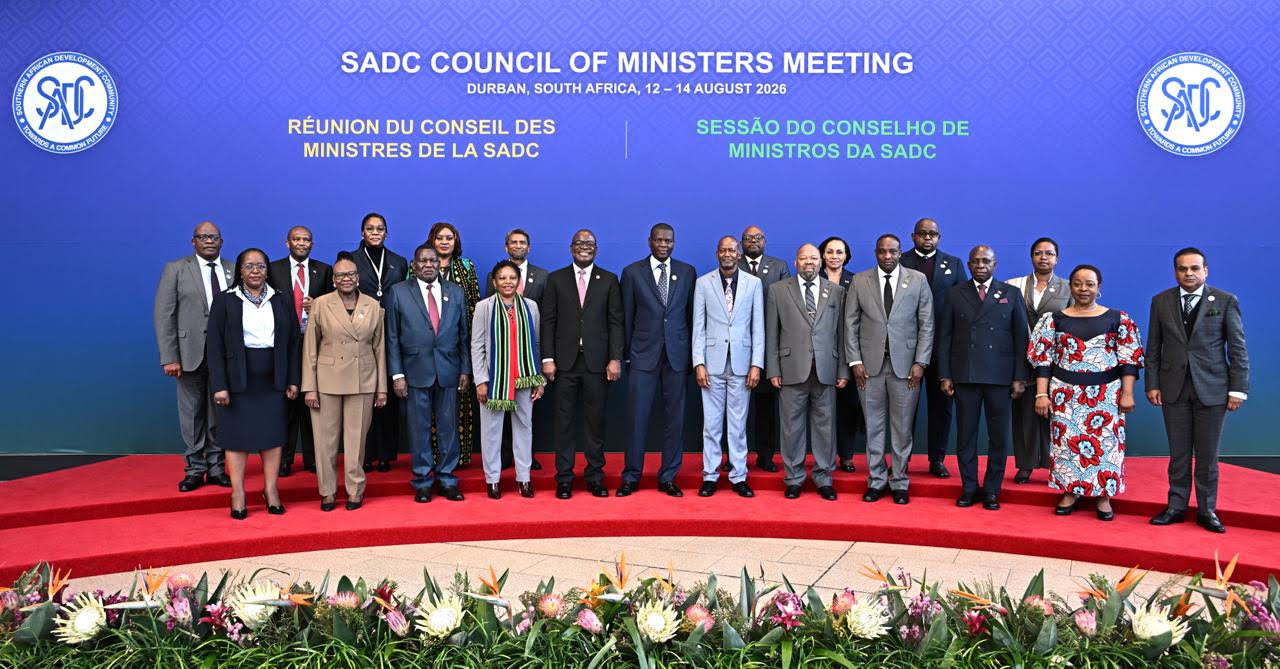
The Republic of South Africa has formally assumed the Chairship of the Southern African Development Community (SADC) Council of Ministers, marking a new chapter in regional leadership and integration. The handover took place in Durban on August 12, 2026, with South Africa set to lead the Council until August 2027, following its tenure as Interim Chair since November 2025.
The responsibility now rests with Honourable Ronald Lamola, Minister of International Relations and Cooperation, who outlined a bold agenda for the region. His vision emphasizes peace, economic transformation, infrastructure development, and human capital growth, stressing that regional peace and security remain the bedrock of sustainable development.
Lamola highlighted that South Africa’s tenure will prioritize accelerating industrialisation through agricultural transformation, beneficiation of critical minerals, and strengthening regional value chains. He underscored that Southern Africa’s vast reserves of minerals such as cobalt and graphite must no longer be exported in raw form, but instead processed locally to create value and jobs. This, he argued, is essential for building resilience and ensuring shared prosperity across the region.
Infrastructure development also featured prominently in his address. Lamola called for the modernization of energy systems, transport corridors, ports, digital networks, and water infrastructure, noting that these are critical enablers of trade, industrial growth, and employment. He further stressed the importance of investing in youth development, pointing out that nearly 60% of Africa’s population is under the age of 25. Harnessing this demographic dividend, he said, requires investment in education, skills, and economic opportunities.
The Chairperson also urged Member States to adopt the SADC Protocol on the Free Movement of People, advocating for lawful and orderly migration processes that strengthen regional integration. In a gesture of solidarity, Lamola congratulated Zimbabwe on its election as a Non-Permanent Member of the United Nations Security Council (2027–2028), describing it as an opportunity to advance Southern Africa’s interests globally.
Representing Zimbabwe, Honourable Professor Dr. Amon Murwira, Minister of Foreign Affairs and International Trade, echoed Lamola’s call for deeper integration. He emphasized that the region’s future must rest on interconnected pillars of peace, industrialisation, infrastructure, and human capital development. Murwira urged Member States to beneficiate mineral resources, invest in science and technology, and transform Southern Africa into a competitive production hub rather than a supplier of raw materials. He also stressed the importance of financial independence, calling for support of the SADC Regional Development Fund (RDF) to strengthen sovereignty and fund regional priorities.
The SADC Executive Secretary, H.E. Elias M. Magosi, provided a broader perspective on the region’s progress and challenges. He noted that despite global geopolitical tensions and declining development assistance, SADC economies have shown resilience. Installed electricity generation capacity has risen to more than 88,000 megawatts, with access increasing from 56% in 2024 to 60% in 2025. Foreign direct investment surged by 44% to US$11 billion, driven largely by Mozambique and South Africa, while intra-regional trade also recorded growth.
Magosi emphasized the need for climate-smart agriculture and greater investment in disaster preparedness, early warning systems, and climate-resilient infrastructure. He warned that climate change remains one of the greatest threats to the region, with forecasts pointing to a severe El Niño event in the coming season. On peace and security, he reaffirmed the importance of collective responsibility, noting progress in addressing political and security challenges in the Democratic Republic of Congo and Madagascar.
The Council of Ministers meeting precedes the 46th Summit of SADC Heads of State and Government, where leaders will deliberate on strategies to advance regional integration, resilience, and prosperity. As the advisory body to the Summit, the Council plays a critical role in ensuring that SADC’s policies, strategies, and programs are effectively implemented.
South Africa’s assumption of the Chairship comes at a pivotal moment for the region. With a focus on industrialisation, infrastructure, youth empowerment, and peace, the year ahead promises to be one of transformation and resilience for the SADC community.