Poet and Blogger Rutendo Chichaya makes her publishing debut

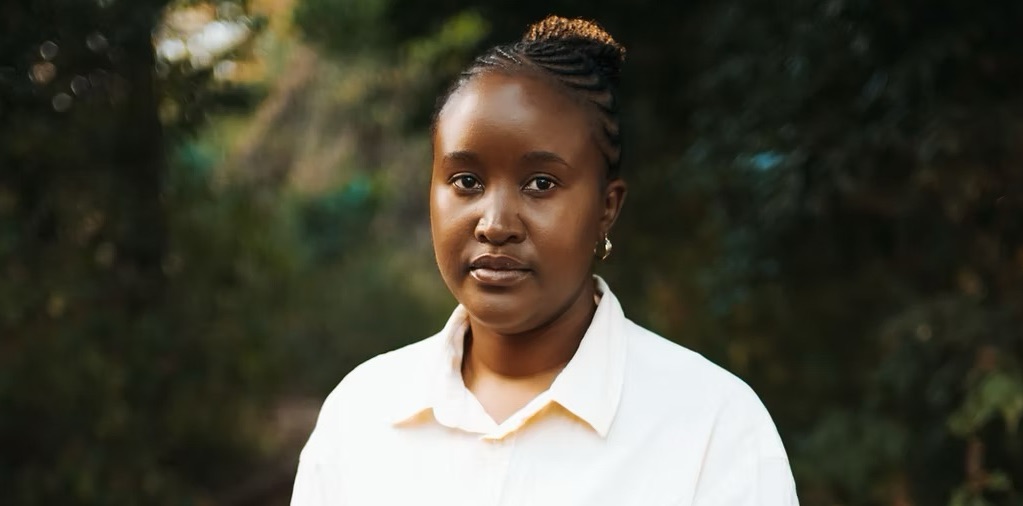
Rutendo Chichaya has been steadily building her profile as one of Zimbabwe’s most interesting contemporary writers and poets for a while now. She has had her work published on outlets such as Brittle Paper, The Kalahari Review, Mosi Oa Tunya Literary Review and 20.35 Africa. She has also had her short stories and poetry featured in multiple print anthologies. Chichaya also uses her work to elevate the voices of other writers, she is the host of ‘Ihwi’ a podcast which highlights storytellers and she also does book reviews on her blog. She has been shortlisted for the 2020 Intwasa Story Prize and the Hamwe Short Story Contest.
In April, Chichaya released her first collection of poetry, ‘Anchored Stiches.’ She shows that she is a writer who is deeply conscious and sensitive to the happenings around her. The poetry stretches backwards and forwards into topics and themes such as loss, poverty, unemployment and many more. ‘if it [silence] does conquer all then why does a silent land endlessly bleed while pacified and disillusioned,’ she writes in the poem ‘Silent Land.’ We caught up with Rutendo to get a deeper glimpse into her work, creativity and the book release. *KM – Kudzai Mhangwa, RC – Rutendo Chichaya
KM: Hie Rutendo, please introduce yourself to our readers in your own words.
RC: Hi, I am Rutendo Chichaya. I am a storyteller and the author of ‘Anchored Stiches’ (2026), my first poetry collection. I am also the host of IHWI podcast and a book reviewer.
KM: I have to say I was really looking forward to your book when I heard the announcement. When did you decide to have your work released?
RC: I made a solid decision to compile the poetry I had been writing over the years and come up with a manuscript in 2022. I must be honest and say I didn’t set out to write a collection, but looking back at the archive I had built while writing for myself, I realised I had something to say.
KM: How was the process of getting the book released?
RC: Releasing a book is a process, and the overall work is ongoing. The importance of commitment and community cannot be overstated. My first editor was adept, understood the vision and helped me serve it. Working with Carnelian Heart Publishing Ltd and everyone who has been and continues to be involved in this project makes the journey manageable. The release is the beginning of a different aspect of the work. So, the work is never complete and I am learning as I go.
KM: I contemplated the title of the anthology a lot, ‘Anchored Stiches.’ What does this title mean to you?
RC: ‘Anchored Stiches’ is a title that comes from the poem ‘Hutano.’ It honours my mother, who was a seamstress. She taught me how to sew, and one of the first things you learn when hand-sewing is an anchored stitch. This is a stitch that holds the thread and fabric together and prevents the thread from running. Poetry is that to me.
KM: One outstanding stylistic choice in the book is that the Shona and Ndebele is not italicized next to the English text. Why did you make this choice?
RC: I made the decision not to italicize the chiShona and isiNdebele words because these are my languages and none of those words are foreign to me. I trust that, in the process of reading, as we all do, when readers come across new or unfamiliar words, they’ll do the work and look up the definitions.
KM: One stand poem I really loved was “Comfort” which details the loss of a mother. How easy or difficult was it to compose that piece?
RC: Grief is complex, so yes, it was difficult. The difficulty for me was in distilling my acceptance. ‘Comfort’ was one of the last poems I wrote, and it was also a breakthrough for me in navigating my mother’s loss.
KM: Another poem “(In)Competence” was also so effective in showing the clutter and messiness of our lives. You have such a gift of painting atmosphere, how did you learn to do that?
RC: Thank you Kudzai. I have always loved poetry and I learn from reading widely. Observing the way we live also helps. When I read ‘(In)Competence’ out loud and listen to the beat of my heart, I am moved. The poem is sonically, kinetically and visually overwhelming, and this goes to the root of the reality it seeks to capture. I value tuning into my senses and spirit, so I take time to listen to that when writing (poetry and prose).
KM: Do you ever use your poetry as a means to heal?
RC: I do use poetry to heal, and I also use it for other things. ‘Anchored Stiches’ is healing work for me. But I do know that healing not a one-time event with finality. This means I will be writing poetry for a very long time.
KM: The way your work is textured, it looks like you have such a keen eye for what happens around you. When did you develop that skill?
RC: I love observing my surroundings, and my curiosity feeds my work. It is difficult to place a time stamp on when I developed that skill. All around us, the emotions, colours and realities of humanity in all their complexities are vivid. I am willing and committed to seeing even that which is uncomfortable to me, perhaps as a means to understand. Stories are around us.
KM: Did you have any fear about bearing some of the pieces?
RC: I did experience fear. I acknowledged the fear for what it was and refused to dwell on it for too long. I had to forge a stronger faith and keep moving. I am learning to acknowledge the fear and how to respect my craft and its purpose at the same time. My work calls for action, and I had to embody that. The poem ‘You, Or Even I’ asks, ‘kusiri kufa ndekupi?’
KM: Who is Rutendo outside of her work?
RC: I am a raging rebel. I think this is visible in everything I do, including my work.
KM: Rutendo Chichaya, well done! What are your final words for our readers?
RC: We must not give up on ourselves and our stories; the writing, editing, publishing, distribution, reading and reviewing. The challenges are real, the work is difficult, and we can do it together. When we value and honour what we all have and can contribute, we are stronger.‘Anchored Stiches’ is available for sale online from Amazon and other online platforms.