Not a lounge singer-backstage with a carnival playlist performer

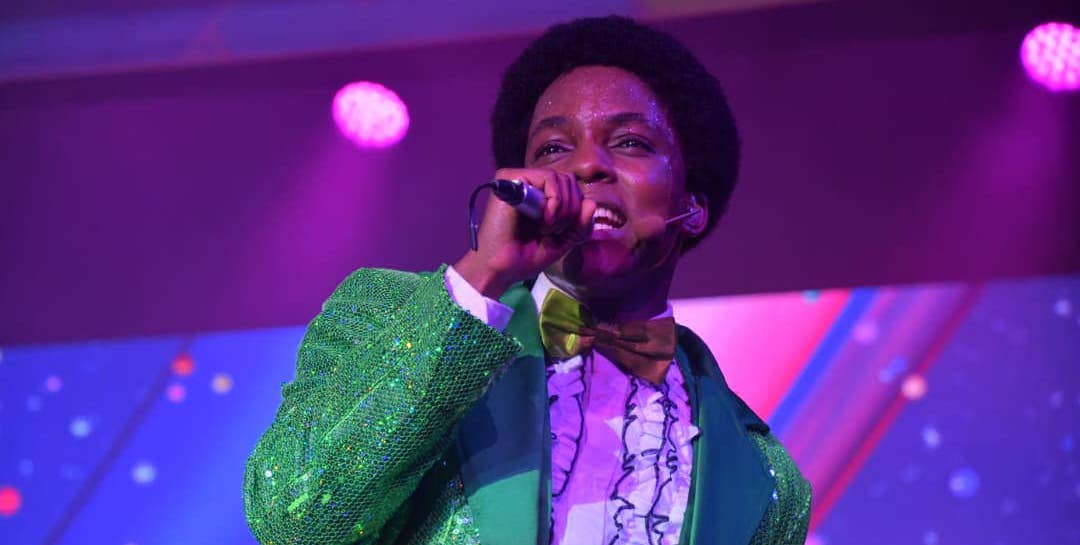
Mylo Moyo (MM) performed for Nickelodeon crowds, hosted for Norwegian Cruise Line, danced at Ferrari World, and now sings and dances nightly for thousands on a Carnival cruise ship yet you’ve probably never heard his name.
That’s exactly how he likes it. From Zimbabwe to international stages, he’s built a career not on chasing fame, but on chasing the work. Behind the lights, costumes, and perfectly synced production numbers is a Zimbabwean triple-threat who treats every show like professional musical theater on the ocean. No lounge singer. No shortcut, just discipline, growth, and a very detailed theatrical machine running 24/7.
In this candid conversation, we go backstage with a Playlist Productions singer-dancer to talk about favor, failure, representation, and what it really takes to turn singing, dancing, and acting into one language.
TR: For someone who has never seen a modern cruise-line production from backstage, what exactly does a Playlist Productions singer-dancer do?
MM: It’s essentially professional musical theater in a very unusual environment. I’m a singer-dancer in a production cast, so I’m performing live vocals while executing choreography, acting, working with the ensemble and telling the story of the production. There’s a full creative and technical team behind it — directors, choreographers, musical directors, stage management, lighting, audio, costumes and production technology. The audience sees a finished show, but backstage it’s a very detailed theatrical machine.
That’s one of the misconceptions about cruise entertainment. People sometimes hear “cruise” and think lounge singer. That’s not the world I’m working in.
TR: You’ve deliberately kept a relatively low public profile despite having worked for internationally recognised entertainment brands. Why?
MM: I’ve never really confused being visible with being successful. The people I need to impress are casting directors, producers and creative teams. They’re interested in whether I can do the job, not whether I have 100,000 followers. I always chase the work not the fame. I also genuinely value having a normal life. I can come home to Bulawayo, go to the gym, supermarket in tracksuit bottoms and flip-flops, and nobody cares who I am. I’ve actually loved that. I’m probably becoming a little less private now because I’ve realised there are things I’ve learned through this career that could be useful to other performers.
TR: You’ve now performed across multiple international platforms, from theme parks to resorts to cruise lines. When you think about your journey and how far you’ve come as a performer, what does that progression mean to you?
MM: What’s interesting is that every contract has made me a slightly different performer. You walk into each production with more experience, more confidence and a better understanding of what you’re capable of. So when I think about where I started at Ferrari World Abu Dhabi as a character performer and how that evolved into performing as a Nickelodeon host and then compared with where I am now as a playlist singer-dancer, I’m much more interested in the journey than the nostalgia and how each contract continues to unlock a new version of myself and realize life-long creative goals. I am also constantly humbled by the challenges each role brings with it.
TR: What was it like the first time you realised you were no longer simply an aspiring performer, but were stepping into a major international production environment as a professional?
MM: That would be Nickelodeon and it was absolutely terrifying! I grew up on the Nickelodeon brand and I think the biggest thing was the scale of it. I’d already worked professionally as a host with Norwegian Cruise Line, so it wasn’t my first professional job, but it was one of the first times I really understood the level of infrastructure behind a production. Suddenly you’re not just thinking about whether you can perform. You’re part of a much bigger machine directors, choreographers, technicians, costumes, lighting, rehearsals, stage management, audiences. Everyone has a job, and everyone has to deliver at the same standard.
That’s when I really started understanding that being talented and being a professional performer are two different things.
TR: How has working in increasingly sophisticated international production environments changed the way you approach your craft?
MM: It made me much less casual about my talent. Early on, you can think, “I’m good at this.” Then you enter an environment where everyone around you is not just good, they’re INCREDIBLE, everyone is trained, and the standard is consistent every night. You learn very quickly that talent is only the beginning. You have to be reliable. You have to take direction. You have to learn choreography quickly, sing consistently, understand staging, work with a team and still perform when you’re tired. I think that’s probably one of the biggest changes in me I’ve gone from wanting to prove that I can perform to understanding what it means to be a professional performer. Discipline is everything.
TR: You’ve performed for audiences from all over the world. How has working internationally changed your
understanding of audiences, performance and your identity as an artist?
MM: You quickly realise that audiences aren’t as different as you might think. The cultural references can change, but people still respond to confidence, humor, emotion, storytelling and someone who genuinely knows how to entertain them. Performing internationally also forces you to become adaptable. You’re constantly meeting people from different countries, working with different performers and encountering different approaches to entertainment. It makes you less precious about your own way of doing things. You learn to take what works, leave what doesn’t, and keep evolving.
TR: As a singer-dancer working in large-scale production shows, what has challenged you most about performing at that level?
MM: The challenge is that you’re not allowed to be brilliant only when you’re having a brilliant day. You have to be consistent. You’re singing live the entire show, dancing full-out, remembering choreography, hitting your marks, telling the story and maintaining your character all at the same time. And you have to do it again and again to the same or higher standard.
That’s what people sometimes don’t understand about production performance. The audience only sees the finished product. They don’t see the amount of precision required behind it.
TR: What has performing regularly taught you about stage presence that you simply couldn’t learn in a classroom or rehearsal studio?
MM: Repetition teaches you things that rehearsal can’t. You learn how to read an audience, how to recover when something goes wrong (and things do go wrong!), how to conserve your energy and how to still give somebody sitting in the back row a reason to watch you.
Confidence also changes. Early in your career, confidence can mean trying to convince everyone that you’re good. Eventually it becomes much quieter. You know what you’re capable of, so you’re not fighting for approval anymore. You’re just doing the job and setting improvement and refinement goals. Everything can always be better. I’m rarely satisfied.
TR: You’re primarily a singer-dancer, but your career has required you to operate across several disciplines. How important has vocal performance become to your identity as an artist?
MM: Singing has never really been an “also” for me. I’m a songwriter with entire catalogs of unreleased material telling the story of my life and the human experience. So it’s one of the foundations of what I do & who I am. What changed over time was understanding how much more there was to develop. Being able to sing isn’t the same thing as being able to sing professionally while you’re dancing full-out, maintaining character, communicating with an audience and doing it consistently for hundreds of shows per contract. That’s a very specific skill set, and it’s something I’ve spent years developing.
TR: What happens when singing, dance and acting stop being separate skills and become one performance language?
MM: That’s really where I feel most at home. The stage is my happy place and I say that all the time. I don’t necessarily think of myself as switching between singing, dancing and acting. In a good production, they’re all telling the same story.
The singing gives you the emotion, the movement gives you another layer of communication, and acting gives you the character and intention behind it, even when performing as yourself. When those things work together, you stop thinking about the individual disciplines and you’re simply performing. And then you stop thinking about performing and you’re just experiencing and living that art in real-time, and there’s no greater high than that.
That’s what I love about triple-threat performing.
TR: From your earliest major international entertainment work with brands such as Nickelodeon to your current work as a Carnival Playlist performer, what has changed most about you as a professional?
MM: The biggest difference is that I understand the business of being a performer much better now. When I started, I was focused on proving that I could do things. Now I’m much more focused on understanding the room, understanding the production, understanding what a director needs and knowing how to contribute to the overall show.
I’ve also become much more comfortable with my identity as a singer-dancer. Early in my career I was discovering what I could do. Now I know what I bring into a production and quickly understand what more I need to learn and improve right from day one of the rehearsals so my sweat equity has now become exceedingly precise and focused.
TR: Across your international career, is there a particular performance or moment that changed the way you saw yourself as a professional performer?
MM: Ironically, it wasn’t my biggest or technically best performance. It was an opening performance I created for a Norwegian Cruise Line Crew Meeting when I was working as a Nickelodeon host. I asked the Entertainment Director if I could create something and essentially built my own mini-production show. I brought in dancers from Rock of Ages, their production’s musical director and live musicians, and worked with the sound, wardrobe and technical teams. I created the storyboard, visual content, helped shape the lighting, staging, choreography and directed the performance.
I was actually sick that day, but when the performance ended, the audience erupted people were standing, cheering and applauding. I walked off that stage and something changed in me. I realised, “I can do this.”
Afterwards, experienced performers, people with Broadway backgrounds, told me I needed to pursue production cast work. That performance was essentially my audition for myself. It wasn’t the moment that proved I’d made it; it was the moment that convinced me I was going to. And eventually, I did.
TR: What has working as part of professional production casts taught you about discipline, teamwork and the standard expected of an international performer?
MM: Production work teaches you very quickly that you’re only one part of something much bigger. You can be the best singer or dancer in the cast, but if you miss your entrance, forget a harmony, don’t know your spacing or aren’t listening to your director, you’ve still damaged the production. I’ve learned that professionalism must be habitual in the best possible way. It means being prepared, being on time, knowing your material, taking direction, looking after your instrument and being someone the people around you can rely on. That’s what makes a career sustainable.
TR: What has performing internationally taught you about representing Zimbabwe and Africa on international stages?
MM: It’s made me very conscious of how powerful representation can be without necessarily making it the thing you’re talking about. I’ve had people genuinely surprised to discover that I’m Zimbabwean because they simply hadn’t encountered any Zimbabweans doing what I do. And being unique that way has always stayed with me. It reminds me that sometimes you don’t have to make a speech about where you’re from. You can simply walk onto a stage, do your job at a high level and let people be inspired by your story.
I’m so proud of being a Zimbabwean who is also acknowledged as a professional performer on an international stage. Both things exist at the same time for me, always.
TR: How has building an international career — from your early entertainment work through Ferrari World, Nickelodeon, and now Carnival — changed the opportunities available to you?
MM: The biggest thing it has given me is credibility within the entertainment industry. Every major production becomes part of your professional history. One contract leads to another conversation, one casting director remembers you, one director recommends you to someone else, and gradually your résumé starts opening doors that weren’t available to you at the beginning.
That’s one of the things I love about this career. You’re constantly building on what you’ve already done. I’m still very much in that process. I don’t see myself as having arrived anywhere yet.
TR: If you could stand beside the version of yourself who was just beginning his professional entertainment career before the international contracts, the major brands and the production stages what would you tell him now?
MM: I’d tell him that every single failure right now is going shape his success. I’d tell him to take himself more seriously, in the sense of understanding that the things he wants are actually possible. I would tell him to train more and stop worrying so much about whether other people could see his potential. I’d tell him to keep chasing the work.