Melokuhle Ncube: The Life Journey Through Art

At 30, Melokuhle Ncube has built a life at the intersection of engineering, art and family. An aircraft engineer by profession and an artist by calling, Ncube is also a husband and a new father, raising his four-month-old son with his wife, Tashia Marange — a chapter he describes as his “greatest masterpiece yet.”
My Afrika Magazine reporter, Lingiwe Sifelani (LS), had a chance to discuss with Melokuhle, getting an insight into his work in the art industry.
LS: Please introduce yourself, family background, and anything you want the readers to know.
MN: My name is Melokuhle Ncube. I’m 30, an aircraft engineer by profession, and an artist by calling.
I’m married to Tashia Marange, the most beautiful soul I know, and together we’re raising our 4-month-old son — our greatest masterpiece yet.
I was raised by a single mother, Christine Munatsi. She was fire and softness in one. Life was hard, but she made sure we stood tall. She passed on the 22nd of May 2026 — may her soul rest in eternal peace.
And there’s my younger brother, Benizer Anodiwanashe Munatsi, my built-in reminder of where I come from. If there’s one thing I want people to know about me: I was shaped by struggle, raised by strength, and I’m learning to create beauty from both.
LS: I have seen a few of your sketches, and they are exceptionally good. Please tell us how it all started.
MN: It started in primary school, with a pencil, an empty page, and a wild imagination.
I drew everything — cartoons, heroes, even Sylvester Stallone, like I was trying to pull movie screens into my notebook. I kept them all in one art file. It was my little world.
But my mom saw distraction where I saw dreams. One day she burnt the file. I cried, but I understood. She was protecting me the only way she knew how. Years later, in 2011, at Herentals College in Gweru, Mkoba, the pencil found me again. I was drawing passport photos for school IDs, little faces that carried big hopes. Again, she pulled me back to focus on O-Levels.
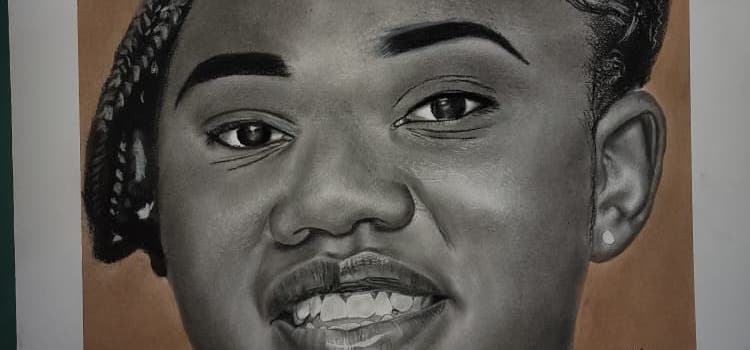
Then love called. In 2019, I poured a whole month into an A3 portrait — not just lines and shading, but every feeling I had for someone. In 2022 I did it again, this time as a birthday gift. That’s when I realized: this isn’t just drawing. This is how I speak when words fail me. From there, I began sharing it with the world. Commissions came. People saw themselves in my work. And what started as doodles became a voice.
LS: How has this artistic style helped you in life in general? Explain your creative processes and how you feel after finishing a piece.
MN: Art is where I pour what I can’t say out loud. It’s therapy, it’s prayer, it’s conversation with myself. When I monetized my work and started sharing online, something shifted. People didn’t just buy art — they connected to it. It became more than a side hustle. It became a bridge between my heart and the world.
My process? It always starts with a picture in my head. A feeling, a face, a story.
Once the pencil touches paper, the ideas multiply. The sketch breathes, and the portrait starts telling me who it wants to be. When I’m done, there’s peace. A quiet kind of pride. But if I look at it tomorrow, I’ll see 10 new things I could do better. That’s why I love it — art is never finished. It’s a continuous adventure. Every piece teaches me something new about myself.
LS: How do you balance your family duties and responsibilities with your passion and artistry?
MN: Balance, for me, is like shading — it’s never perfect, but you keep layering until it feels right.
By day I’m an aircraft engineer. By night I’m a husband, a father, and an artist. My wife Tashia and our 4-month-old son are my anchor. They remind me why I work, and why I create. Art doesn’t compete with family. It flows from it. The love I have for them is the same love I pour onto the paper. When I’m with them, I’m fully there. When I’m drawing, I carry them with me.
LS: Are you self-taught, or did you go through some mentorship process for you to master your craft?
MN: I’m self-taught. My teachers were mistakes, burnt sketchbooks, and late nights trying again.
Life itself mentored me — through a mother who wanted me to focus, through love that made me draw for a whole month, through the quiet voice that said: “don’t stop.” Every portrait taught me something new. So I’d say my classroom was patience, and my degree was persistence.
LS: Which artists do you draw inspiration from?
MN: Mostly, I draw inspiration from nature. From the way light falls on a face. From the lines in my mother’s hands. From the softness in my son’s eyes. Nature doesn’t rush, but everything becomes beautiful. That’s how I try to draw too. I also learned a lot from watching real people — actors, strangers, the people I love. Their expressions teach me more than any textbook ever could.
LS: When you were younger, what did you want to become when you were older?
MN: When I was younger, I just wanted to create. I didn’t have the words for it then. I only knew that when I drew, the world made sense. I dreamed of being someone who could turn feelings into something you could see and touch.
LS: How far are you from your dream job?
MN: I’m already living it. Becoming an aircraft engineer was my dream job — precision, problem-solving, building things that fly. And art became the dream I didn’t know I needed. So now I get to live in both worlds: one that keeps planes in the sky, and one that keeps hearts on paper. I’m not far from my dream. I’m standing in the middle of it.
LS: What advice do you have for aspiring artists?
MN: Don’t wait for permission. Don’t wait for perfect tools. Start with what you have, even if it’s just a pencil and a page. Let your art be honest. Pour your joy, your grief, your love into it. People don’t just buy art — they buy truth. And remember: every “no” and every burnt sketchbook is just part of the process. Keep going.