Botswana Urges Youth and Communities to Seize Mining Opportunities and Catalyse Economic Diversification

By Times Reporter: Botswana’s government has called upon its youth, small-scale miners, and local communities to actively participate in the country’s evolving mining sector, underscoring a national imperative to transcend reliance on diamond exports and pursue a more diversified, inclusive, and technologically driven economy.
Speaking on behalf of President Duma Boko during the opening of the Botswana Mining Show on 21 October 2025 in Gaborone, Minister for State President Moeti Mohwasa emphasised a forward-looking vision of economic autonomy grounded in the strategic transformation of the mining sector. He urged attendees to reimagine Botswana not as a mere source of raw materials, but as a value-added economy capable of regional leadership in mineral exploration, beneficiation, and sustainable industrial growth.
Minister Noah Salakae, responsible for Transport and Infrastructure, echoed this message, stating that Botswana’s mineral wealth extends significantly beyond diamonds, encompassing under-exploited resources such as copper, nickel, gold, silver, manganese, coal, uranium, iron ore, and rare earth elements. These critical minerals—essential for global energy transitions and technological advancement—were described not solely as trade commodities but as “keys to industrial transformation.”
This marks a deliberate policy shift from past mineral export dependency, towards a diversified industrial framework that encourages local beneficiation and technological innovation. Botswana is now positioning itself to become a regional hub for responsible mining and value chain development, rather than remaining a node in global extractive economies dominated by external interests.
Highlighting the strategic importance of local agency, both ministers called for increased partnerships between citizens, financial institutions, and technical stakeholders to unlock domestic capacities in exploration and mining. The government stressed the need for inclusive financial systems that support licence-holders to operationalise their claims, and encouraged creative funding solutions, joint ventures, and knowledge-sharing between banks, state bodies, and private entities.
This initiative aligns with wider continental efforts under the Africa Mining Vision (AMV), which advocates for mineral resource governance to be transparent, equitable, and supportive of broad-based development. Botswana’s attempt to reframe the extractive industry as a catalyst for human development, and not simply GDP growth, contributes to a growing corpus of African economic policy that resists the historical marginalisation of communities in resource-rich regions.
Botswana has historically depended on diamonds, which account for approximately 80% of total export revenue and nearly one-third of GDP. However, concerns over fluctuating global markets and long-term sustainability have prompted a recalibration of national economic priorities. The current strategy reflects a broader trend seen across several African economies, where mineral wealth is being leveraged to support infrastructure development, skills training, and technology integration, rather than fuelling capital flight or reinforcing commodity dependency.
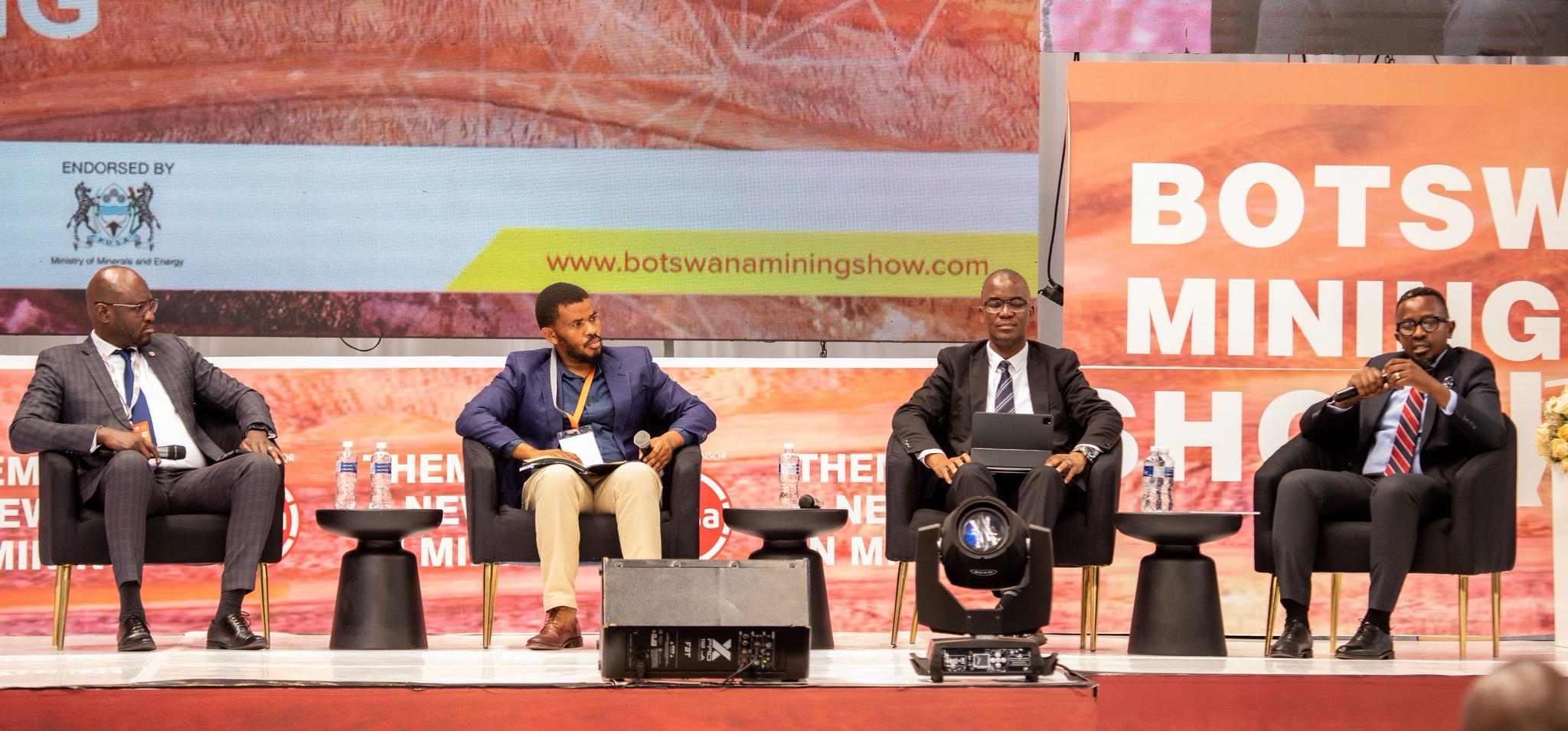
The Botswana Mining Show, expected to host over 10,000 participants, including policymakers, financiers, entrepreneurs, and students, serves as a platform not just for industry promotion but for dialogue on transformative resource governance. As young people across Africa face record-high unemployment rates, Botswana’s focus on youth engagement in mining offers a model for how mineral economies can be structured to foster inclusion, innovation, and long-term resilience.
This recalibrated vision moves beyond inherited colonial structures of extractivism, urging instead a human-centric, sovereign approach to natural resource management—one that seeks to redefine the role of African societies in the global economic order.