Beyond the Trophy: African Australian Women Building Businesses and Communities

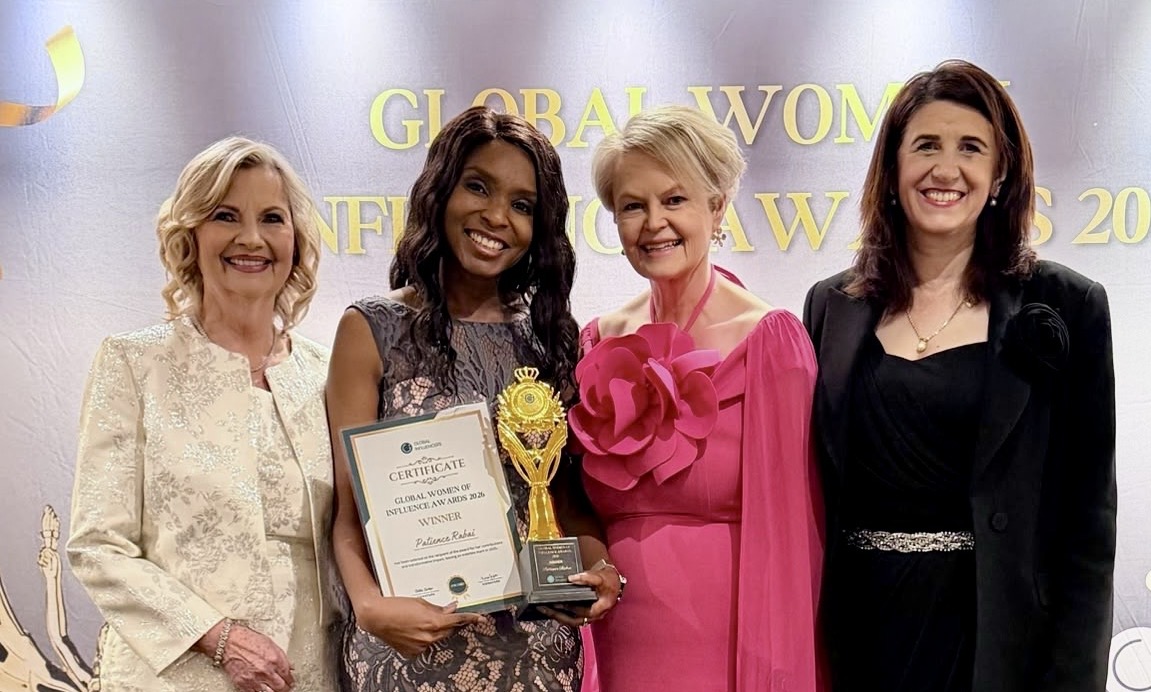
By Fungai Manuel | Melbourne, 11 October 2026: As African Australian women receive international recognition for their leadership, their contributions to entrepreneurship, community development and social inclusion reveal a story far more significant than the awards themselves.
The Global Women of Influence Awards 2026, with ceremonies scheduled across Singapore, Dubai and Melbourne, have brought attention to women contributing to business, leadership and community development.
Among those recognised at the Melbourne ceremony on 10 October was African Australian entrepreneur and community leader Patience Rabai, shown holding a winner’s certificate and trophy.
For Rabai, the recognition adds to an established record of business and community leadership. Yet the greater significance of her story lies beyond the certificate and trophy.
Through entrepreneurship, financial education and community initiatives, she is helping African Australian women establish businesses, strengthen professional networks and pursue economic independence.
Her story belongs to a wider pattern of African Australian women building enterprises, services and community institutions that contribute to Australia’s present and hold promise for its future.
Building Opportunities Where Barriers Exist
One of Rabai’s most significant contributions is the establishment of Afro Aussie Women in Business (AAWIB), an organisation supporting African Australian women who operate businesses or aspire to become entrepreneurs.
The initiative emerged from a gap Rabai encountered personally.
While attending business networking events, workshops and professional gatherings, Rabai noticed that African Australian women were frequently absent from spaces where business relationships and opportunities were being developed.
Rather than waiting for established institutions to address the imbalance, she created a platform through which women could connect, learn and support one another.
As she explained in a Business Victoria feature published in February 2025:
“If we waited to be invited, we’d always be underrepresented.”
That observation became a foundation for AAWIB’s work.
Through mentoring, financial literacy initiatives and networking programmes, the organisation seeks to equip women with the practical knowledge and professional relationships needed to establish and develop sustainable enterprises.
The effects extend beyond individual businesses.
When women acquire the skills and resources to become economically independent, the potential benefits reach their families, employees, customers and communities.
A Contribution Recognised by the Victorian Government
In January 2025, the Victorian Government announced that AAWIB had received a $20,000 grant for its Accelerate Your Net Worth project.
The initiative was designed to support African Australian business owners across Melbourne through financial literacy workshops, investment strategy seminars, networking and personalised mentoring.
Minister for Small Business and Employment Natalie Suleyman acknowledged the organisation’s work in supporting multicultural female business owners.
The announcement placed AAWIB’s activities within a wider economic context.
According to the Victorian Government’s announcement of 14 January 2025, Victoria was home to more than 718,000 small businesses, over one-third of which were migrant-owned.
These figures underline the scale of migrant entrepreneurship in Victoria.
Organisations such as AAWIB can help strengthen that participation by addressing barriers involving financial knowledge, professional connections and access to business development support.
The longer-term measure of their effectiveness, however, will be the businesses sustained, employment created and economic independence strengthened through these initiatives.
Leadership Beyond Entrepreneurship
Rabai’s work extends across several areas of community and professional development.
She founded First Class Financials Consultants, a Melbourne-based business consulting and financial education initiative established in 2018.
Through business coaching, financial literacy workshops and consulting services, the organisation supports individuals and entrepreneurs seeking to improve their financial capability and business planning.
Rabai also works as Business Services Manager at POWA Care Connections, a disability support provider in Victoria.
Her role connects her professional work with disability support, social inclusion and the provision of services to individuals and families.
Beyond these organisations, she has developed initiatives such as Sunday Supper BizTalk Live, bringing entrepreneurs and aspiring business owners together through informal discussions, mentoring and professional networking.
In 2025, Rabai received the Community Champion of the Year award at the Africa Day Celebrations Awards in South Australia.
Taken together, these activities reflect an approach to leadership in which business development and community service reinforce one another.
African Australian Women Creating Change Across Different Sectors
Rabai is not alone.
Other African-born women based in Australia have also featured in the Global Women of Influence Awards’ 2026 recognition programme.
Tino Ruzive, a Zimbabwean Australian social worker based in Western Australia, founded RedefiningSelf, an initiative supporting women through difficult personal transitions.
Her work includes coaching and workshops addressing confidence, emotional recovery and personal development, particularly for women navigating experiences such as toxic relationships, identity loss and emotional trauma.
Ruzive also received the Zimbabwe Achievers Award for Community Champion of the Year in 2024, according to her published nomination profile.
Her activities highlight an important aspect of community development: helping individuals rebuild their confidence, independence and ability to participate meaningfully in society.
Alexis Ngunyi, a Melbourne-based Kenyan-born entrepreneur, is another 2026 nominee.
Her work focuses on women’s entrepreneurship, leadership and collective economic empowerment.
Before establishing The Matriverse, she founded Her Queendom, a women’s community focused on personal, professional and financial growth.
According to the awards organiser’s published profile, Her Queendom brought together approximately 150 women, illustrating her interest in building collaborative networks.
The Matriverse represents her longer-term ambition to develop a women-led entrepreneurial ecosystem.
That vision is still developing, but it raises important questions about how collective networks can support entrepreneurship, economic independence and leadership.
Janet Mhindurwa, a Zimbabwean Australian community leader based in Queensland, has also featured in the programme’s 2026 Hall of Fame recognition.
As Managing Director of Azambezi Events Co, Mhindurwa has worked on multicultural events, community engagement and initiatives intended to strengthen women’s representation.
Her published nomination profile also highlights her involvement in community health advocacy, financial safety workshops and initiatives addressing barriers to employment and access to services.
Although these women’s professional activities differ, their work shares an important characteristic: an emphasis on developing people, strengthening connections and creating pathways for others.
Their stories matter not simply because of the recognition they have received, but because they demonstrate different forms of contribution to Australian society.
The Economic and Social Value of Inclusion
Australia’s multicultural identity is often discussed through migration, cultural diversity and social cohesion.
Equally important is the contribution migrant communities make to the country’s economic life.
African Australians participate as business founders, employers, professionals, service providers and community leaders.
Their businesses and organisations form part of the wider Australian economy, providing services, circulating income, supporting communities and, where enterprises grow, creating employment.
Yet entrepreneurial ambition alone does not guarantee business success.
Access to finance, professional mentoring, training and established business networks can influence whether an enterprise survives and expands.
Community-led organisations can help bridge some of these gaps, particularly for individuals who may otherwise struggle to access conventional business networks.
Their effectiveness should ultimately be assessed through tangible outcomes rather than recognition alone.
Looking Ahead: The Next Generation
Perhaps the most significant aspect of these women’s activities is what they could mean for Australia’s future.
AAWIB has outlined ambitions to expand its reach nationally and internationally while strengthening opportunities for women entrepreneurs.
Its published programmes include a Youth Entrepreneurship initiative for young women aged 16 to 25, offering business development, mentoring, networking and practical learning opportunities.
Such initiatives could provide younger Australians with access to knowledge and professional relationships that earlier generations found difficult to obtain.
The potential long-term benefits are considerable.
More sustainable businesses could contribute to employment, stronger local economies and greater financial independence.
Young Australians exposed to successful entrepreneurs within their communities may also gain access to role models, practical guidance and professional opportunities.
There is further potential for partnerships involving governments, financial institutions, educational organisations and the private sector.
Realising that potential will require more than recognition.
It will depend on sustained investment, responsible leadership, accessible opportunities and measurable results.
Recognition Is Only the Beginning
The Global Women of Influence Awards provide an occasion to acknowledge women whose work might otherwise receive limited public attention.
However, the deeper story extends beyond a single ceremony.
It concerns African Australian women who are establishing businesses, supporting vulnerable individuals, strengthening community institutions and developing opportunities for others.
Patience Rabai’s recognition in Melbourne offers a timely reminder that African Australians are not merely participants in Australia’s multicultural story. They are also helping shape its economic and social future.
Their achievements deserve documentation, their contributions careful examination and their ambitions serious consideration.
For future generations, the enduring measure of their leadership will not be the number of awards received, but the opportunities created, institutions strengthened and lives improved.
The recognition may belong to individuals. The possibilities extend far beyond them.