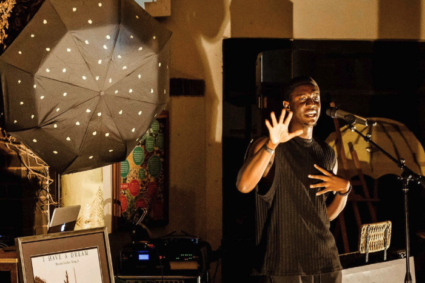
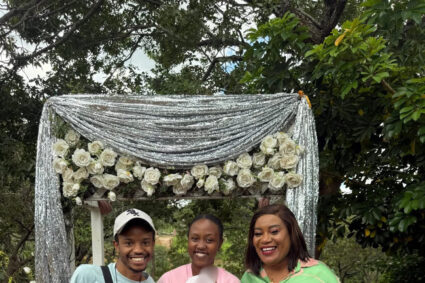
The Healing Power of Shared Stories: Exclusive with Reliance Hamandishe


September is Suicide Prevention month, a month to reduce the suicide statistics. It is the responsibility of all to give special attention to the people in respective groups.
Many people face numerous circumstances that affect their day-to-day livelihood. Mental health matters that have not been dealt with resurface often to worsening the individual’s well-being. To those who are yet to encounter it, mental health issues remain a fictious being that doesn’t exist. However, many have gone through various forms of mental health illness but are not aware of the name by which it is identified.
Scrolling through timelines on Facebook, I came across a post, a long post actually, about mental health matters. In the post he titled Memories with Sharp Edges, the author shared personal convictions, his healing process, and progress. I had a light bulb moment and knew his message would be most valuable shared on a broader scale.
Enjoy the exclusive interview with Lingiwe Gumbo (LG) and Reliance Hamandishe (RH) pertaining to the post and all things mental health which are worth taking note of.
LG: May you please give a summary of the particular post that got my attention.
RH: The post you highlighted explores the aftermath of escaping a traumatic situation. It’s not about the event itself, but the internal wreckage left behind, the loss of self, the hyper-vigilance, the fractured relationships, and the struggle to recognize oneself. It describes the profound loneliness of carrying “memories with sharp edges” and the ongoing search for safety when the instinct to run is still deeply ingrained. As you can see it ends not with a solution, but with a raw and honest admission of still being lost and searching, the war is never won in a single battle.
LG: Please introduce yourself to the audience.
RN: My name is Reliance Hamandishe. I am a reader more than I am a writer and someone who uses words to process and give voice to complex human experiences, particularly those related to trauma, survival, and the long, non-linear path toward healing. I believe in the power of sharing our stories to connect, validate, and remind others that they are not alone in their struggles.
LG: Please explain the purpose of the posts you share on social media and the feedback so far.
RH: The purpose of my posts is a two-fold. First, it is a personal catharsis, a way to give shape and form to the internal chaos that often follows pain. Writing it down takes it out of the shadows and makes it something I can begin to understand.
Secondly and more importantly, I share them with the hope of creating a sense of solidarity. I want anyone who reads my words and sees a fragment of their own experience reflected to feel less isolated. The feedback so far has been overwhelmingly humbling. Many people have reached out to say, “This is exactly how I feel but could never articulate.” It has sparked quiet, private conversations about shared pain and the small acts of courage it takes to simply keep going. It confirms that speaking our truth, however hard, is a necessary and healing act for both the speaker and the listener.
LG: According to your understanding and experience, what are the most prominent causes of suicide? How best can we curb this in society?
RH: Based on my understanding, the most prominent cause of suicide is not a single event, but, UNBEARABLE PSYCHOLOGICAL PAIN, a feeling of being trapped, hopeless, and utterly alone with a suffering that feels endless. This pain often stems from:
*Untreated Mental Illness: Depression, PTSD, anxiety, and other disorders that distort thinking and overwhelm a person’s coping mechanisms.
*Overwhelming Life Circumstances: Chronic pain, financial ruin, profound loss, or sustained trauma that erodes a person’s resilience.
*Isolation and Loneliness: A deep, pervasive belief that no one understands, cares, or would be better off without them.
How best to curb it in society:
1. Destigmatize Mental Health: We must talk about mental health as openly as we talk about physical health. This encourages people to seek help early.
2. Improve Access to Care: Make affordable, quality mental healthcare available to everyone, removing financial and logistical barriers.
3. Foster Connected Communities: Actively check on each other. Create environments, in workplaces, schools, and families where people feel safe to express vulnerability without judgment.
4. Educate on Warning Signs: Widespread public education on the signs of suicidal ideation (e.g., talking about being a burden, giving away possessions, social withdrawal) can empower everyone to be a first responder.
LG: I’m made to believe, through the little research I have had, that men are more prone to suicides and crimes of passion. Is this accurate? Why could it be the reason? How best can we rescue them?RH: Yes, the statistics are tragically clear that men die by suicide at a significantly higher rate than women. This is often called the “silent crisis” of men’s mental health.
Why this case is largely cultural:
*Harmful Social Norms: From a young age, men are often socialized to be stoic, self-reliant, and to suppress emotions like sadness, fear, and vulnerability. “Men don’t cry.” This makes expressing emotional pain feel like a failure of masculinity.
*Barriers to Help-Seeking: Admitting they are struggling and seeking therapy can be perceived as weakness, contradicting the societal expectation to “man up” and handle problems alone.
*Different Manifestations: While women are diagnosed with depression more often, men may internalize their pain, leading to isolation, substance abuse, or reckless behavior instead of openly expressing sadness, which can make their suffering less visible until it’s at a crisis point.
How best to rescue them:
*Redefine Strength: Actively promote a new narrative that (strength is in vulnerability), self-awareness, and asking for help.
*Male-Specific Outreach: Support and promote mental health initiatives and spaces designed for and by men, making help-seeking feel more accessible and less stigmatizing within male culture.
*Check-In Authentically: Ask the men in your life direct, caring questions beyond “How are you?” Try: “How are you *really* doing?” or “I’ve got your back, no matter what.” Create a safe, non-judgmental space for them to be honest.
*Promote Models of Healthy Masculinity: Celebrate and amplify stories of men who prioritize their mental well-being, go to therapy, and are emotionally available.
LG: Please share more on this or other train of thought which you feel important to note.
RH: An important train of thought this brings up is the concept of post-traumatic growth. It’s the idea that while trauma shatters us, it can also force a rebuilding. In that rebuilding, people can discover a deeper sense of purpose, a greater appreciation for life, and more profound connections with others. It’s not about erasing the pain or being grateful for the trauma, but about acknowledging that the struggle to put the pieces back together can sometimes create a new, stronger mosaic. The goal isn’t to return to who you were before, but to integrate the experience and find a way to carry it forward without letting it define you entirely.
LG: Have you published your work elsewhere besides social media platforms? Any future plans?
RH: I have primarily shared my work on social media platforms as a way to connect directly with a community of readers from as early as 2014. These pieces are part of a larger collection of writing I am working on. Future plans absolutely include compiling this work into a published book—a project that I hope will serve as a lifeline and a mirror for those navigating similar paths. And I’m also working on my biography which will contain part of my own story and how I overcame it.
LG: How can you be reached in the event of a speaking or teaching engagement or simply networking?
RH: Thank you for your interest. For speaking engagements, teaching opportunities, or to connect regarding my writing, please feel free to reach out to me via direct message on Facebook and I can then provide a more direct email address and phone numbers for further discussion.
With such detailed information, every individual is equipped to-be the remedies in reducing statistics of suicide. Suicide Prevention month can be another calendar month unless we make efforts to minimize and completely curb the effects of mental health issues. Throughout life as we normalize checking up on each other, the fight will be half won.