Should Zimbabwe bring back ZJC? Perhaps there is still a lesson to learn

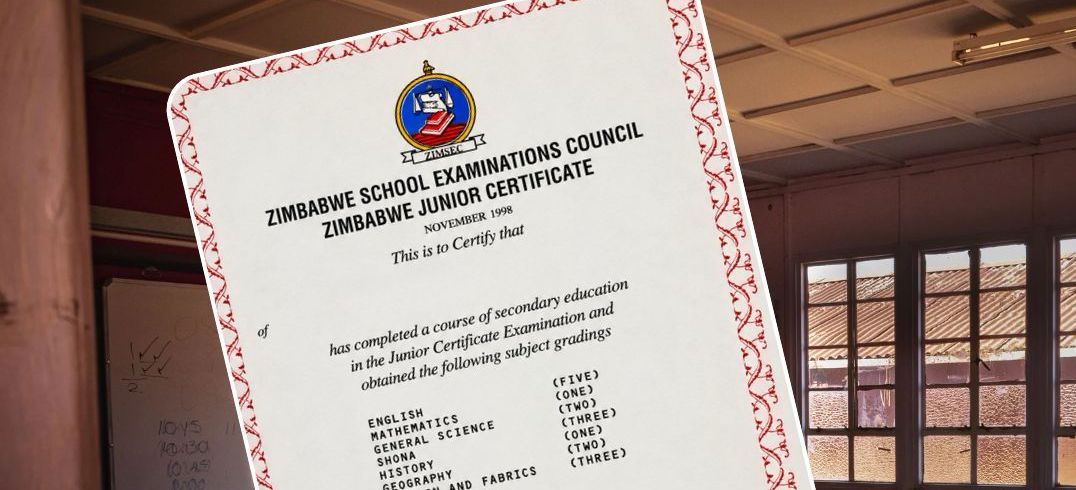
For some Zimbabweans, the words Zimbabwe Junior Certificate (ZJC) bring back memories of their ‘Form Two’ days, when completing junior secondary school came with another important examination. Students studied, prepared for their examinations and waited to see how they had performed before moving on to the next important high schooling stage.
ZJC was discontinued in 1999, but more than two decades later, it is worth asking whether removing it was the best decision or whether Zimbabwe lost an opportunity to assess and guide learners at an important stage of their education.
The debate is not necessarily about bringing back an old examination simply because previous generations sat for it. It is about understanding what role it played and whether today’s learners could benefit from something similar.
At the end of Form Two, students were still relatively young and had time to identify their strengths, improve in subjects they struggled with and think about what they wanted to pursue later in life. ZJC provided an opportunity to assess their progress before they entered Forms Three and Four, where the pressure of preparing for O-Level examinations became more pronounced.
It also gave some learners a reason to take their first years of secondary education seriously. Rather than viewing Form One and Form Two as years they simply had to get through, they had an examination to work towards.
However did the certificate really change anyone’s career prospects?
That is where its value becomes less straightforward. Unlike O-Level, ZJC was not widely recognised as a qualification that could open employment opportunities. A person holding the certificate alone was unlikely to find it easy to secure a job or progress into certain forms of further education.
In that sense, it could be argued that ZJC was more useful as an educational checkpoint than a qualification that could independently take someone somewhere.
Still, that does not mean it had no value.
Sometimes, identifying a learner’s difficulties early enough can make a difference. A student who is struggling in certain subjects at Form Two may need additional attention before reaching O-Level. Equally, a learner with an interest in practical subjects could benefit from guidance before making important decisions about their future.
Perhaps this is where Zimbabwe’s education system could borrow an idea from the old ZJC structure.
Not every child who enters secondary school will eventually become a doctor, lawyer, teacher or engineer. Some will discover an interest in agriculture, construction, fashion, mechanics, technology or business.
These abilities deserve attention too.
The challenge is that academic performance is often treated as the main measure of a young person’s potential. A learner who struggles in the classroom can easily begin to believe that they have little to offer, yet they may have practical talents that have not been properly developed.
Would an improved junior secondary assessment help schools identify those abilities earlier? It is a question worth considering.