AU Welcomes Historic DRC–Rwanda Peace Agreement Signed in Washington

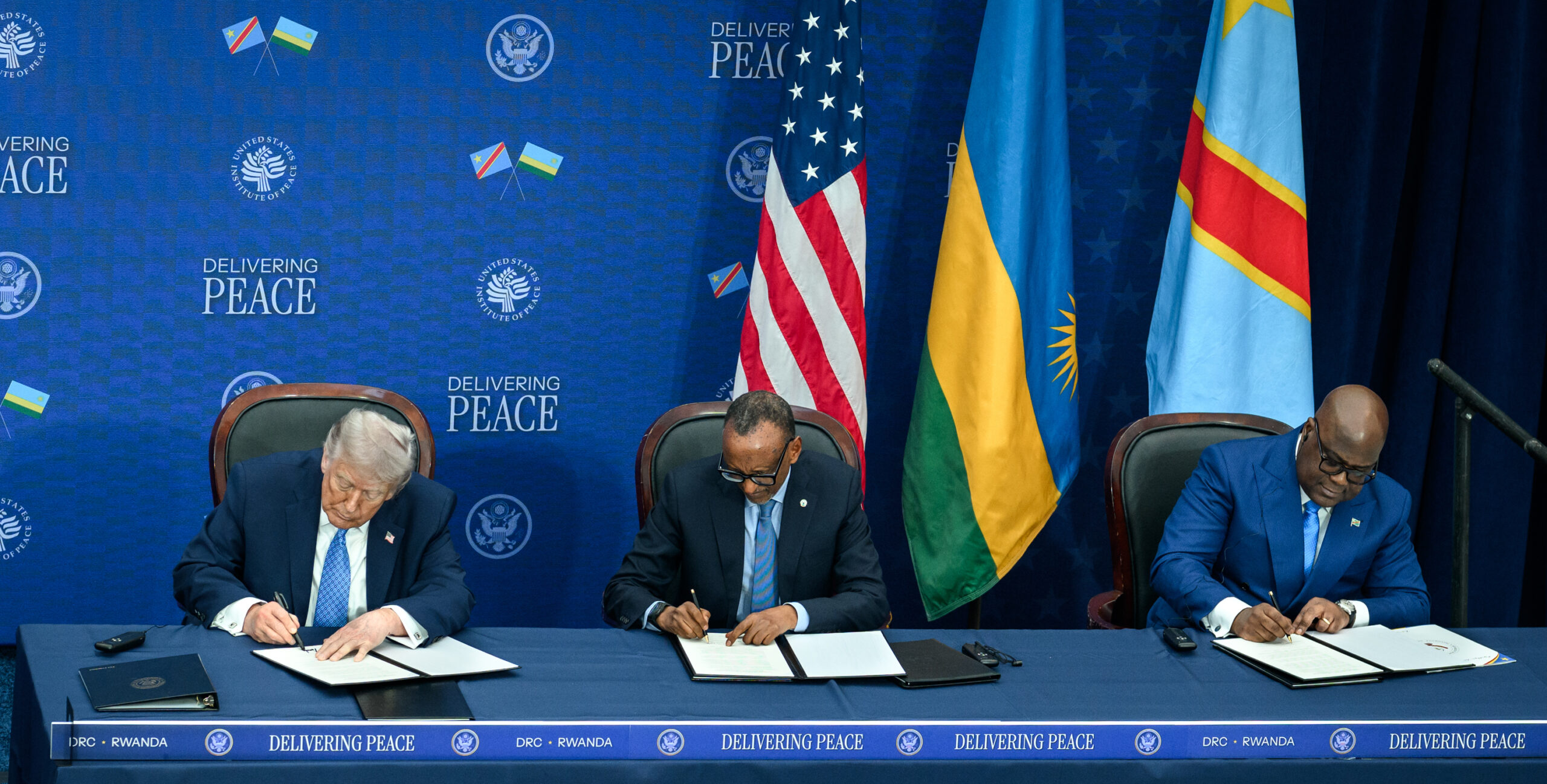
The African Union (AU) has welcomed the peace agreement signed on Wednesday between President Paul Kagame of Rwanda and President Félix Tshisekedi of the Democratic Republic of Congo, calling it a major breakthrough for stability in the Great Lakes region.
AU Commission Chairperson H.E. Mahmoud Ali Youssouf, who witnessed the signing in Washington, described the accord as “a significant milestone in the pursuit of lasting peace, security, and stability.”
Youssouf praised the constructive international support that contributed to the breakthrough, including the engagement of the United States and the personal involvement of President Donald Trump, whose efforts he said helped create favourable conditions for the deal. He also commended the State of Qatar for its diplomatic backing and readiness to support African-led peace efforts.
“This conflict has lasted for thirty years. We have seen countless mediation efforts, but none succeeded in resolving the underlying issues. President Trump introduced a new and effective dynamism, that created the space for breakthroughs. His approach is even-handed, never taking sides. More importantly, President Trump’s approach is pragmatic…” President Kagame at the signing Ceremony of the Washington Accord for Peace and Prosperity.
The AU chief highlighted the leadership of African heads of state who steered the process, singling out President Faure Gnassingbé of Togo for his ongoing facilitation and President João Lourenço of Angola for his earlier mediation work. He also acknowledged the complementary roles played by leaders of the East African Community (EAC) and Southern African Development Community (SADC).
Youssouf urged both countries to implement the agreement “in letter and spirit,” emphasising that durable peace will depend on commitment from all sides.
“The African Union Commission stands ready to accompany the parties and regional mechanisms in advancing this vital process for the benefit of the peoples of the DRC, Rwanda, and the wider region,” he said.
The agreement marks one of the most significant diplomatic developments in the region in recent years, raising hopes for a lasting end to tensions that have destabilised communities along the DRC–Rwanda border.