Harare’s Wetland Crisis: How Much Land Does a Man Need?

In 1886, celebrated Russian author Leo Tolstoy published what would become one of the greatest moralistic short stories in the world.
With a rhetorical yet enticing title; “How Much Land Does a Man Need?”, this masterpiece ends with a very humbling and disarming moral about greed.
It tells the story of Pahom, a peasant who becomes obsessed with amassing more land- way more than he actually needs.
Square by square, his estate grows, and he doesn’t stop hunting and acquiring more land. He becomes insatiable. The more land he gets, the more land he wants.
The story arc peaks with Pahom hearing about the Bashkirs, a semi-nomadic group living in the Russian steppes.
The Bashkirs owns vast swathes of fertile land, which they are willing to sell for a song because they hold a very simple philosophy on land ownership which is not influenced by greed and avarice.
The Bashkir elders tell Pahom that he can have as much land as he can walk around in one day, for a thousand rubles. Only one condition: he must return to the starting point before the sun sets, or he loses both money and land.
For land-obssesed Pahom, there could be no sweeter deal than this in the world.
The day of the walk comes; Pahom hits the ground running- literally.
His greedy paces increasing by each heartbeat, he cuts across the terrain, meandering through vegetation, jumping over obstacles. He runs and runs. Racing against the patient sun, racing against his own insecurities. Foot by foot, square by square, acre by acre, his estate grows.
The moral of the story is in the climax, which races fast towards a tragic ending; Pahom keeps on running, pushing his heart and legs to the limits- until he suddenly drops dead.
He loses the land, the money, and more importantly his life. His servant buries him in a grave measuring only six feet from his head to his toes. Six feet. That’s all the land a man needs.
One hundred and forty years later, the universal moral of the story is still very relevant to modern society.
In the Zimbabwean context, a better allegory of the folktale will be the ongoing parceling of state land in urban areas, driven by the necessity of urban expansion and outright greed of some individuals.
In the capital Harare, where the demand for residential land keeps rising, unscrupulous developers called “land barons” often invade specially reserved land like wetlands and vleis, parceling them into housing stands for sale to home seekers.
Usually the land barons are not your average “peasant” in the street, they are rather politically connected individuals or powerful syndicates.
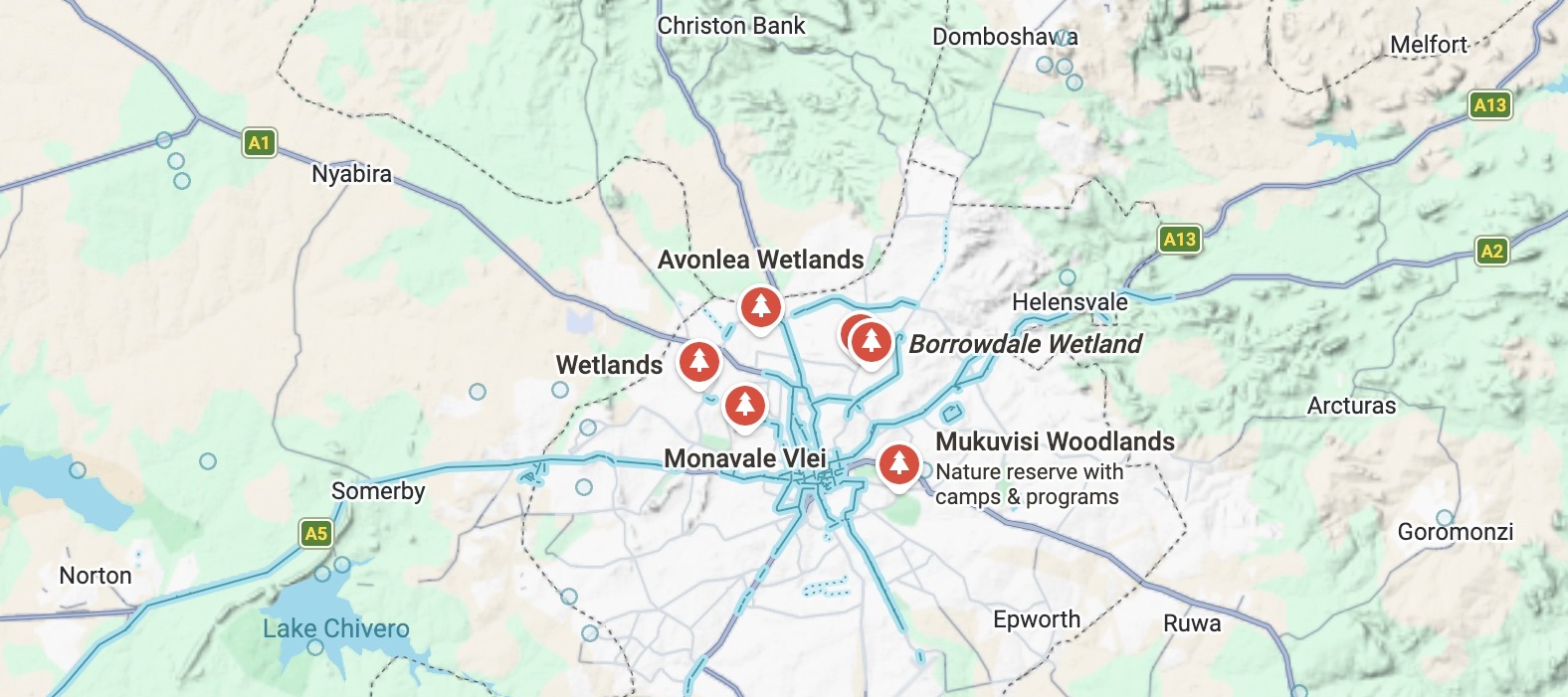
A case recent in memory is the Monavale vlei saga, where a group of legislators descended on the ecologically important piece of land and started developing it for residential stands. Apparently, the claim was that the MPs had been offered residential land across the suburbs of Harare as part of a government incentive.
This development angered local residents and environmental activists for a good reason. Monavale is not a mere wetland, it’s Ramsar- recognized and protected by an international convention. Its existence within Harare is not by accident.
Harare is in Harare because of Monavale.It is the capital’s underground life artery, the reason why boreholes in Western Harare have water.
The irony of this unfortunate incident is brutal .Members of Parliament, the very people who have the mandate of guardianship over laws and regulations that preserve order and sustain society are found leading the charge to break them.
All for selfish reasons.
Zimbabwean legislators, most of them- are politically connected elites who have more wealth than they actually need. Some have been career-MPs for decades, accumulating pecks with each tenure. They are neither hungry nor needy.They just suffer from the Pahom-syndrome of wanting to acquire more, albeit at the expense of future generations.
Fortunately, in the Monavale case, the government quickly intervened and stopped Pahom in his tracks, thanks to the lobbying efforts by the community and environmental watchdogs.
The Permanent Secretary for Presidential Affairs and Devolution in Harare Province, Tafadzwa Muguti, visited the site and addressed concerned residents and conservationists. All development on the site was to be stopped forthwith and the government wasn’t going to allow anyone to break urban and environmental laws. It was a win for the dedicated watchdog groups that have been fighting jealously for years to guard and preserve this biologically diverse piece of land, albeit temporarily.
Barely two weeks after the Permanent Secretary’s intervention and assurance, graders rolled back into Monavale wetland again, accompanied by a group of MPs reported to be numbering nearly two dozen.
They were ready and eager to resume the ground clearance process, tearing down the precious piece of earth, replacing the order of nature with hard concrete, steel and glass.
The ever-alert environmental activists swiftly responded, boldly stood in front of the graders to prevent them from working.
The stand-off, again, led to the government intervening. This time, it was the Minister of Local Government, Daniel Garwe, ordering the MPs off the wetland.
It was a win for the environment and another defeat for the greedy Pahoms, who had no option but to retreat.
One of the MPs leading the invaders later on came out with egg on his face, conceding defeat.
“I had a meeting with the Speaker of Parliament and also with the minister of local government and we were advised to stop any developments on that site…I’m sure there’s going to be alternative land that is going to be allocated to these MPs…we have been given the facts, we are now well aware that this land is a no-go area”, he told the press.
One can only but hope that the alternative piece of land the MPs get allocated next is not a wetland again.
Monavale vlei is temporarily safe from the greedy Pahoms of Harare, thanks to collective stakeholder support and government reassurance.
It remains to be seen whether the authorities will maintain their stance on upholding the wetland’s status or they will be swayed into complicity as is always the case.
The city continues to lose vital ecological spaces to the greed of land barons under the guise of urban expansion. In some cases, authorities greenlighted large scale developments on vital wetlands, in sheer disregard to their own by-laws and regulations.
With 50% of Harare’s wetland share said to be already lost, the city’s ecological balance and future sustainability is under threat. But it’s not too late. With clear political intention and will, the little that’s left can be saved, lest we leave for the next generation a legacy of hard concrete, dust and doom.