MOVIE REVIEW: ‘Don’t Let’s Go To The Dogs Tonight’, An Almost Beautiful Film

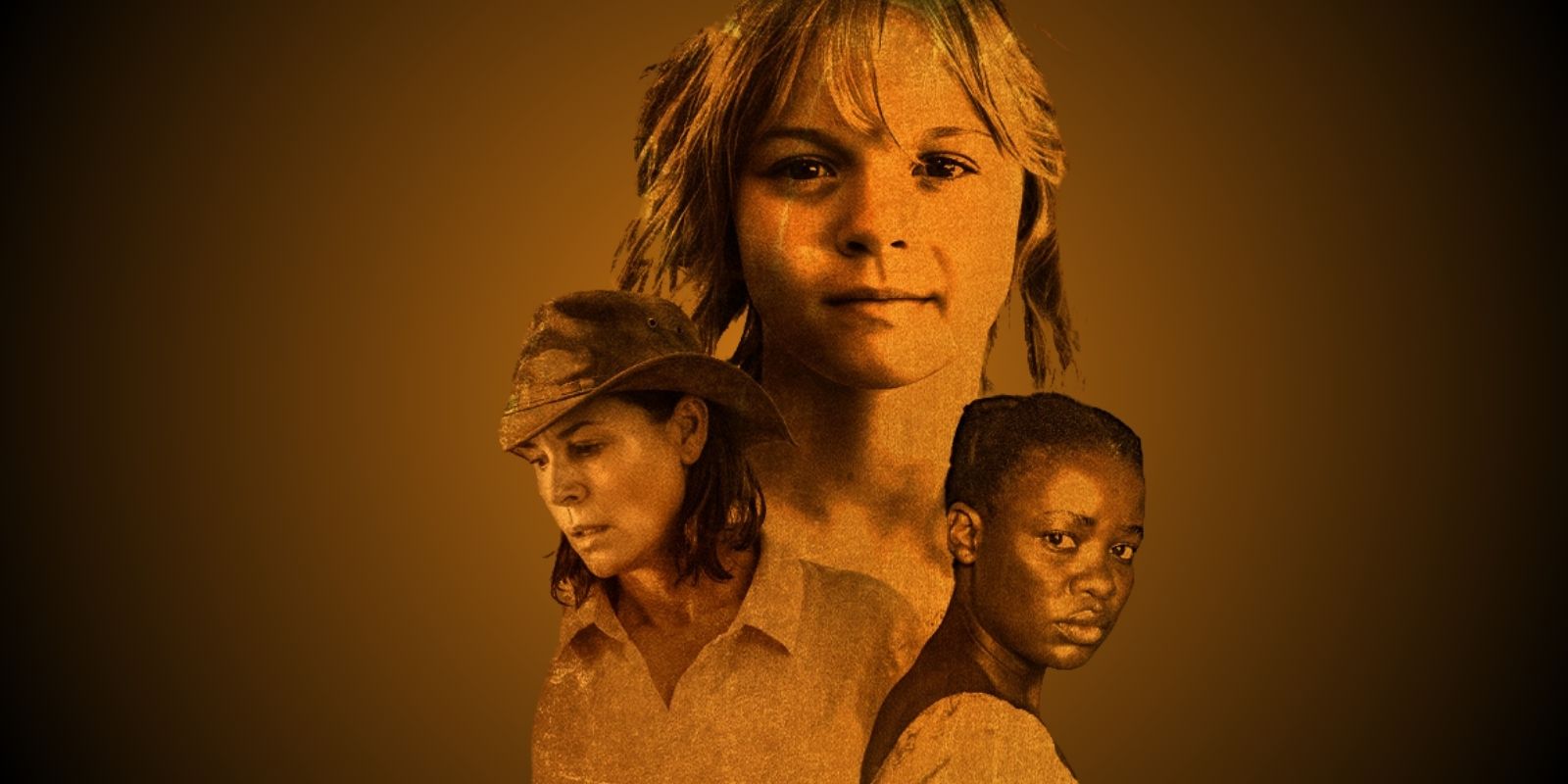
After nearly a year playing hard to get, Don’t Let’s Go To The Dogs Tonight is finally available for mass consumption. Directed by Embeth Davidtz, the 2025 movie stars Lexi Venter, Embeth Davidtz, Zikhona Bali.
And like any long- awaited product, it was descended upon with gusto and expectation the moment it hit streaming platforms.
For Zimbabwean viewers and the nostalgic community of ex-Rhodesians scattered all over the globe, the stakes were high. Perhaps so high, that the cake crumbled in its platter before reaching the table.
More about what crumbled later, let’s dissect the cake first.
Based on the biographical childhood memoirs of Alexander Fuller with the same title, Don’t Let’s Go To The Dogs Tonight is a full-length feature directed by Embeth Davidtz.
A professional actress with a decent Hollywood resume, this is her directing debut. Not disappointing.
It is the story of Rhodesia in its twilight – told through the supposedly naive eyes of young Bobo, an eight-year-old White Rhodesian girl living on a remote farm with her hopeless family.
Portrayed by unheralded child actor Lexi Venter, Bobo’s character is the voice, pulse, and punctuation that drives the narrative. And Venter’s performance, raw and unadorned, is just gold.
Off the hinges, carefree, haunting, disarming, Bobo is emotionally mature for the child she is.
You are made to love and hate her in one breath. Her dark mystique effortlessly probes adult conscience, leaving it bare and vulnerable. She’s the dark sheep of the family that walks the unconventional, asks the difficult questions and does not try to be perfect.
The film itself doesn’t try to be perfect either. It appears director Embeth Davidtz, who produced and starred as Bobo’s mother, was aiming for chaotic complexity- which she achieved.
Beneath the crispiness of the cinematography, which impressed the audience at its Durban International Film Festival (DIFF) 2025 premiere, the film carves into a layered strata of hard talk: colonialism, heritage, land question, and the human face of war.
The emotive and controversial topic of land forms the principal conversation of the narrative. Through the eyes of a child, we get to look through the racial curtain of the times to see what Rhodesia was and what it ought to become. We get an unvarnished view of how proletariat families saw and understood the other side, and what formed the basis of the grievance that ultimately pushed them out of Zimbabwe post-Independence. Through the eyes of a child, we get to discover how privilege and underprivilege lived on the same acre, separated only by language and imaginary boundaries.
And this makes Dogs Tonight a very important film.
The book upon which the film is based is a much-celebrated piece of literature with “best seller” laurels; it remains to be seen whether the screen adaptation would rise to match the same status.
A valid storyline, powerful performances and rich cinematography, this might be a beautiful cake. But not perfectly baked.
The major thumbs-down for me, as a Black Zimbabwean viewer, is the language part. All the indigenous characters in the film speak Shona, one of the commonly spoken languages in Zimbabwe. The idea was good, but the execution fell short.
Shot on location in South Africa with an entirely South African cast, it was obvious the Shona wasn’t going to come out well, but it seemed the producers cared less. They went on to cast talent in roles that had all- Shona dialogue, complete with the idioms and nuances that make Bantu languages rich and distinct. And the outcome was terrible, compromising the otherwise impressive performances of the supporting acts.
South Africa is next door to Zimbabwe and is home to thousands of Zimbabweans living and working in the many sectors of its economy, including the film industry. There are casting agencies that have professional Zimbabwean actors in their databases; why didn’t the producers of Dogs Tonight consider that option?
Cultural representation in projects of such prominent visibility is key. The fact that the producers overlooked that aspect points to one conclusion: the film was not made for Zimbabwe.
It’s a story about Zimbabwe, yes, but made for the global audience.
We can let them get away with murder on that argument, but sadly, language is not the only thing that was overlooked.
Verisimilitude, both physical and factual, fell short in some parts of the film.
For example, some of the vehicles used as props were late models. The liberation movement of that time, ZANU, which eventually became the ruling party at Independence, is referred to as ZANU PF, yet it only got to be called that seven years after Independence.
There is a Catholic hymn that’s sung somewhere in the film and it’s attributed to an indigenous, white garment sect colloquially known as “mapositori”.
One ex-Rhodesian on social media also suggested the project could have done better with a military advisor.
With a budget whispered to be just close to a million and a half dollars, this was a low-budget project, but some of the costly mistakes could have simply been avoided at no cost.
That said, the project hasn’t been a financial flop yet, according to available figures. It has made a decent take at the box office and continues earning through streams.
If I were to rate it on a scale of 10, I would give it a 6. Ambitious, daring. Not bad.
Don’t Let’s Go To The Dogs Tonight is available on Netflix. I recommend it for family watching. Good for History classes too.