Team Europe and South Africa Launch €12 Billion Partnership to Drive Inclusive and Sustainable Growth

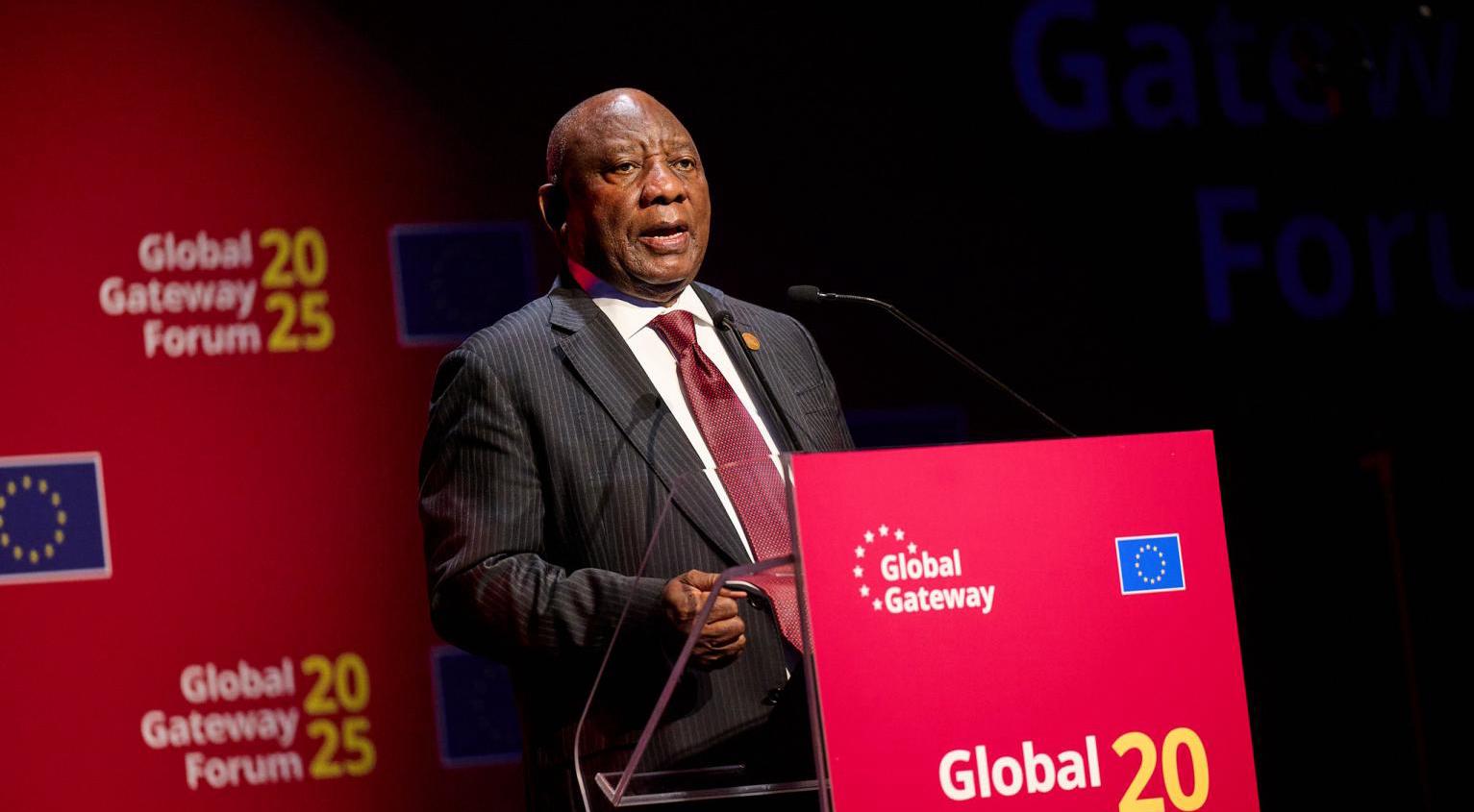
At the Global Gateway Forum, held in Brussels this week, the President of the European Commission, Ursula von der Leyen, and President Cyril Ramaphosa of South Africa unveiled a landmark €12 billion Team Europe investment package aimed at deepening cooperation between South Africa and the European Union (EU).
The investment package reflects a shared ambition to foster inclusive prosperity, while supporting South Africa’s leadership in the just energy transition, sustainable infrastructure, digital connectivity, and the pharmaceutical value chain. It is a strategic step toward advancing Africa’s agency in global partnerships, and towards ensuring that economic cooperation prioritises mutual benefit, human development, and long-term resilience.
This new commitment builds on the €4.7 billion investment package announced at the EU–South Africa Summit in March 2023, marking a deepening of a relationship rooted in shared strategic interests. The expanded initiative brings together the European Union, its Member States, and European development finance institutions under the EU’s Global Gateway strategy — a framework designed to mobilise sustainable investments and strengthen partnerships that are equitable and transformative rather than extractive.
The package is structured around four key priorities, each designed to reinforce South Africa’s long-term transformation agenda.
Team Europe has committed €8.7 billion towards advancing the Just Energy Transition — supporting South Africa’s shift toward renewable and efficient energy systems. This includes investments in green hydrogen, critical raw materials, and renewable energy expansion. It will also establish facilities to enhance local mineral processing, promote policy reforms, and strengthen research and development capacity. These efforts aim to empower South Africa to become a global player in clean energy while diversifying its industrial base.
An additional €1.2 billion has been allocated to ensuring that this transition remains just and inclusive, particularly for communities and workers most affected by structural shifts in the energy economy. This funding supports re-skilling, climate adaptation, and climate-smart agriculture, while also investing in water security and sustainable municipal development.
A further €1.3 billion will be invested in connectivity and green logistics, addressing infrastructure bottlenecks that have historically constrained economic growth. Investments will target transport corridors, digital infrastructure, and renewable-powered logistics, enabling both regional trade and technological innovation to thrive.
The remaining €292 million will focus on strengthening South Africa’s vaccine and pharmaceutical manufacturing capacity through the Manufacturing of Vaccines in Africa (MAV+) initiative. This includes reinforcing regulatory systems, improving market access, and investing in biotechnology research and local production facilities. The initiative aims to position South Africa as a continental hub for vaccine production — a strategic shift that enhances Africa’s public health sovereignty and resilience against future pandemics.
Two early outcomes illustrate the investment’s tangible impact. The Coega Green Ammonia Project, based in the Eastern Cape, will support domestic and export production of green ammonia — a clean fuel with potential to transform global shipping and industry. Concurrently, investments in biomanufacturing will enable South Africa to produce vaccines and essential pharmaceuticals for the African continent, advancing the goal of self-reliance in healthcare.
This investment package exemplifies a more balanced model of international cooperation, one that recognises Africa’s potential as a centre of innovation and growth rather than a site of dependency. It places African priorities at the forefront of partnership design, aligning with the African Union’s Agenda 2063 and the Sustainable Development Goals.
The Global Gateway — through which the EU aims to mobilise up to €300 billion globally between 2021 and 2027 — represents a commitment to co-investment, not conditional aid. For South Africa, this signals a broader opportunity: to leverage foreign partnership in a way that accelerates industrial diversification, green innovation, and inclusive growth across the Southern African region.
Ultimately, this partnership reaffirms that Africa’s future prosperity depends on agency, collaboration, and ownership of its development trajectory. As global investment landscapes evolve, frameworks such as Global Gateway offer the possibility of redefining North–South relations through shared sustainability and mutual respect — not dependency or unilateral influence.