Rethinking Defence: Africa’s Military Leaders Chart a New Course at Kigali Symposium


Kigali, Rwanda — As global warfare evolves, Africa continues to grapple with security challenges, military leaders, defence experts, and policymakers gathered in Kigali this week for the Land Forces Commanders Symposium 2025, hosted by the Rwanda Defence Force (RDF). The gathering underscored Africa’s growing resolve to redefine its security architecture, strengthen partnerships, and adapt to emerging technologies such as drone warfare.
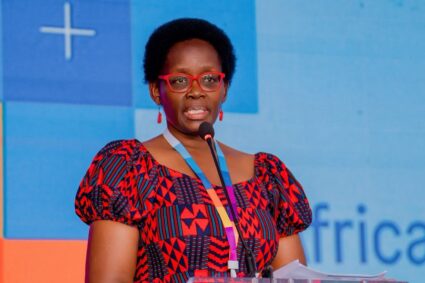
The first session of the symposium, titled “Rethinking Land Operations in the Era of Drone Warfare,” explored how modern technology is reshaping defence strategies on the continent. The discussion was moderated by Brigadier General Zipporah Kioko, Director of Strategic Oral History at the National Defence University/National Defence College, Kenya.
The panel featured high-ranking and technical experts, including General Pierre Schill, Chief of Staff of the French Army; Air Vice Marshal Professor Chiedu Ubadike, Professor of Aerospace Engineering at the Air Force Institute of Technology (Nigeria); and Tiamiyou Radji, Director of Senegal Flying Labs.
Their conversation delved into the implications of drone technology in land operations, from intelligence and surveillance to precision strikes and humanitarian responses. The panellists agreed that African militaries must invest not only in acquiring drones but also in building homegrown research, training, and policy frameworks to ensure responsible and effective use.
“Drone warfare is no longer theoretical — it’s transforming the battlefield,” one panellist noted. “Africa must develop its own doctrine and capacity to harness this technology for both defence and peacekeeping.”
The second session, themed “Promoting Bilateralism as a Complementary Option to Multilateralism,” turned the spotlight on the diplomatic dimension of military cooperation. Speakers emphasized that bilateral collaboration can often yield faster, more adaptive responses in crises — especially when complemented by multilateral efforts through the African Union and regional blocs.
The panellists underscored the need for trust, intelligence-sharing, and joint operations between partner nations to enhance security, humanitarian coordination, and peace enforcement across borders.
“Active collaboration is key to saving lives,” one speaker remarked. “Bilateral partnerships don’t replace multilateralism — they strengthen it, ensuring timely and coordinated interventions.”
In his keynote remarks, President Paul Kagame urged African nations to take ownership of their collective security and move from dependency to self-reliance.
“Africa still experiences the highest number of active conflicts in the world,” President Kagame said. “Addressing this reality requires strong continental partnerships and coordination mechanisms. We cannot expect others to carry the responsibility for Africa’s security. None of the challenges we face are beyond our capacity to manage or resolve. We have seen what is possible.”
The symposium, now a flagship continental platform, serves as a strategic forum for African military leaders to share insights, strengthen cooperation, and craft innovative approaches to emerging security threats, from terrorism and cyber warfare to humanitarian crises and peacekeeping.
As discussions continue in Kigali, one message resonates clearly: Africa’s security future will be defined not only by its military strength, but by its unity, innovation, and shared resolve to safeguard peace on its own terms.