OP-ED: COP31 Collapse – Was Robert Mugabe Right All Along?

Seventeen years after Copenhagen, the world is still trapped in the climate politics Mugabe warned about
When negotiators finally emerged from the marathon COP31 Climate Summit in Antalya, Turkey, after nearly 49 hours of overtime discussions, they carried with them a sobering reality. The summit had failed. Despite increasingly urgent scientific warnings, escalating climate disasters across the globe, and repeated calls from the United Nations for decisive action, nearly 200 countries could not agree on a unified pathway forward. UN Secretary-General Antonio Guterres expressed “profound frustration” at the outcome, while negotiators openly lamented the inability of governments to reach consensus on the issue that lies at the centre of the climate crisis: fossil fuels. As countries traded accusations and delegates left Antalya empty-handed, the summit reinforced a troubling reality. The political barriers to climate action remain as formidable as ever. For many Africans, however, the events in Antalya evoked memories of another climate summit held thousands of kilometres away and nearly two decades earlier.
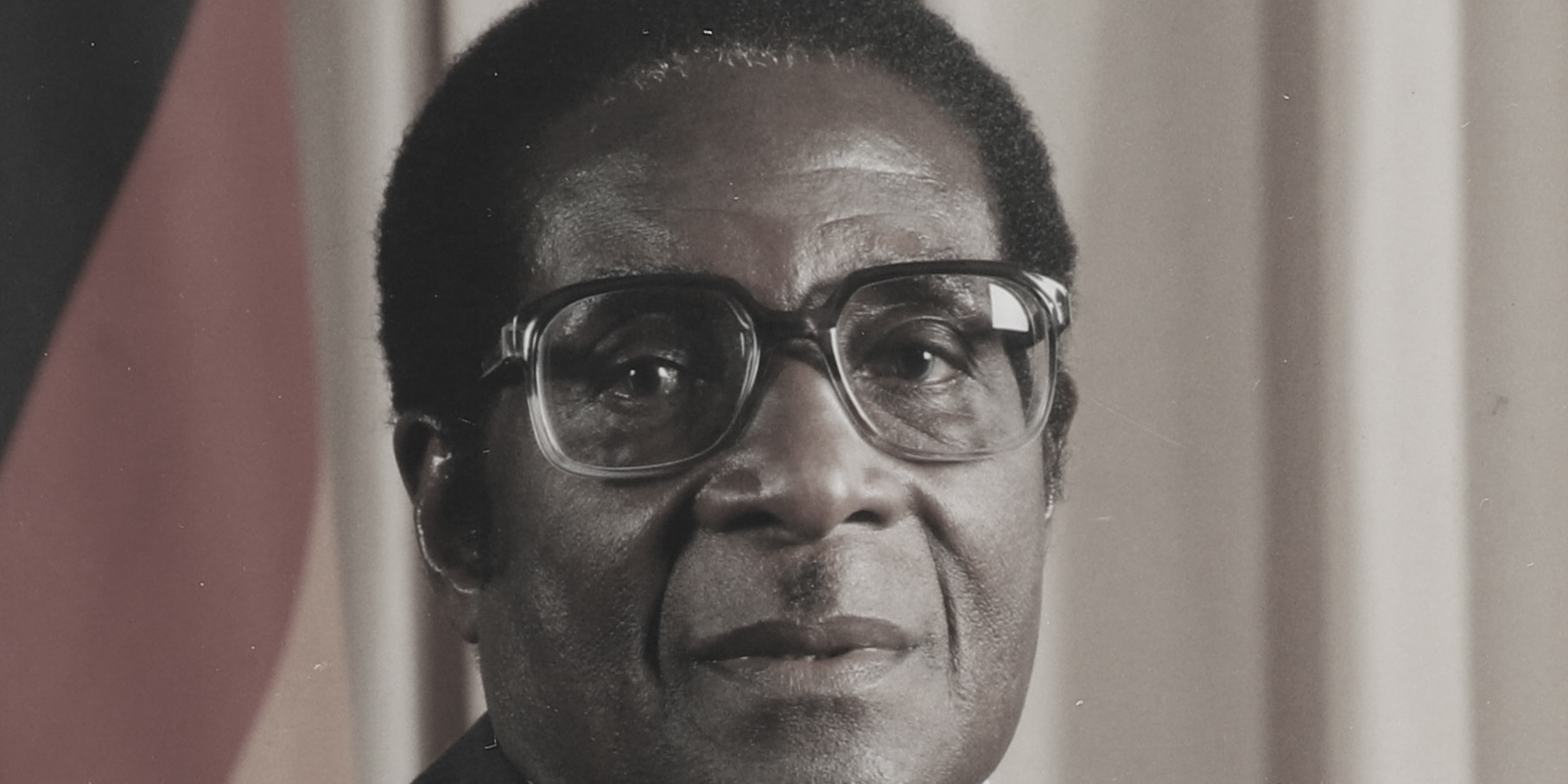
In December 2009, at the United Nations Climate Change Conference in Copenhagen, Zimbabwe’s late President Robert Gabriel Mugabe delivered a speech that was largely overshadowed by larger geopolitical battles playing out at the conference. At the time, many Western commentators viewed his remarks through the lens of Zimbabwe’s political controversies rather than the substance of what he was saying. Yet beneath the fiery rhetoric was a stark warning about the future of climate diplomacy. Mugabe argued that climate change was not simply an environmental issue. It was also a struggle involving economic power, political influence, historical responsibility and the unequal structure of the international system. Sixteen years later, as COP31 collapsed under the weight of many of those same tensions, his words acquired a renewed relevance that few could have imagined in Copenhagen.
One of the most striking observations made by Mugabe was his warning that climate negotiations would become hostage to global power struggles. While many leaders spoke about cooperation and shared responsibility, he argued that deeper forces were shaping events behind closed doors. Addressing delegates in Copenhagen, Mugabe declared: “For beneath the tip of well-intentioned rhetoric on climate change lies the iceberg of power and aspirations to global dominance.” He went further, adding: “We are dealing with vested interests. We are dealing here with dominant economies resting on a faulty, eco-unfriendly development paradigm, aspiring to misrule the world.” At the time, those comments were dismissed by critics as political theatre. Yet the collapse of COP31 appears to validate at least part of his concern. The summit did not fail because countries disagreed about whether climate change exists. It failed because nations continued protecting economic interests tied to energy production, industrial competitiveness and geopolitical influence. Once again, climate diplomacy collided with national interests.
The central battle in Antalya revolved around fossil fuels. European nations demanded stronger language on phasing out coal, oil and gas, while major oil-producing countries rejected any wording that threatened their economic foundations. The resulting deadlock ultimately destroyed hopes of a comprehensive agreement. Looking back at Mugabe’s Copenhagen speech, it is difficult not to notice how accurately he anticipated this type of impasse. He argued that meaningful progress would remain slow because climate negotiations involved countries attempting to preserve economic systems from which they derived wealth and power. In his own words: “In those circumstances, progress is bound to be glacier.“ The phrase was intended as a criticism of the pace of climate negotiations. Nearly two decades later, the world’s inability to move beyond familiar disputes suggests that his assessment may have been remarkably accurate.
Perhaps nowhere was Mugabe more prophetic than in his discussion of the divide between developed and developing nations. Throughout his speech, he repeatedly argued that the countries suffering most from climate change were often those least responsible for causing it. In one of the speech’s most memorable passages, he told delegates: “We of the developing world are drowning, we are the burning, indeed we are the tragedy that climate changes have turned out to be for the larger half of mankind. Yet we never caused that crisis.” He pointed to sinking island states, recurring droughts and disappearing livelihoods as evidence that climate change was already devastating vulnerable populations. Today, those concerns have become even more pronounced. Across Africa, climate-related disasters have intensified. Droughts have become more frequent in Southern Africa, floods have displaced communities across East Africa and food insecurity continues to threaten millions. The continent remains among the least significant contributors to historical greenhouse-gas emissions, yet it continues to bear a disproportionate share of the consequences.
Mugabe repeatedly returned to what would later become known as climate justice. Long before the phrase entered mainstream climate diplomacy, he argued that responsibility for addressing the crisis should reflect historical emissions and economic capability. He insisted that developed nations had a moral obligation to do more than simply make promises. They needed to reduce emissions while simultaneously helping poorer nations adapt. In Copenhagen, he stated: “It simply has become imperative that the developed world, itself the leading sinner on climate offences, takes serious and effective measures to cut emissions on the one hand, while supporting developing countries to adapt to and mitigate the effects of this man-made planetary disaster.” The debate over climate finance at COP31 demonstrated how unresolved this issue remains. Developing nations entered Antalya demanding stronger funding commitments and increased support for adaptation measures. Yet many of those expectations disappeared as negotiations collapsed. The questions Mugabe raised in 2009 remain unanswered in 2026.
Another aspect of Mugabe’s speech that appears remarkably relevant today was his criticism of double standards in international governance. He questioned why powerful nations were quick to invoke principles of accountability, sanctions and international law in other contexts while appearing less willing to apply similar standards to countries responsible for the majority of historical emissions. Addressing delegates directly, he asked: “Why is the guilty north not showing the same fundamentalist spirit it exhibits in our developing countries on human rights matters on this more menacing question of climate change?” He continued by asking whether countries that ignored climate obligations were not equally undermining international law. Whether one agrees with the language or not, the broader question continues to shape climate negotiations. The debate over historical responsibility remains one of the most contentious and politically sensitive issues confronting the international community.
Perhaps the most overlooked part of Mugabe’s Copenhagen address was his argument that climate change could not be separated from broader patterns of inequality within the international system. He argued that environmental degradation, unfair trade, uneven development and political power were all interconnected. “Climate change,” he told delegates, “reveals the interconnectedness of global imbalances by way of uneven development, by way of unfair trade, by way of unclean politics, by way of hegemonic values and by way of arbitrary power and governance systems.“ The events surrounding COP31 seem to reinforce that observation. The negotiations were influenced not only by environmental concerns but also by economic competition, energy security fears, supply-chain vulnerabilities and geopolitical rivalries. Climate diplomacy has become inseparable from the broader contest for global influence.
Mugabe also challenged what he viewed as a contradiction at the heart of international climate policy. He argued that developing countries should not be forced to sacrifice their development prospects in order to solve a crisis largely created by wealthier nations. This concern remains especially relevant for Africa today. As the continent seeks to industrialise, expand energy access and lift millions out of poverty, policymakers increasingly face difficult questions about balancing economic growth with environmental sustainability. In Copenhagen, Mugabe warned: “We oppose climatic recovery paradigms predicated on denial of our right to development for the sake of cleaning the mess created by selfish countries of the north.” That tension remains visible today in debates over energy security, natural gas development, critical minerals and industrialisation across Africa.
None of this means Robert Mugabe was right about everything. His political legacy remains deeply contested both within Zimbabwe and internationally. However, history often separates the messenger from the message. Looking back from the vantage point of COP31, it is increasingly clear that several of his warnings about climate diplomacy were remarkably prescient. He foresaw the persistence of the North-South divide. He predicted that economic interests would continue to obstruct climate action. He warned that historical responsibility would remain unresolved. He anticipated disputes over climate finance, technology transfer and development rights. Most importantly, he recognised that climate change would become as much a geopolitical issue as an environmental one.
As delegates left Antalya frustrated and divided, the shadow of Copenhagen seemed to linger over the conference halls. Seventeen years after Mugabe warned that climate negotiations would be constrained by power, interests and inequality, the world remains trapped in many of the same debates. The science has become clearer. The consequences have become more severe. The urgency has become undeniable. Yet the politics remain largely unchanged. If COP31 demonstrated anything, it is that the greatest obstacle to climate action is no longer a lack of knowledge. It is the unresolved struggle over who pays, who sacrifices, who develops and who ultimately shapes the future of the global economy. Robert Mugabe saw that struggle in 2009. The collapse of COP31 suggests the world is still living it today.