Don Dada – The Struggle and The Crown

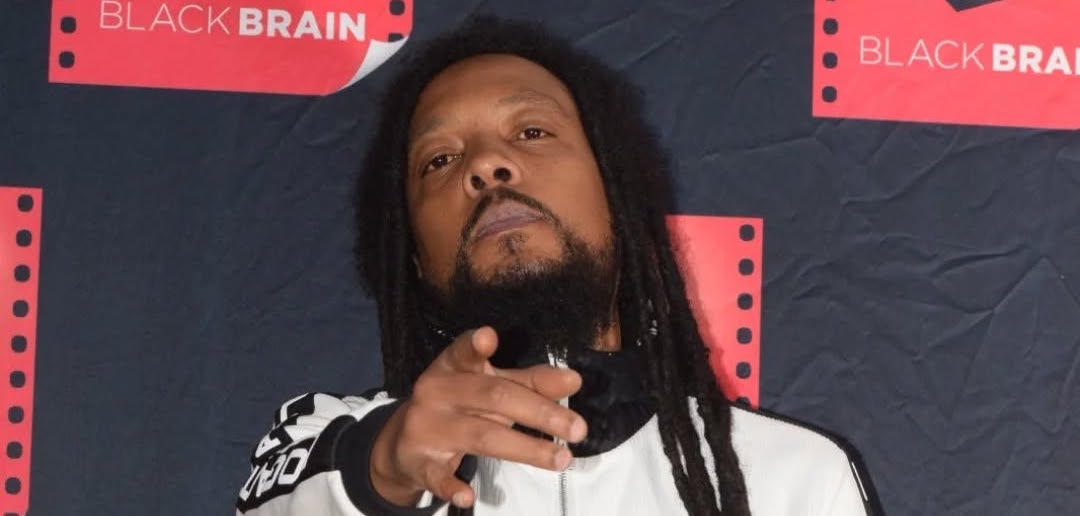
For over two decades, he has been the constant voice preaching Pan Africanism, Ubuntu and Hope in lyrics and rhythm.
Now, in 2026, with platinum plaques hanging on his studio walls in Jozi and several awards and nominations bearing his name, the voice has matured. Finer. Wiser.
His newest work; The Struggle and The Crown, a double album offering the best of both worlds in Reggae and rap is proof of a long career that hasn’t been in vain.
Born Menelik Nesta Gibbons in Zimbabwe towards the end of the historic 80s, Don Dada is more than a household name in the Reggae universe; he is the reference.
It’s simply impossible to talk about South Africa’s contemporary reggae scene and skip Don Dada’s name.
His breakthrough track, Viva Mandela, became a national tune that opened international doors, with Bob Marley’s Tuff Gong International signing him onboard for a distribution deal, making him the first South African artist to be distributed by Tuff Gong, a big player in the reggae music business.
In 2025, his six-track EP, Forward We Continue, got a SAMA32 nomination for Best Reggae Album.
And now, his newest drop; The Struggle and The Crown, is on a Grammy consideration campaign.
My Afrika Magazine contributor, Elias Muonde (EM) tracked down the dreadlocked Don Dada (DD) to his Johannesburg base for an extensive exclusive chat about Ethiopia, Pan Africanism, Marcus Garvey, the Grammys, Winky D, everything else and of course, Reggae.
Because, honestly- when all has been said and done – no one can really stop Reggae.
EM: You were born Menelik Nesta Gibbons. Your name carries two powerhouses in Reggae legend. Did that have an influence on you taking Reggae music as a career?
DD: It’s funny how Reggae music has been a part of my life even before my birth. In 1980, seven years before I was born, my mother met Robert Nesta Marley, known to the world as Bob Marley. They had a brief conversation, during which he asked if she had any knowledge of African history, particularly Ethiopian history. At the time, my mother did not know much about the history of Ethiopia, so he asked her to do two things: firstly, to find out about Ethiopian history, and secondly, if she had a son, to name him after him. Some say it was destiny, while others say it was divine timing because their conversation happened in April, and exactly seven years to the month later, I was born. My name, Menelik, is connected to Menelik I, the son of King Solomon and the Queen of Sheba, whilst my middle name, Nesta, is connected to Bob Marley.
I believe it goes deeper than the music because, although I would have to say that, in some unconscious way, my names have probably played a part in influencing me towards Reggae music, other factors have also played a role. My family (my father has been a Rastaman since the 1980s), my life (I have had locks my entire life, never cutting my hair once), and my view of this world (from my Pan-Africanist outlook to my constant calls for unity and oneness in our communities and society overall) have all played a part as well. I think that when you combine all these elements, it becomes easy to see how Reggae and I have always been, and will always remain, connected.
EM: How did it feel being the first South African artist to be signed by Bob Marley’s Tuff Gong International? And how did that distribution deal impact the business side of your music?
DD: It has been a major honour to be connected with and distributed by the world-renowned Tuff Gong International. We have had an amazing journey together so far, and it has been a pleasure working with them. Because Reggae is such powerful music, as practitioners, we want to have people around us who understand its value and know how to handle bodies of work of that nature. With Tuff Gong International, I have found people who have helped solidify Reggae’s place in the hearts and minds of the world.
Of course, you can create the best work or project in the world, but if you have no way of getting it to the public, that project remains unheard. Tuff Gong International has enabled us to get our music out to the entire world, and, again, it has been a pleasure working with people who share a similar love and vision. It makes everything so much easier.
EM: Johannesburg, where you are based, is a melting pot of different musical sounds that are always evolving with time, from pantsula and kwaito to amapiano. Does Reggae experience the same “pressure” or need to evolve and “fit in”?
DD: I don’t see it as pressure for any music to evolve, but rather as the sounds of the youth filtering into the mainstream. To the world, amapiano is relatively new, but in South Africa, it is a sound that has been created and played for a while. South Africa is a diverse, multilingual, multicultural society, and it only makes sense that the music is as diverse as the people are.
It is worth noting that South Africa has one of the largest Rastafari communities in the world, and therefore, the appreciation and love for Reggae music run deep. Add to that the fact that Reggae music was used by freedom fighters when they were in the bush and needed motivation, and was listened to in the townships in hiding because it was banned and labelled subversive. Then add Jamaica’s own support for South African people during the struggle against apartheid. And don’t forget that, earlier in the 1920s, Garveyism spread internationally, leading to active UNIA chapters and women’s sections in the Western Cape and other parts of South Africa.
Then you start to understand their long history with the Caribbean and their love affair with Reggae music. The music has always naturally evolved alongside our circumstances and struggles, and even as times have changed. I believe it has been a natural evolution of the sound rather than a perceived pressure to change.
EM: With over 25 years in the industry, your work has been in line for prestigious accolades, from platinum statuses and SAMAs to Grammy consideration—and more to come. What really keeps you going and fired up?
DD: My love for music and my career began out of a pure love for creating, writing, and, of course, the feeling of seeing others react to the music. I never once approached music with the intention of becoming rich or famous, and I believe that this is the same energy I create with today.
Accolades are nice, and it is humbling to know that your impact is felt on that scale. But when I begin to create something after completing another project, I do it because I still feel so passionate about what I am doing that, regardless of how it may be received, I want to give my all to it.
Music is about much more than creating or business. Music is spiritual and has the power to unite. I have had people come up to me in public and thank me for giving them positivity through my music when they were experiencing hardships in private. For me, this is bigger than any award or material measure. It means that I have helped another person in their time of need, and that makes me want to create more music to help others.
EM: Who are some of the artistes signed under your record label, Ruff Cutt Studio?
DD: At the moment, I am focusing on establishing the brand, and therefore, I have intentionally shied away from signing artists. Instead, I have chosen to play the role of a facilitator, assisting artists in building themselves.
From production, recording, mixing, and mastering to publishing, marketing, and PR, we have helped tailor artists’ strategies and products to ensure a productive and successful launch. Our goal is to grow and scale according to demand rather than take on too much at once. I must say that we have been extremely successful in our endeavours, especially in the Reggae and Hip-Hop genres, as well as in making great connections internationally.
EM: Your recent double album, The Struggle & The Crown, is quite the talk of the town right now. What struggle and what crown are you actually talking about?
DD: Firstly, I want to say thank you, as it was a labour of love to create this body of work. The Struggle & The Crown has multiple meanings, depending on the angle from which you approach it.
Firstly, it refers to the stages one must progress through to attain the success represented by the crown. We must fight or struggle to achieve our wins and claim our crowns; nothing is easy.
Secondly, it refers to an artist’s journey in the industry. We all start with very little support, and through persistence, we continue to grow and evolve into the kings and queens you see on stage today. It is a reminder of that journey, as well as recognition of entering a new phase.
Thirdly, it is a visual metaphor. There are two distinctive paintings that are beautiful on their own, but when brought together, they create a bigger, more powerful picture. (Don’t get me started on the imagery, because it has an entire meaning of its own.)
Finally, it is the continuation and conclusion of The Heart & The Mind, my previous project, which was an internal examination of what I listen to most: the heart or the mind. The Struggle is intended to show the outward journey and metamorphosis of myself, leading to the responsibilities and joy of finally attaining the crown.
EM: The double album is presented in two genres: Reggae and Hip-Hop. Were you trying to mark your territory and perhaps eventually claim your double “crown” as a crooner and rapper?
DD: Haha, yeah, in a way, I suppose it was—but don’t say it too loudly! No, in all honesty, I had two main reasons for doing this. Firstly, it was intended to show the close relationship between Hip-Hop and Reggae. As genres, you could consider them father and son, as Hip-Hop’s origins and originators, such as DJ Kool Herc, used Jamaican sound system culture and techniques to create Hip-Hop. The connection has always been evident and real.
Secondly, I have a deep love and appreciation for Hip-Hop. Most Hip-Hop listeners and fans also listen to Reggae, and the content and emotions expressed in both genres are similar.
I find that, as musicians, we tend to put ourselves into creative boxes and very rarely stray from them, limiting our potential and creativity because we feel pressure to fit in. My music is created to reflect who I am and where I’m from, so it will always be diverse because I am Rastafari, I am Jah’s soldier, I am for the people, and, of course, I love Hip-Hop.
EM: You were inducted into the Recording Academy (the Grammys) as a voting member. Congratulations! In your new responsibility as a gatekeeper, what do you think African artistes need to do more of in order to be heard globally?
DD: I wouldn’t describe my role as that of a gatekeeper, but rather as an essential part of ensuring that the Grammys are fair and relevant, as your work is judged by your peers and other active practitioners from around the globe.
In terms of African artists grabbing attention, there are a couple of things I believe in strongly. Firstly, your strength is your authenticity. No one in the world has the same story or the same sound as you. Africa gives us so many languages, sounds, and emotions that you will never find anywhere else, so please make the most of them.
Secondly, the world has become so much smaller through the use of technology, and this is a game-changer for independent and emerging artists. There is a market for anyone and everyone, but you have to have patience and perseverance to find your people. When you finally do, trust me, it will be worth it.
Collaborations are the new currency. Work with as many artists as you can because it gives you access to a bigger fan base than your own. It allows you to create outside your normal sound and, above all, gives you different opportunities that your music alone would not ordinarily present.
Finally, remember that they call it the music business for a reason. You can have the music, but if your business is bad, you will struggle to sell it. So, educate yourself in the business side of the industry. Attend workshops, go to industry meetings, and become familiar with how the business works. More often than not, this is where good artists lose their love for the industry and leave because they have not been able to, or did not even know how to, generate income from their amazing art.
EM: You have shared the mic with big names in your illustrious career, and I reckon your project with Sizzla Kalonji to be one of your most outstanding collaborations. Is there any local, regional, or international artiste you are burning to collaborate with?
DD: From Winky D to Buffalo Souljah, to Asaph and Gemma, there is a whole host of people I would love to work with. As I said, I see collaborations as the new currency, so I would definitely love to get into the studio and create something fresh, new, and exciting for the world.
The sounds and rhythms of the southern region of Africa are so beautiful, and you can expect more beautiful music inspired by us, for us, to come your way soon.
Just keep an eye on my social media, because that is where a lot of breaking news comes first. If you’re interested in following me, regardless of the platform, my handle is always the same. Just look for @dondadamusic on any platform, and you will find me.
EM: When was the last time you performed in Harare, and when is the next?
DD: My last performance was about four years ago, at the Zim Hip-Hop Awards. What a beautiful moment, and what a time it was!
I’m hoping to come back in the coming year and give you even more vibes and positivity. When I can confirm it, you will definitely be among the first to know. I miss the people and the vibes, so I’m going to make it happen soon, soon!
Until then, check out The Struggle & The Crown, and thank you all from the bottom of my heart for all the support and love. We grow together. Boom!