African Cinema took centre stage at Angoulême with Rwanda and Congo stories

African cinema was firmly represented at the 2026 Festival du Film Francophone d’Angoulême, where filmmakers from Rwanda and Central Africa brought powerful stories of memory, displacement, family and resilience to one of France’s leading Francophone film gatherings.
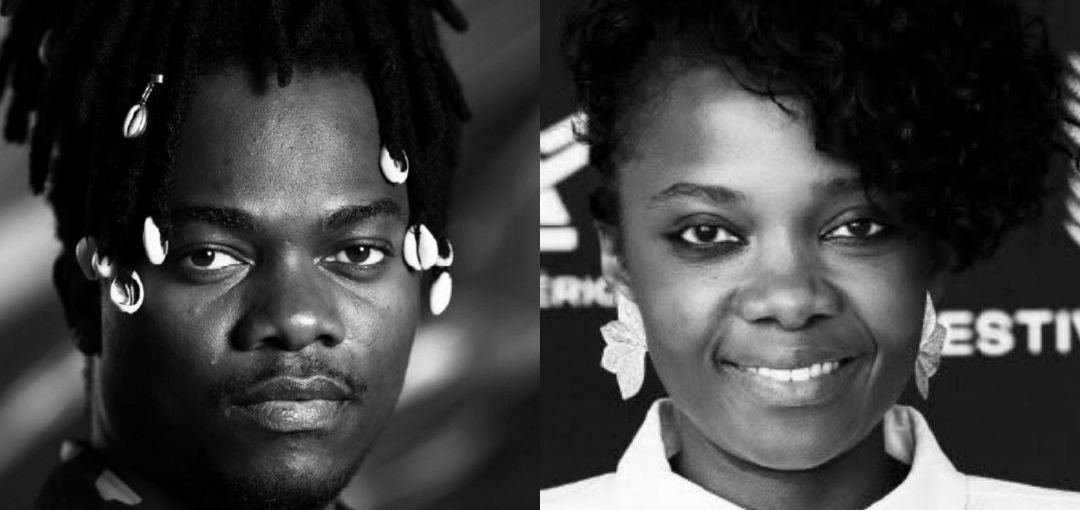
Held from 24 to 29 August, the 19th edition of the festival featured two African productions in its official competition; Ben’Imana, directed by Rwandan filmmaker Marie-Clémentine Dusabejambo, and Congo Boy, directed by Central African filmmaker Rafiki Fariala.
The two films arrived in Angoulême with considerable international attention. Both had previously been presented at the 2026 Cannes Film Festival, where Ben’Imana won the Caméra d’Or and FIPRESCI Prize, while Congo Boy earned its young leading actor Bradley Fiomona the Best Actor award in Un Certain Regard.
For Rwanda, Ben’Imana provided an opportunity for Dusabejambo to take a deeply Rwandan story into the Francophone cultural space.
Set in Rwanda in 2012, the film follows Vénéranda, a survivor of the 1994 Genocide against the Tutsi who becomes involved in community initiatives centred on justice and reconciliation.
Her commitment to rebuilding trust is challenged when a crisis within her own family forces her to confront the limits of her convictions.
The film moves between Rwanda’s national experience and the intimate world of one family, examining how the legacy of violence can continue to influence relationships long after the events themselves have ended.
Congo Boy, meanwhile, takes audiences to Bangui in the Central African Republic, where a young Congolese refugee attempts to balance family responsibility with his passion for music.
The film follows 17-year-old Robert, whose life changes dramatically when his parents are imprisoned. With his four younger siblings now depending on him, he must navigate responsibilities far beyond his age while refusing to abandon his ambition of pursuing music.
Music is central to the film’s identity, making its eventual recognition at Angoulême particularly fitting.
At the festival’s closing ceremony, Rafiki Fariala and Lillo Morealle received the Valois de la Musique for Congo Boy.
The award marked the only Valois prize won by an African film at the 2026 festival, placing Fariala’s work among the year’s recognised achievements in Francophone cinema.
Yet the significance of the African presence at Angoulême extends beyond the awards.
Both films demonstrate the breadth of contemporary African filmmaking. Ben’Imana explores reconciliation and the inheritance of historical trauma, while Congo Boy focuses on youth, displacement, family responsibility and the determination to pursue a dream despite difficult circumstances.
Their presence also highlights the increasingly international nature of African film production. Congo Boy is a co-production involving the Central African Republic, the Democratic Republic of Congo, France and Italy, while Ben’Imana brings together Rwanda, Gabon, France, Norway and Côte d’Ivoire.
This cross-border production landscape reflects the growing links between African filmmakers and the wider Francophone film industry. Angoulême, with its focus on French-language and Francophone cinema, provides an important platform for these stories to reach French audiences and connect with filmmakers, producers and cultural institutions beyond the continent.
In African cinema, the appearance of Ben’Imana and Congo Boy in the competition was therefore significant in its own right. The films did not arrive simply as representations of Rwanda or Central Africa; they entered the competition as works capable of engaging an international audience on questions that are both deeply local and universally human.
At a festival where ten Francophone feature films competed for the Valois awards, African filmmakers shared the same competitive space as established voices from across the Francophone world.
Congo Boy ultimately left Angoulême with a trophy, but together with Ben’Imana, it helped underline a wider development: African cinema is increasingly finding room within major international Francophone platforms to tell its own stories, in its own voices, while building new cultural bridges between Africa and France.