ECA Chief Calls for Bold Industrial Transformation in SADC

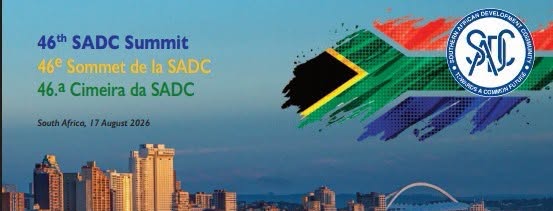
Durban, South Africa | 17 August 2026 — At the 46th Ordinary Summit of the Southern African Development Community (SADC), United Nations Under-Secretary-General and Executive Secretary of the United Nations Economic Commission for Africa (ECA), Claver Gatete, delivered a landmark address that underscored the urgency of industrial transformation in Southern Africa.
Speaking before Heads of State and Government, Gatete emphasized that the region must move decisively beyond its historic dependence on exporting raw and semi-finished commodities, instead embracing value addition, regional production, and higher-value industries. He noted that while minerals contribute approximately 10% of SADC’s GDP and 25% of exports, they account for only 7% of direct employment — a structural imbalance that highlights the need for beneficiation, integration, and infrastructure-driven growth. Gatete’s remarks came against the backdrop of global economic realignments that are reshaping trade, investment, and supply chains, presenting both risks and opportunities for Africa’s most resource-rich region.
Gatete’s intervention was framed around six strategic priorities designed to accelerate industrialisation and ensure that Southern Africa captures a greater share of the value created from its own resources. These include mobilising financing and partnerships at scale, accelerating mineral beneficiation and critical mineral value chains, transforming agriculture into an engine of industrialisation, strengthening regional fertiliser and agricultural input security, deepening regional value chains through the African Continental Free Trade Area (AfCFTA), and accelerating investment in energy and enabling infrastructure.
He highlighted practical examples of emerging cooperation models already underway: South Africa’s automotive industry, Botswana’s diamond processing, Zimbabwe’s lithium investments, Mozambique’s natural gas developments, the Lobito Corridor, the Southern African Power Pool, and the Zambia–DRC Battery Electric Vehicle Initiative. Each of these initiatives, Gatete argued, demonstrates the potential for regional integration and shared prosperity if countries commit to coordinated action. “This is precisely the kind of opportunity Africa must seize,” he declared. “Not simply exporting ore, but producing higher-value goods, developing technical capabilities and skills, and retaining more value in the continent.”
The ECA Executive Secretary further announced planned collaboration with the African Development Bank to advance African Critical Mineral Value Chains and Strategic Corridors, including those linked to batteries, electric vehicles, lithium, graphite, iron ore, manganese, and green industrial materials. He reaffirmed ECA’s commitment to working with SADC, the AfDB, and other partners to translate industrialisation ambitions into concrete investments and transformative programmes. Gatete stressed that the pathway forward is clear: “Implementation at scale, coordinated regional action and sustained investment are what is required.”
The message from Durban was unequivocal — Southern Africa possesses the resources, capabilities, and regional markets to transition from exporting potential to creating shared prosperity. The challenge now lies in strengthening cooperation, building competitive regional value chains, and ensuring that Africa captures a greater share of the value created from its own resources. This call to action situates industrialisation not merely as an economic imperative but as a strategic necessity for resilience, sovereignty, and inclusive growth in a rapidly shifting global order.