Zvinotanga Nesu: ‘Why Funuel Marowa believes young men must lead the change’

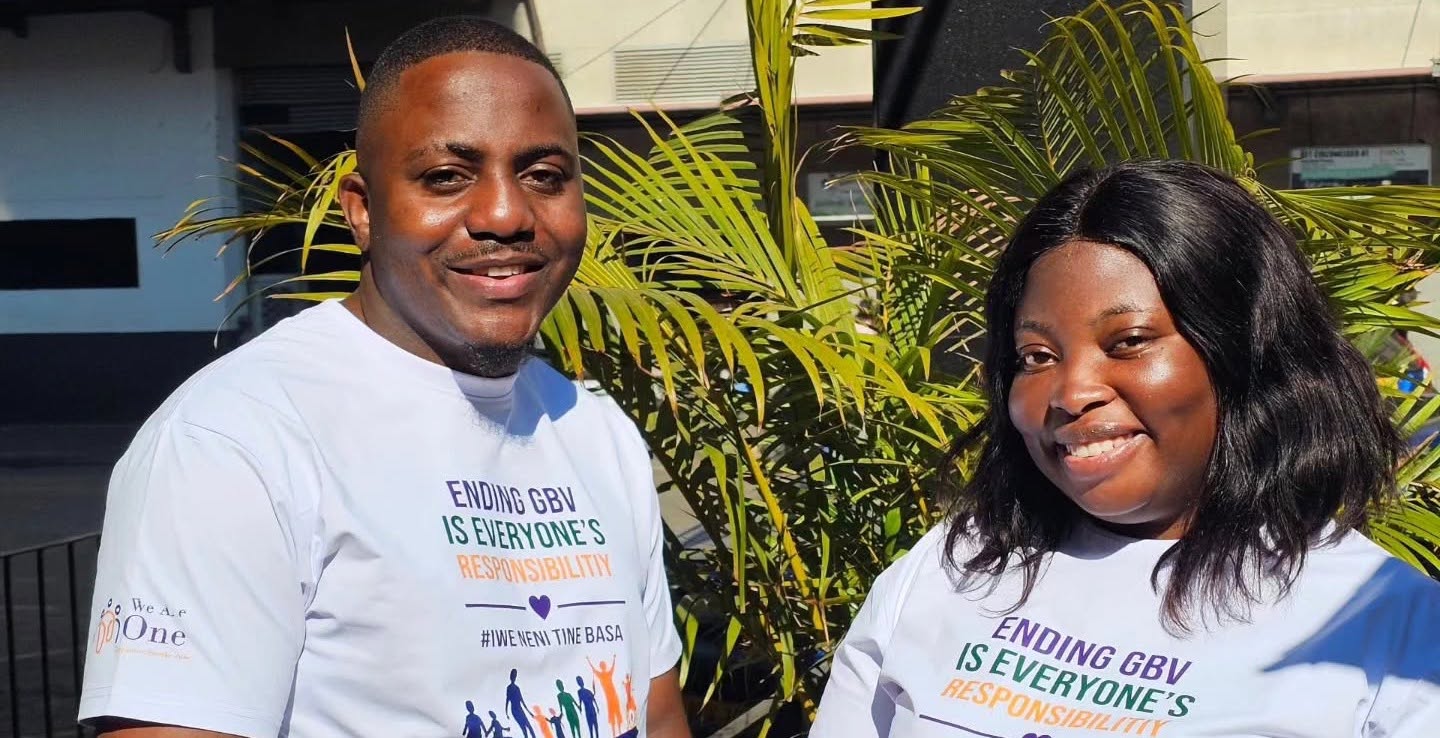
As Africa continues to confront gender-based violence, gender inequality and challenges affecting young people, the role of young men in creating lasting change is becoming increasingly important. Zimbabwean Social Scientist and youth advocate Funuel Takudzwanashe Marowa is part of this growing movement, calling on young men to challenge harmful ideas of masculinity and take an active role in building safer and more equal communities.
In this conversation with My Afrika Magazine, Marowa (FM) reflects on his journey, his experience at PROGRESS 2026 in Mombasa, Kenya, and why change must begin with each of us.
TR: Funuel, can you introduce yourself to our readers and share what first drew you to your career?
FM: Mhoro, Africa!
My name is Funuel Takudzwanashe Marowa, a Social Scientist based in Harare, Zimbabwe. I serve as the Programs Manager at Shamwari Yemwanasikana, leading initiatives across Harare, Chiredzi, Seke, Murewa, and Manicaland to advance sexual and reproductive health rights, prevent gender-based violence, strengthen child protection, and end child marriage. I also serve as the Board Secretary for Patsime Edutainment Trust and volunteer with the Global Youth Movement on Ending Violence Against Children (Zimbabwe Chapter).
My entry into this work wasn’t sparked by a single event, but a steady awakening during my undergraduate Sociology studies at Midlands State University. Engaging in student advocacy and later serving as a Probation Officer intern at Northcote Training Institute brought me face-to-face with young people whose trajectories were heavily shaped by systemic circumstances beyond their control. Grounded in the philosophy of Ubuntu ‘I am because we are’.I found it impossible to reconcile our shared humanity with the deep inequalities surrounding these youth. That friction fueled my commitment to community development and child rights, driving the work I continue to lead today.
TR: What has your experience working with young people, girls and young women taught you about the issues they face every day?
FM: Working directly with girls and young women has taught me that the challenges they face rarely exist in isolation. A girl experiencing period poverty is often the same girl at risk of child marriage, navigating restricted access to SRHR information, and growing up in a household impacted by gender-based violence. Sitting with girls during our Hurukuro sessions and Dandaro Revasikana gatherings in Chiredzi and Murewa, I have witnessed how they navigate these layered burdens with a quiet resilience that humbles me every single day.
Most importantly, it has taught me that young people are not waiting to be rescued; they are waiting to be resourced. When provided with accurate information, dedicated platforms, and a genuine seat at the decision-making table, they take the lead. Our biggest failure as institutions and advocates occurs when we design solutions for young people instead of with them.
TR: Was there a particular moment in your journey that made you realise gender equality and young people’s rights was something you wanted to pursue seriously?
FM: Yes. It traces back directly to my time at Northcote as a Probation Officer intern. I clearly remember a case involving a young girl whose entire trajectory had been altered by a series of decisions made entirely by the adults around her none of whom had ever stopped to consider her voice. It wasn’t a dramatic or cinematic moment; it was quiet, heavy, and profound. Sitting there, I realized this could never be just case files and statistics to me. It had to be a lifelong commitment to systemic change. That was the exact turning point where advocacy stopped being an academic pursuit and became my vocation.
TR: You are attended PROGRESS 2026, the MenEngage Africa SRHR Symposium in Mombasa, Kenya. What was your first reaction when you were selected to participate?
FM: My initial reaction was profound gratitude, followed almost immediately by a deep sense of responsibility. Being selected to attend PROGRESS 2026 wasn’t a stroke of luck. it was the culmination of rigorous, months-long preparation, a demanding scholarship application process. When the official confirmation finally arrived, the feeling was both validating and humbling. It felt earned, but more than that, it carried a weight that transcended individual achievement.
I realised instantly that traveling to Mombasa meant carrying more than just my own voice. I was stepping into that space as a representative of the young women and girls navigating systemic barriers across Harare, Chiredzi, Seke, Murewa, and Manicaland. Simultaneously, I felt the responsibility of representing the growing network of young men across Zimbabwe who are actively challenging outdated norms to redefine positive masculinity. Attending the MenEngage Africa SRHR Symposium isn’t merely about personal professional development; it is an invaluable opportunity to bring grassroots, community-level realities into high-level regional dialogues and ensure that the voices of Zimbabwean youth directly shape Africa’s broader SRHR and gender equality agendas.
TR: What does representing MenEngage Zimbabwe and Shamwari Yemwanasikana at such a continental platform mean to you personally?
FM: It means carrying two powerful, deeply intertwined mandates into a regional space. MenEngage Zimbabwe embodies a growing, conscious movement of men and boys who are actively choosing to be allies and advocates rather than passive bystanders. Shamwari Yemwanasikana represents the young women and girls whose everyday realities, challenges, and aspirations ground every strategy I implement and every platform I step onto.
Standing at a continental table carrying both of these identities is deeply personal. It is the ultimate expression of Ubuntu in practice a constant reminder that I am present in Mombasa because a resilient community back home made it possible. This platform is not just about bringing Zimbabwean experiences to Africa; it is about ensuring that every strategy, partnership, and insight gained in these high-level spaces is brought back to directly serve and transform that same community.
TR: What are some of the most powerful conversations or lessons you have taken away from the symposium so far?
FM: The most transformative conversations have been those where young men from every corner of our continent have had the courage to step into rare, radical honesty openly unpacking and unlearning the harmful definitions of manhood passed down to us as “tradition” or “normal.” Witnessing that collective unlearning has been profoundly powerful; it proves that transforming masculinity begins with an inner reckoning before it becomes an outward movement.
Equally striking has been the overwhelming consensus that our struggles do not exist in silos. Across every country’s narrative, sexual and reproductive health rights, gender-based violence prevention, economic empowerment, and bodily autonomy are inextricably linked. You cannot solve one while ignoring the others.
Crucially, these dialogues have reinforced the urgent need to fundamentally rethink youth participation.
For too long, young people have been invited into spaces merely to satisfy a mandate or tick a tokenistic box on an attendance sheet. Tokenism must end. We do not need symbolic presence; we need structural influence. Young people must be positioned as active co-designers in the actual decision-making rooms where policies are drafted shaping the frameworks that directly govern our health systems, economic structures, governance, and business landscapes. When we move from performative inclusion to genuine power-sharing, solutions stop being top-down interventions and become sustainable, generational transformations.
TR: You engaged with participants from different African countries. What similarities have you noticed in the challenges facing young people across the continent?
FM: Across the continent, the throughlines are strikingly similar: limited access to accurate SRHR information, timely service delivery, systemic economic exclusion that drives girls toward child marriage or survival transactions, and entrenched gender norms that are passed down generation after generation frequently enforced under the guise of tradition by communities who believe they are preserving culture.
Above all, silence remains our most ubiquitous shared barrier. Whether in Harare, Nairobi, or Accra, the challenges may wear different local names and speak different languages, but they stem from the exact same structural roots. Recognizing this commonality across borders is where real continental solidarity begins.
TR: Are there any approaches or ideas from other African countries that you believe Zimbabwe could learn from?
FM: Absolutely. One of the most compelling insights from interacting with delegates across the continent is seeing how other African nations deliberately structure male engagement directly into national SRHR, GBV, and health policies treating positive masculinity not as an ad-hoc project, but as a core pillar of public health and gender equality strategy.
In Zimbabwe, we are fortunate to already possess powerful, indigenous, community-owned entry points like Dare RaMambo (the Chiefs’ traditional council) and Dare ReMachinda (the elders’ council). These traditional spaces hold immense social influence. However, what we can adapt and strengthen from our regional peers is the intentionality with which male engagement is linked to formal policy frameworks, accountability mechanisms, and sustained budgetary allocations moving beyond isolated community dialogues toward institutionalized, nation-wide systems.
When male engagement transitions from informal advocacy into national policy frameworks, it equips traditional leaders, young men, and community structures with the mandate, resources, and legal backing to actively dismantle harmful practices. By pairing our rich cultural governance models with these structured, policy-backed frameworks, Zimbabwe can build a truly comprehensive approach where men and boys are consistently held accountable and enabled as lifelong allies in protecting the rights of women and girls.
TR: GBV remains a major concern across Africa. From your work, what do you believe are some of the underlying issues that continue to allow it to persist?
FM: At its root, gender-based violence (GBV) persists because harmful behaviors have been normalised over generations frequently excused under the guise of culture, discipline, or simply “how things are.” This social tolerance is further sustained by deep-rooted economic dependency, which deprives survivors of financial autonomy and leaves them trapped in abusive environments with limited options for exit or safety. Enforced silence, driven by stigma, fear of retaliation, and secondary victimisation, creates a cycle that continually reproduces itself across generations.
However, social norms represent only part of the equation; systemic and legal gaps compound these social drivers.
Protective laws exist on paper across many African jurisdictions, but enforcement mechanisms remain under-resourced, slow, or inaccessible especially in rural and underserved communities. Addressing GBV effectively requires moving beyond awareness campaigns alone. Real progress demands restructuring the underlying economic, legal, and institutional architecture pairing social norm transformation with enforceable laws, accessible legal aid, robust survivor support services, and tangible economic empowerment programs that give women and girls true autonomy.
TR: How important is it to involve men and boys in preventing GBV rather than treating it as an issue that only concerns women and girls?
FM: Involving men and boys in preventing gender-based violence is non-negotiable. GBV has never been a “women’s issue” it is a profound societal crisis with a clear pattern regarding who most frequently causes the harm. Expecting women and girls to solve GBV on their own is not only unjust; it is strategically ineffective.
If we exclude men and boys from the dialogue and the work, we leave the source of the problem unaddressed and expect the survivors to carry the entire burden of their own protection.
Real prevention requires transforming the structural, cultural, and behavioral roots of violence. Men and boys possess unique leverage to challenge patriarchal norms, disrupt locker-room culture, and hold their peers accountable in spaces where women are often excluded or ignored.
Platforms like MenEngage Zimbabwe, Shamwari Yemwanasikana, and the PROGRESS 2026 Symposium exist precisely to champion this shift insisting that positive masculinity, male allyship, and active accountability sit at the center of GBV prevention strategies rather than on the margins.
True transformation happens when men stop viewing GBV prevention as an act of sympathy toward women, and start recognising it as a fundamental duty toward human rights and collective justice. By equipping young men to unlearn harmful ideas of manhood and step up as champions for gender equality, we dismantle the culture of violence at its source and build safer, more equitable communities for everyone.
TR: Lastly what role can young men play in challenging harmful attitudes, stereotypes and behaviours that contribute to GBV?
FM: Young men have the power to be active interrupters of cycles that would otherwise repeat unchallenged across generations. That transformation begins in everyday spaces: calling out a friend who trivialises violence, refusing to participate in culture that objectifies women, and leading uncomfortable conversations in locker rooms, family circles, and WhatsApp groups where harmful attitudes often go unchecked.
Beyond individual conduct, young men must step up as strategic advocates and mentors. By mentoring younger boys, actively participating in community dialogue platforms, and modeling relationships built on mutual respect rather than dominance, young men actively rewrite what manhood looks like. When positive masculinity becomes the standard rather than the exception, young men cease to be passive bystanders and become primary agents of lasting cultural transformation.
TR: To wrap it up, what is your message to young men who want to become part of the solution in building a more equal and safer society?
FM: Zvinotanga nesu it begins with us. You do not need a title, an organisation, or a massive platform to start. You simply need the courage to challenge what you were taught was “normal” and the humility to unlearn and grow. Equality is not a threat to your manhood; it is an invitation into a fuller, more honest expression of it one anchored in respect and accountability rather than control and dominance.
Start within your own circle. Speak up when it is uncomfortable. Show up for the women and girls in your community not as a favor, but as a fundamental responsibility. Ubuntu reminds us that none of us are truly free until all of us are. The safer, more equitable Africa we envision will be built one accountable young man at a time. I am because we are and shaping that future rests on all of us, together.