French African Embassies Join France in Celebrating Bastille Day as Partnerships Evolve

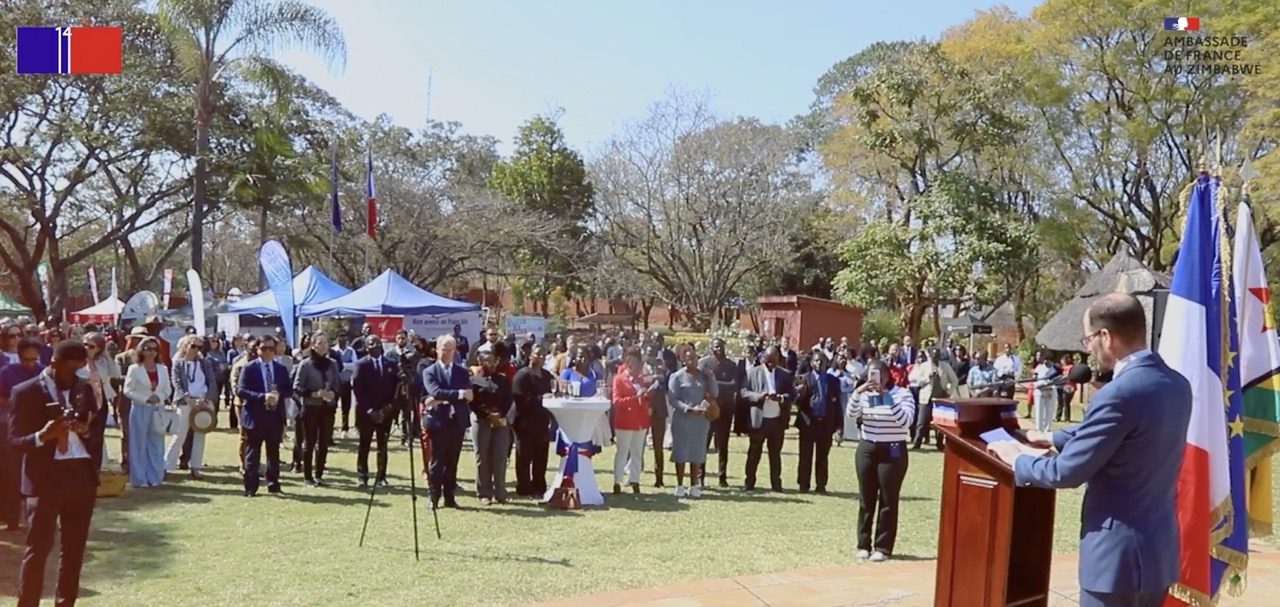
French embassies across Africa, including those in Zimbabwe, Zambia, and South Africa, marked Bastille Day on 14 July with diplomatic receptions attended by government officials, members of the diplomatic corps, business leaders, and representatives from civil society.
Bastille Day, France’s national holiday, commemorates the storming of the Bastille prison in 1789 an event that symbolised the beginning of the French Revolution and the ideals of liberty, equality, and fraternity.
While the celebration is rooted in French history, it has also become an opportunity for France to strengthen its diplomatic and economic relationships with countries around the world, including those across Africa.
In Harare, Lusaka, and Pretoria, the commemorations reflected not only France’s national identity but also its enduring partnerships with African nations.
The events showcased cultural exchanges, diplomatic dialogue, and cooperation in areas such as education, trade, climate action, security, and development.
The significance of Bastille Day in Africa has evolved considerably over the decades.
During the colonial era, France’s presence on the continent was largely associated with imperial rule in many West and Central African territories.
Today, however, the observance is less about colonial history and more about diplomatic engagement with sovereign African states. Although debates over France’s historical legacy continue in parts of the continent, many African governments view the annual celebrations as an opportunity to reaffirm bilateral cooperation and explore new partnerships based on mutual respect and shared interests.
For countries such as Zimbabwe, Botswana, Zambia, and South Africa which were not French colonies Bastille Day carries a different meaning. Rather than reflecting a colonial past, it serves as a platform for strengthening relations with France in areas including investment, higher education, innovation, tourism, renewable energy, and cultural diplomacy.
As Africa’s global partnerships continue to diversify, Bastille Day has become a reminder that modern diplomacy extends beyond historical ties. It offers a forum for dialogue, economic cooperation, and people-to-people connections, illustrating how relationships between France and African nations are increasingly shaped by common goals for sustainable development, peace, and prosperity.