Zimbabwe Pilots ASGM Formalisation Under planetGOLD to Bridge Artisanal and Large-Scale Mining

The planetGOLD Zimbabwe project is spearheading a pilot initiative to formalise artisanal and small-scale gold mining (ASGM) in Zimbabwe, as part of broader efforts to reduce mercury use in gold processing while strengthening regulation, safety and formal market integration.
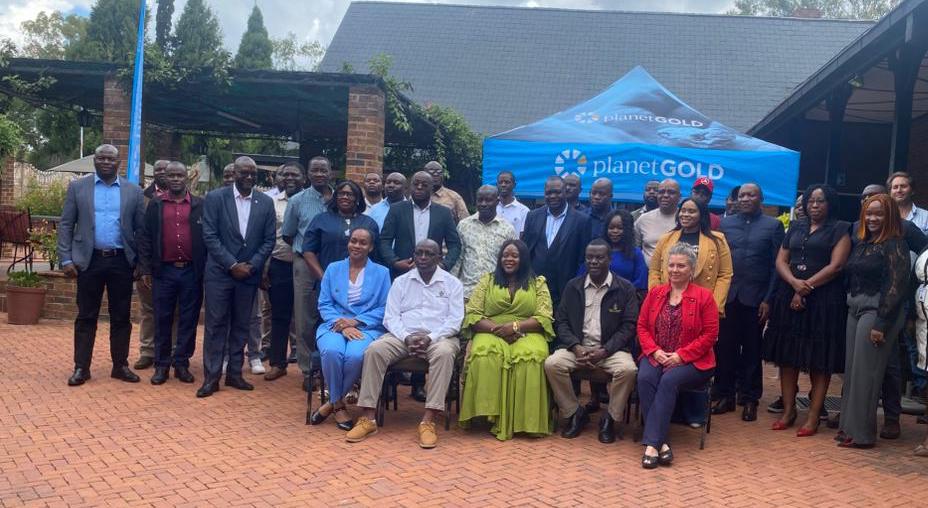
The initiative was discussed at a stakeholder workshop in Bulawayo, held at Cresta Churchill, where government representatives, artisanal miners and large-scale mining companies were exploring structured collaboration models aimed at improving productivity, environmental compliance and coordination within the gold sector.
The programme falls under Component 1 of the planetGOLD Zimbabwe Project, which focuses on building capacity to support the formalisation of artisanal and small-scale miners.
Speaking at the workshop, planetGOLD Project Manager, Nyaradzo Mutonhori said the pilot seeks to strengthen cooperation between artisanal miners and large-scale mining companies while recognising the sector’s growing economic importance.
“Today we are in Bulawayo at Cresta Churchill where we are discussing piloting ASM formalisation models with the support of large scale mines. This is under component 1 of the Planet Gold Zimbabwe Project which seeks to build capacity to help ASM gold miners to formalise,” she said.
She highlighted the significance of artisanal mining in Zimbabwe’s gold economy, citing data attributed to the Fidelity Printers and Refiners.
“In Zimbabwe, we all know that according to Fidelity Gold Refinery, ASM gold mining is producing more gold than large scale mines and contributing as a key economic actor,” she said.
Mutonhori said this makes formal integration of ASM operations a national priority.
“And in this regard, their operations should be integrated into the programme,” she said.
She added that the workshop is engaging major mining companies, including Sabi Gold Mine, Mutapa Resources and Turk Mine, to understand existing collaboration and tensions with artisanal miners.
“And today, we are talking with big mines like Sabi Gold Mines, Mutapa Resources, Tech Mines to understand how they have been working and coexisting and collaborating with ASM gold miners,” she said.
She said the discussions also include direct input from artisanal miners.
“We are also hearing from the miners themselves, particularly ASM gold miners in terms of the challenges that they are facing,” she said.
Mutonhori said the pilot is expected to generate practical solutions for improved collaboration.
“And together, we hope by the end of this workshop to come up with a solution,” she said.
She further explained that the pilot is testing formalisation models where large-scale mines collaborate with artisanal miners to improve national gold output.
“We are working with pilot formalization models where large scale mines can collaborate with ASM small scale miners to increase the gold output of the country and to surpass the target,” she said.
Structural barriers to formalisation and collaboration
Contributing to the discussion, Zimbabwe School of Mines researcher, Paul Matshona outlined key structural barriers affecting ASGM formalisation and collaboration between artisanal and large-scale mining (LSM) operators.
He said one of the core challenges is the absence of a clear and consistent definition of an artisanal miner, which continues to complicate policy and regulatory frameworks.
“There is a need to define what an artisanal miner is,” he said.
Matshona noted that this ambiguity weakens formalisation efforts and creates uncertainty in how ASM should be integrated into environmental and institutional systems.
He added that ASM is often mischaracterised either as a survivalist activity or as an informal sector requiring promotion, despite its current scale and economic significance.
He said the lack of a structured integration framework within environmental management plans further limits effective formalisation.
Risks and challenges for LSM operators
Matshona said collaboration between ASM and LSM operators is often hindered by mistrust and differing operational approaches.
He described the relationship as a mix-and-match dynamic in which traditional and formal mining systems intersect without sufficient alignment.
“The lack of trust is something that needs to be addressed if we are to build a workable model for collaboration between the two,” he said.
He also highlighted institutional and technical misalignment between ASM and LSM mining methods, particularly in relation to safety standards, extraction techniques and operational planning.
He warned that failure to properly integrate ASM activities into structured systems may result in operational inefficiencies and safety risks for large-scale mining operations.
Recommendations for improved integration
Matshona recommended the development of structured integration mechanisms that formally incorporate ASGM into existing mining governance systems.
He proposed the use of environmental management plan frameworks as a potential entry point for integrating artisanal miners into regulated mining operations.
He also called for institutional reforms that recognise ASM as a distinct and significant segment of the mining industry requiring tailored policy approaches.
In addition, he said improved coordination, clearer technical guidelines and strengthened communication between ASM and LSM actors are essential to reducing conflict and improving safety outcomes.
He concluded that successful formalisation will depend on addressing definitional clarity, rebuilding trust and aligning institutional and technical frameworks to accommodate both ASGM and LSM within a unified system.