Royal Blue Legend Rolls Back into Victoria Falls After 12 Years

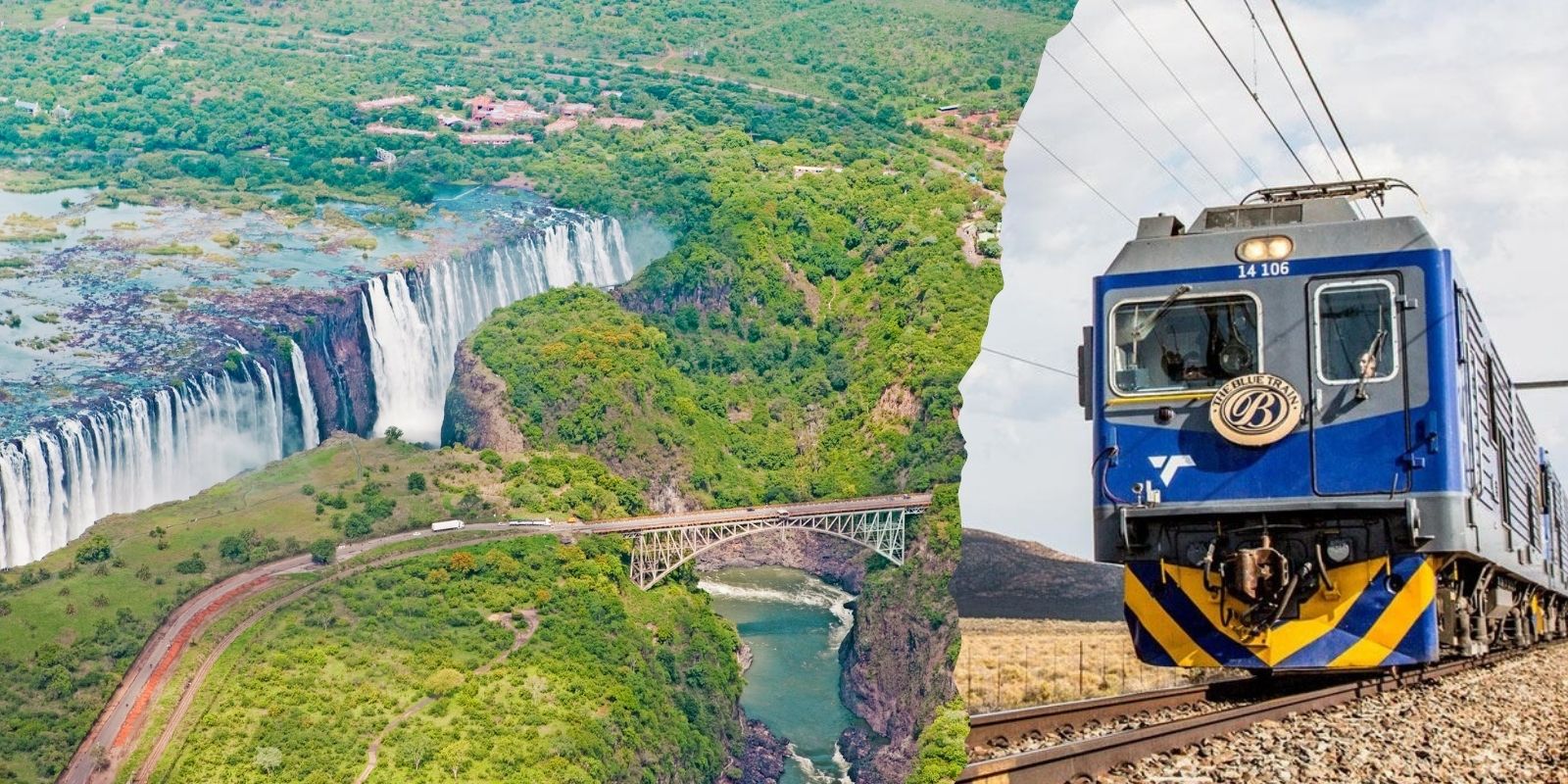
The legendary Blue Train broke the quietness of Victoria Falls recently, gliding into the station like a moving jewel box.
After twelve years away, Africa’s most celebrated luxury rail journey rolled back bringing a promise of elegance, nostalgia and new opportunities for Zimbabwe’s tourism sector.
Carrying more than thirty Japanese travelers and a crew of thirty, therefore within hours of arrival, the guests swapped velvet-lined carriages for open-top safari vehicles exploring the wild heart of Zambezi National Park and encountering elephants, buffalos and lions under the African sun.
First launched in the early 20th century and officially named The Blue Train in 1946, this “palace on wheels” has long been the stuff of travel legends, a five-star hotel in motion, offering private suites, butler service, and fine dining served on crystal and silver. It’s routes have hosted royalty, heads of state, and celebrities, making it an enduring emblem of sophistication.
The service to Victoria Falls, introduced in 1997, was suspended in 2013, with only a passenger-free trial run in 2021. It’s revival now signals more than a timetable change, it’s part of a strategic push to attract high-end travelers and strengthen the Victoria Falls–Hwange–Binga tourism corridor. It also complements cross-border conservation tourism efforts like the Kavango-Zambezi Transfrontier Conservation Area.
In an interview with My Afrika Magazine, Musama Tazi, Acting train manager, said: “The Blue Train’s arrival in Victoria Falls is a proud moment for our tourism industry. It’s a sign that Zimbabwe is continuing to attract high-end international travellers, which boosts our local economy and showcases our world-class hospitality. The train coming all the way from South Africa to one of our greatest natural wonders sends a clear message, Zimbabwe is open, welcoming, and ready to give visitors an unforgettable experience.”
With its polished wood interiors, panoramic windows, and timeless service, the Blue Train does more than move passengers, it carries them into a bygone era of rail travel, where the journey itself is as memorable as the destination.
And now, once again, that journey ends at the edge of the world’s largest waterfall.