Kanyangarara’s Stick-Handling Success: Zimbabwe’s Hockey Phenom on the Rise

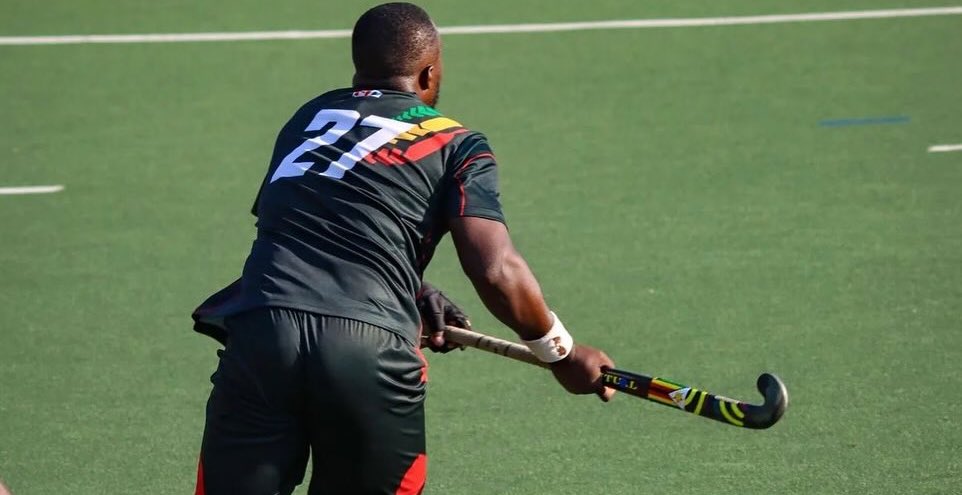
In a country where football often dominates the sporting conversation, Tatenda Kanyangarara is quietly redefining what excellence looks like on Zimbabwe’s hockey fields. A product of early exposure, disciplined mentorship, and an unshakable love for the game, Kanyangarara has emerged as one of Zimbabwe’s most promising hockey talents—now serving as Vice-Captain of the National Hockey Team.
Introduced to hockey at a tender age and raised within the rhythms of the sport, Tatenda’s journey is one shaped by legacy, leadership, and purpose. From school-level competition at Falcon College to donning the national jersey on the international stage, his rise reflects not only personal commitment but also the unifying power of sport in a changing Zimbabwe.
Beyond the goals and tackles, Tatenda’s story opens a wider conversation about access, representation, and resilience—particularly for black athletes navigating a sport still developing across underprivileged communities. His outlook is honest, hopeful, and forward-looking, grounded in the belief that passion and opportunity can transform the game for future generations.
In this exclusive interview with Tapiwa Rubaya (TR), Tatenda Kanyangarara (TK) speaks candidly about his love for hockey, the influence of family and mentorship, the realities facing young players in Zimbabwe, and his vision for a stronger, more competitive national hockey ecosystem.
TR: Can you tell us a bit about yourself and what drives your passion for hockey?
TK: My name is Tatenda Kanyangarara. I was introduced to hockey at a very early age, and it quickly became my first love. From the beginning, it was more than just a sport it gave me a sense of purpose and calm, and over the years it has been my peace. Hockey has opened many doors for me, both on and off the field, and has played a major role in shaping who I am today.
I’m a sports enthusiast and a natural risk taker, and that mindset is a big part of why I love the game. Hockey constantly challenges me to push boundaries, grow, and believe in myself, and that’s what continues to drive my passion for it.
TR: How did you get involved in hockey, and what sparked your interest in the sport?
TK: I was fortunate to start hockey very early. My dad played hockey at the highest level, so we would always tag along to support him and then play around once they were done. I was practically born into the sport, and being around it from such a young age made hockey a natural part of my life.
TR: You attended Falcon College, a prestigious school in Zimbabwe. Did your time there play a significant role in your sports career?
TK: Absolutely. Attending Falcon was partly because of hockey. The sport has opened many doors for me, and my time at Falcon contributed greatly to the player I am today. A special mention goes to my former coach, Mr Majuba, who saw my potential early on and called me up to play for the first team while I was still in Form 2. That belief and exposure made a huge difference in my development.
TR: What does it mean to you to be a leader within the Zimbabwe national hockey team?
TK: I’m not quite there yet, but I’m currently the vice-captain, and strides are being made toward that goal. Regardless, it is a true privilege to hold a leadership position for your country, especially in a sport I love so deeply. Leadership comes with responsibility, accountability, and the need to lead by example both on and off the field.
TR: Hockey is often seen as a unifying sport. What does this mean to you?
TK: To me, hockey’s power as a unifying sport lies in the fact that once you step onto the field, backgrounds fade and teamwork takes over. It doesn’t matter where you come from, what language you speak, or your social or economic background—everyone is working toward the same goal. That shared purpose builds respect, discipline, and a strong sense of belonging.
TR: As a black athlete in a sport that is still developing in Zimbabwe, particularly in underprivileged communities, what challenges exist?
TK: I can’t say I’ve personally faced major challenges, as I’ve been fortunate to have access to some of the best facilities and coaches in the country, and I’ve never felt hindered by the colour of my skin. However, many of my friends have faced challenges such as limited equipment, lack of exposure to strong opposition, and inadequate facilities.
Despite this, their love for the game always outweighed the obstacles from training on dusty neighbourhood soccer fields, using hand me down sticks, playing barefoot, and lacking proper protective equipment. Yet they always found a way to compete. Today, many of those same players represent their schools, provinces, and national teams. They overcame purely through unwavering passion and love for the game.
TR: What does it mean to represent Zimbabwe on the international stage?
TK: Wearing the Zimbabwe national jersey is a huge honour because it represents the pride, history, and support of the entire nation. It reminds me that I’m playing for more than myself I’m playing for Zimbabwe. Being able to walk in the same footsteps my father once did, and to do so alongside my brother, is something I will always cherish.
With that honour comes responsibility: to give my best at all times, show discipline and sportsmanship, and represent the country with pride both on and off the field.
TR: Who really controls the hockey ball the stick or the player?
TK: Scientifically, the stick moves the ball. However, when it comes to control and skill, it is definitely the player. The player controls the force, direction, and decision-making required to move the ball effectively.
TR: What advice would you give to young Zimbabweans interested in hockey?
TK: Start with passion and patience. Learn the basics well the best players are those who consistently execute the basics at a high level. Don’t be discouraged by setbacks; consistency is key. Essential qualities include discipline, hard work, resilience, and a willingness to keep learning. Most importantly, don’t be afraid to make mistakes that’s where growth happens.
TR: Looking ahead, what are your goals for Zimbabwean hockey?
TK: My goal for the national team is to become more competitive internationally and consistently qualify for major tournaments. I’d like to see stronger development structures, more exposure for young players, and better support systems.
In the coming years, I believe hockey in Zimbabwe can grow through grassroots development, improved facilities, and increased international participation. We also need more public interest and corporate sponsorship to turn these goals into reality. Hockey is definitely growing in Zimbabwe, and I truly believe that in a few years, we can be among the powerhouses of African hockey.