Donor fatigue drives UN toward fiscal crisis

The United Nations is entering one of the most precarious financial periods in its history. A convergence of geopolitical shifts, donor fatigue, and escalating global crises has pushed the institution to the edge of operational paralysis. But nothing has destabilised the system more than the United States, historically the UN’s largest funder pausing billions in aid, withholding contributions, and initiating withdrawal from 31 UN agencies.
This is not merely a budgetary crisis. It is a geopolitical rupture with profound implications for global governance, humanitarian protection, and the future of multilateralism. For Africa the continent most dependent on UN peacekeeping, humanitarian aid, and development support the stakes could not be higher.
A System Built on Fragile Funding
The UN’s financial architecture has always been vulnerable. A small group of wealthy nations carries the bulk of the financial burden, with the United States traditionally contributing the largest share of both the regular budget and peacekeeping operations. When Washington hesitates, the entire system trembles.
That tremor became a rupture in January 2025 when the U.S. administration paused billions of dollars in foreign aid, affecting “nearly all US foreign aid programmes, pending a 90‑day review,” according to UNFPA’s Pio Smith¹. UN agencies warned that the pause placed “millions in jeopardy”².
The crisis deepened in January 2026 when the White House issued an executive order to withdraw from 31 UN agencies, including those responsible for global health, climate governance, and child protection³. The UN Secretary‑General reminded Washington that assessed contributions are “a legal obligation under the UN Charter”⁴.
Washington’s New Foreign Policy: Retreat from Multilateralism ?
The U.S. Department of State has defended the administration’s position, arguing that American taxpayers should not subsidise institutions that “lack accountability or transparency”⁵. This aligns with a broader sovereignty‑first doctrine that views multilateral bodies as constraints rather than partners.
President Donald Trump has repeatedly criticised the UN, calling it “inefficient” and “unfair to the United States.” His return to political prominence reignited fears of renewed cuts — fears that materialised quickly.
European leaders responded with alarm.
French President Emmanuel Macron warned that “weakening the UN weakens global stability.”
Germany’s Olaf Scholz described the funding crisis as “a dangerous mismatch between global needs and global responsibility.”
China, meanwhile, has positioned itself as a defender of multilateralism, with President Xi Jinping stating that Beijing supports “a stronger United Nations and a more balanced global governance system.”The geopolitical chessboard is shifting — and the UN is caught in the middle.
Financial Governance Under Scrutiny
Critics of the UN, particularly in Washington argue that the organisation suffers from bloated bureaucracy, slow procurement, and fragmented oversight. These concerns are not unfounded; several agencies have faced governance scandals over the years.
But UN leadership counters that while reform is necessary, abandonment is not a solution. Secretary‑General António Guterres has warned that the UN is “on the verge of insolvency”⁶ and that member states must meet their obligations.
The Better World Campaign noted that continued U.S. nonpayment threatens the UN’s ability to carry out even its most basic functions⁷.
The Human Cost: Job Cuts, Programme Shutdowns, and Lives at Risk
The financial crisis has forced the UN to implement hiring freezes, cut staff contracts, and scale back field operations. Peacekeeping missions — many of them in Africa — face reduced capacity. Humanitarian agencies are rationing aid.
The World Food Programme, already stretched thin, has warned that without restored U.S. funding, millions could face starvation. UN humanitarians have described the situation as a “slow‑motion collapse” of global safety nets.The UN’s own assessment is stark: the funding pause and withdrawals have placed “millions of lives in jeopardy”⁸.
What Does This Means for Africa ?
Africa is the region most dependent on UN operations — and therefore the most exposed to the consequences of this crisis.Peacekeeping at Risk,Africa hosts the majority of UN peacekeeping missions. Cuts threaten stability in regions such as:The Sahel , Democratic Republic of Congo , South Sudan , Somalia .A weakened UN peacekeeping presence could embolden armed groups, destabilise fragile governments, and reverse years of progress.
Humanitarian Fallout
Millions rely on UN agencies for: Food assistance , Refugee protection , Maternal health services , Education in conflict zones ,The U.S. funding pause has already disrupted UNFPA’s reproductive health programmes and WFP’s food distribution. Mozambique, Ethiopia, Sudan, and the Horn of Africa are particularly vulnerable.UNDP, UNICEF, and WHO programmes underpin development across the continent. Cuts mean: Fewer vaccination campaigns,Reduced climate adaptation support,Slower progress toward SDGs ,Shrinking support for governance and anti‑corruption reforms
Geopolitical Realignment
As the U.S. retreats, other powers — especially China and Gulf states — are expanding influence. Africa may face, Increased dependency on non‑Western donors ,New political alignments,Shifts in development priorities , Reduced leverage in global negotiations
A Global System at a Crossroads
The UN’s financial crisis is not just about money. It is about the future of global governance. The U.S. withdrawal from key agencies marks a historic shift in how the world’s most powerful nation engages with multilateral institutions.
For Africa, the stakes are existential. A weakened UN means:- Less peace, Less food, Less protection, Less development ,Less global attention.And in a world of rising conflict, climate shocks, and economic fragility, Africa cannot afford a retreat from multilateralism.As António Guterres warned, “Reform is no longer optional — it is existential.”The question now is whether the world will choose reform — or allow the system to unravel.
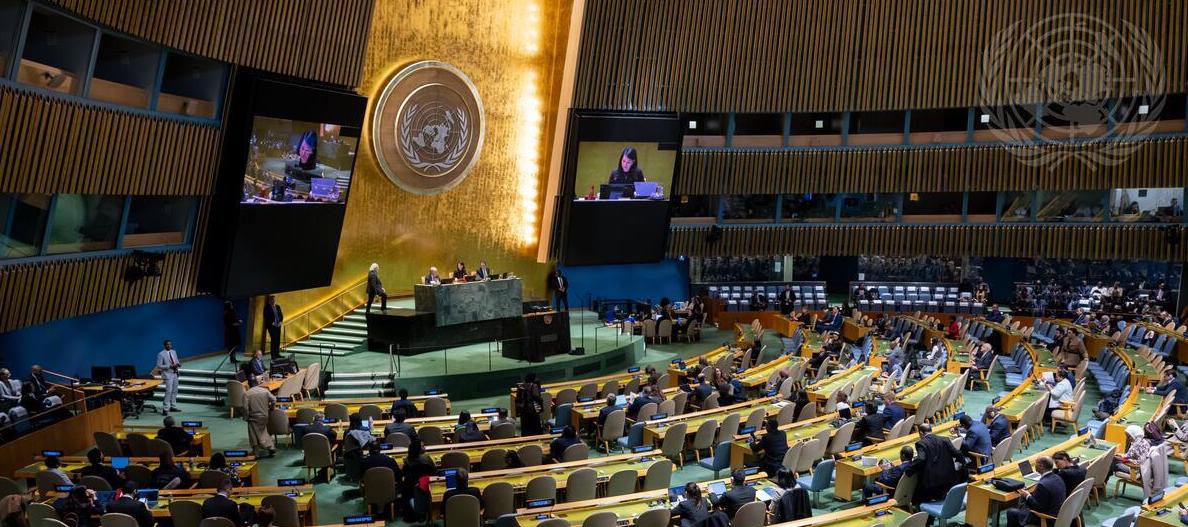
US President Donald Trump emphasized the need for UN reform during his address to the 72nd United Nations General Assembly in New York on 19 September 2017. He argued that the UN had become inefficient and overly bureaucratic, calling for greater accountability, streamlined operations, and fairer burden‑sharing among member states. Trump’s remarks reflected his administration’s broader skepticism of multilateral institutions and insistence that sovereign nations should retain primacy in global governance (United Nations, 2017).
The late President of Zimbabwe ,Robert Gabriel Mugabe consistently raised the issue of UN reform, particularly regarding the Security Council, during his tenure. At the 68th UN General Assembly in 2013, he criticized the dominance of Western powers and highlighted Africa’s exclusion from permanent membership. Mugabe reiterated these demands at the African Union Summit in Addis Ababa in 2016, stressing that reform was essential to democratize global governance and ensure equitable representation for Africa and the Global South (United Nations, 2013; African Union, 2016).
References
¹ UNFPA (2025) UNFPA statement on US funding pause.
² UNFPA (2025) ibid.
³ UN News (2026) US withdrawal from 31 UN agencies.
⁴ Better World Campaign (2026) UN funding obligations under the Charter.
⁵ U.S. Department of State (2025) Press briefing on UN funding.
⁶ UN Secretary‑General (2025) Statement on UN financial crisis.
⁷ Better World Campaign (2026) Analysis of U.S. arrears.
⁸ UNFPA (2025) UNFPA statement on humanitarian impact.
United Nations (2017) General Assembly of the United Nations, 72nd Session: Statement by Donald J. Trump, President of the United States. New York: UN.United Nations (2013) General Assembly of the United Nations, 68th Session: Statement by Robert Mugabe, President of Zimbabwe. New York: UN.
African Union (2016) 26th African Union Summit: Address by President Robert Mugabe. Addis Ababa: AU.