Cameroon’s Catfish Revolution: Fish Farming Sparks Hope, Resilience, and Economic Growth

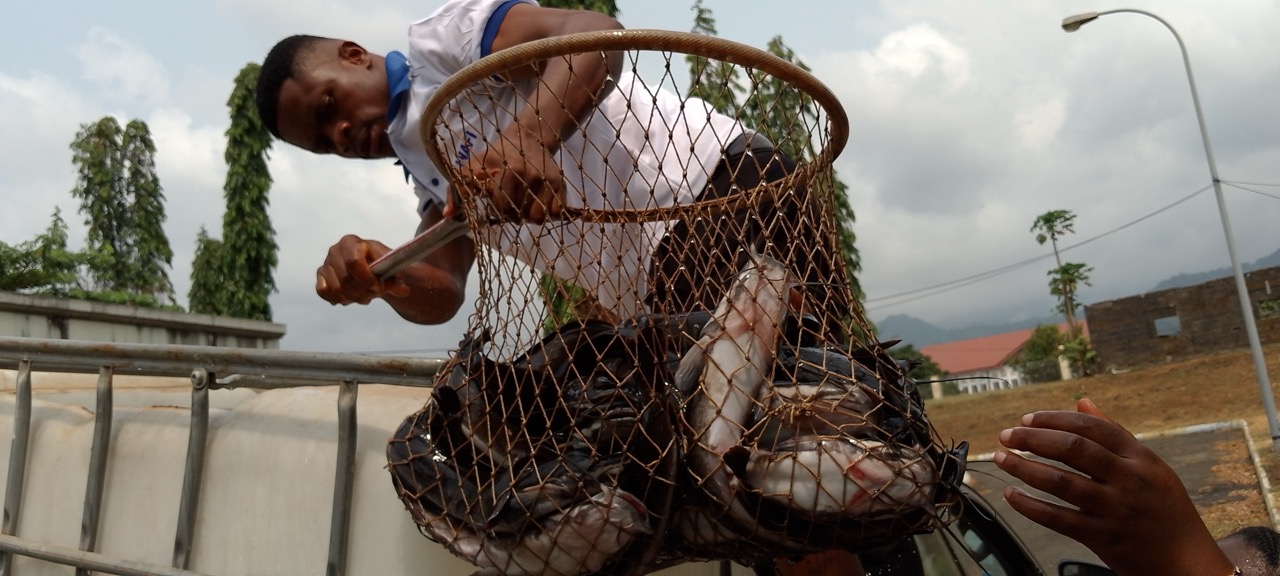
In the fishing communities of Cameroon’s coast and southwest, ponds are no longer just sources of food, they have become powerful engines of opportunity, driven by science, innovation, and a bold vision for food security. At the heart of this transformation lies a remarkable strain of African catfish (clarias), developed by Cameroon’s Agricultural Research Institute for Development, which is helping reshape lives and livelihoods.
The new strain grows faster, survives longer, and produces healthier yields than previous varieties. Farmers now see catfish reach market weight in as little as five to six months, with survival rates climbing to 85% and each female capable of producing up to 20,000 fry three times a year.
This breakthrough is being scaled through the Livestock and Fish Farming Value Chain Development Project (PD-CVEP), financed by the African Development Bank (AfDB) with €84 million and implemented by Cameroon’s Ministry of Livestock, Fisheries and Animal Industries. Since October 2024, pilot hatcheries have already produced more than 115,000 fry, with results showing strong performance across the board.
For women like Fanta Njifondjou Oumarou, a fish farmer in Limbé, the change is personal and empowering:
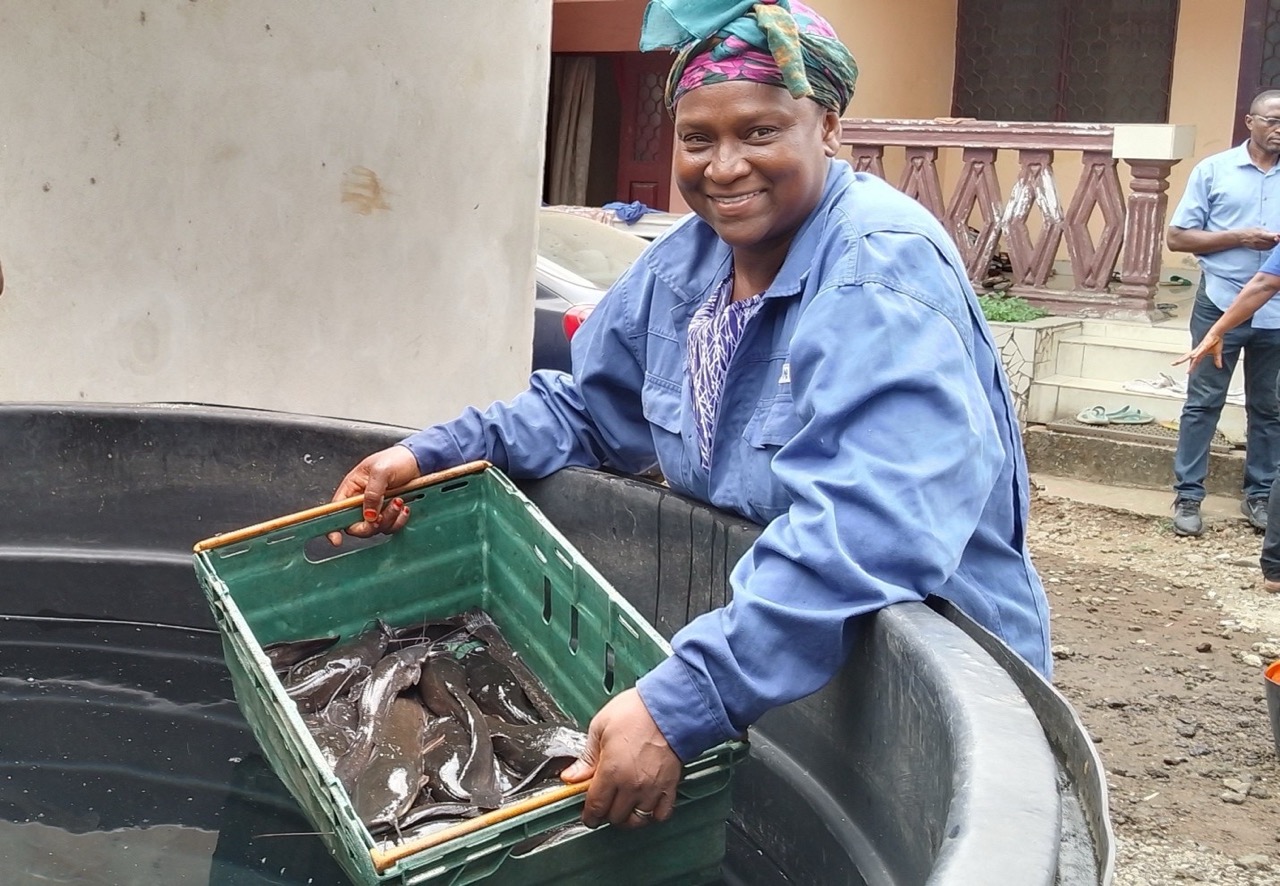
“The support given by the Project is encouraging us to go further. Today, I feel better equipped to make a profit from fish farming.”
The project is not just about broodstock. It is building an ecosystem of resilience by training 280 fish farmers in modern aquaculture practices — from hatchery management to business strategy. Its goal is ambitious: to boost Cameroon’s annual fish production by 10,000 tons by 2027, reduce imports, and secure local food systems.
Traders and consumers are already noticing the difference. In Douala, market vendor Moukoudi Mbappé Dolie says the new catfish variety is a hit with customers:
“The flesh stays firm after grilling because it contains less fat than older strains. The flavour appeals to customers and my income has increased significantly.”
But transformation also means dignity. Field visits to Douala’s Deïdo and Dakar markets revealed difficult working conditions for fishmongers, prompting the project to include upgrades such as hygienic counters, access to ice and water, and better security.
“Working in better conditions isn’t a luxury – it’s a necessity,” says Marthe Epoko, a vendor in Deïdo.
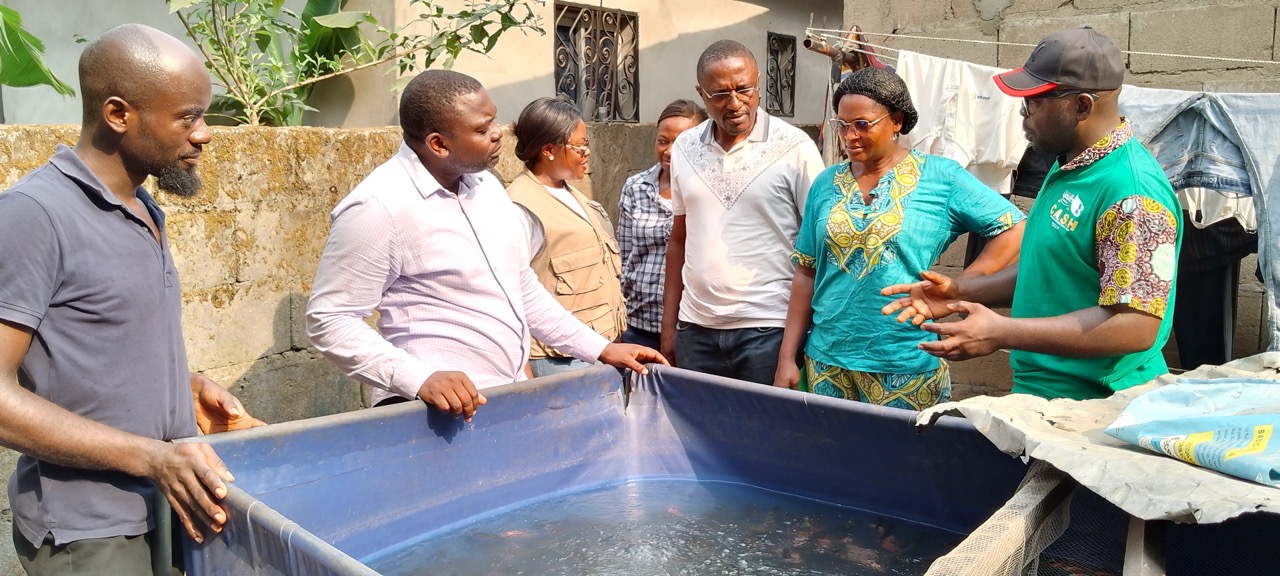
In the long term, improved fish farms in Bamenda, Yaoundé, and Foumban are set to become supply hubs, providing quality fry to farmers nationwide. By embedding traceability, performance monitoring, and inclusive participation, the PD-CVEP is proving to be far more than a development program, it is a movement rooted in resilience, innovation, and empowerment.
As Victor Viban Banah of the Ministry of Livestock, Fisheries and Animal Industries emphasizes:
“This project is crucial for the future of our aquaculture sector.”
From the ponds of Limbé to the markets of Douala, Cameroon’s fish farming revolution is not only feeding families but also rewriting the story of rural transformation, one catfish at a time.