Egypt Launches One of Africa’s Largest Wind Farms

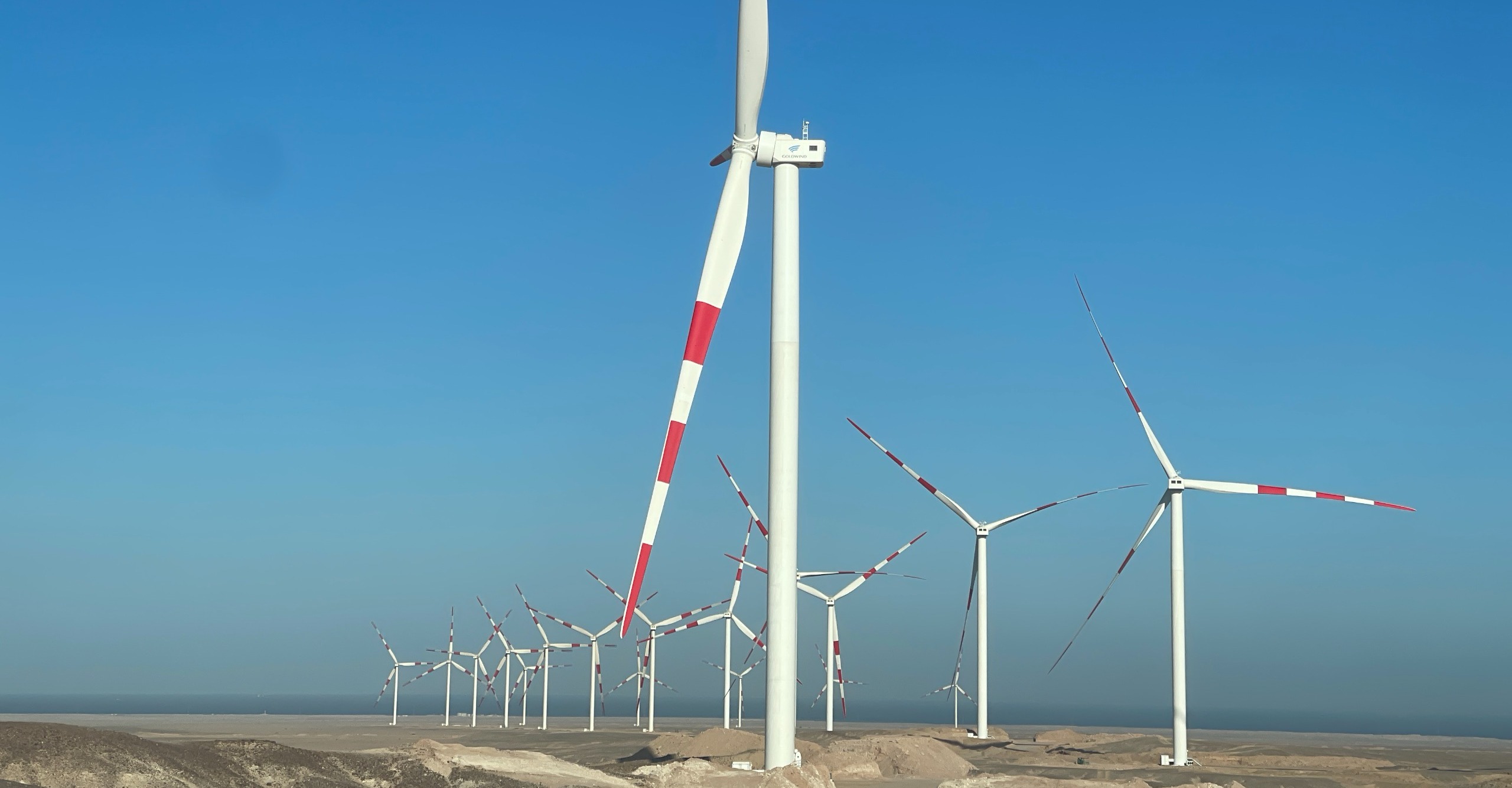
Egypt has taken another major step toward reshaping its energy future after global energy giant ENGIE and its partners secured financial close for the ambitious 900-megawatt Gulf of Suez 3 Wind Farm, a project that will become one of the largest onshore wind power developments in Africa and the biggest wind farm in ENGIE’s global portfolio.
Located near Ras Shokeir on the Gulf of Suez, the project represents far more than a renewable energy investment. It reflects Egypt’s growing ambition to position itself as a regional clean energy powerhouse while addressing the twin challenges of rising electricity demand and long-term energy security.
With financial close now achieved, full-scale construction can begin. The first 300MW phase is expected to commence commissioning in January 2028, while the entire 900MW facility is scheduled to become fully operational by the third quarter of 2028.
The project will be developed, owned and operated by Shokeir Wind Energy S.A.E., a consortium bringing together French energy leader ENGIE, Egyptian construction giant Orascom Construction, and renewable energy developer Aeolus. The ownership structure allocates 35 percent to ENGIE, 25 percent to Orascom Construction, and 40 percent to Aeolus, creating a powerful partnership that combines international expertise with local knowledge and execution capability.
What makes the project particularly significant is the scale of international confidence behind it. Financing has been secured from a consortium of leading international financial institutions, including the Japan Bank for International Cooperation (JBIC), PROPARCO, FMO, Société Générale, Crédit Agricole Corporate and Investment Bank, and KfW IPEX-Bank. The participation of these institutions sends a strong signal that Egypt continues to attract substantial foreign investment into strategic infrastructure projects despite ongoing global economic uncertainty.
Once operational, Gulf of Suez 3 is expected to generate approximately four terawatt-hours of renewable electricity annually. That amount of electricity is sufficient to power hundreds of thousands of homes while reducing dependence on fossil fuels and cutting carbon emissions. In practical terms, the wind farm will help diversify Egypt’s electricity mix and strengthen national energy resilience at a time when countries across Africa are seeking reliable and affordable power sources to support industrial growth and economic development.
The Gulf of Suez has emerged as one of the world’s most attractive wind corridors due to its strong and consistent wind resources. Egypt has increasingly leveraged this natural advantage to build a renewable energy industry that has attracted some of the world’s largest energy investors. The latest project builds upon the successful completion of the 262.5MW Ras Ghareb Wind Farm and the 650MW Red Sea Wind Energy project, both developed by ENGIE and its partners ahead of schedule and below budget.
Collectively, the three wind projects will provide nearly two gigawatts of installed capacity, placing Egypt among Africa’s leaders in utility-scale wind power generation. The development also supports the country’s broader strategy of increasing renewable energy’s contribution to the national grid while reducing exposure to volatile global energy markets.
Beyond electricity production, the project is expected to create employment opportunities during both construction and operational phases. Local contractors, suppliers, engineers, technicians, and support services are likely to benefit from the investment, helping develop skills and expertise within Egypt’s growing renewable energy sector.
The project’s revenues are secured under a 25-year Power Purchase Agreement with the Egyptian Electricity Transmission Company, backed by Egypt’s Ministry of Finance. This long-term arrangement provides investment certainty while ensuring stable electricity supply to the national grid for decades to come.
For ENGIE, the financial close represents a major strategic achievement. The company describes Gulf of Suez 3 as its largest onshore wind farm project globally, highlighting its growing confidence in Egypt as a key renewable energy market. For Egypt, however, the significance extends beyond a single project.
As countries worldwide compete for investment in clean energy infrastructure, Egypt is increasingly demonstrating its ability to attract international capital, advanced technology, and strategic partnerships. In doing so, it is not only generating renewable electricity but also building a foundation for future economic competitiveness in a world rapidly transitioning toward low-carbon energy systems.
The message from the Gulf of Suez is becoming increasingly clear: the winds blowing across Egypt’s coastline are no longer just a natural resource. They are becoming a strategic asset powering the country’s economic future.