The Beautiful Problem: Can Zimbabwe feed the Region again?

At Texpo 2026, farmers, logisticians, and youth leaders clashed and agreed on one thing: the demand is already here.
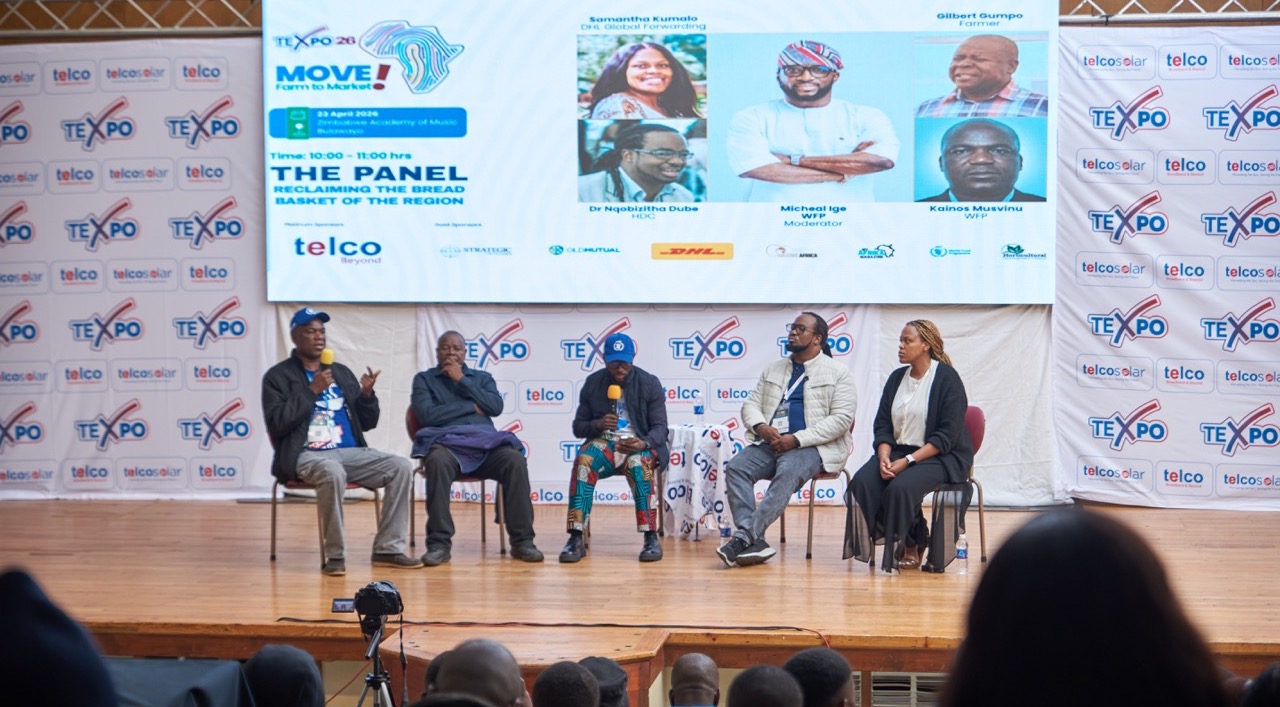
The real fireworks at Texpo 2026 on Wednesday, 22 April, weren’t on the exhibition floor. They were in a packed seminar room where one question set the tone,“Is it still recoverable for Zimbabwe to return to being a regional basket?”.
Ms. Samantha Kumalo, Head of Sales at DHL Global Forwarding Zimbabwe one of the panel guests, didn’t sugarcoat the starting line.
“When it comes to logistics in Zimbabwe, we are landlocked or land linked,” she said, drawing knowing laughs… We don’t have a port in our country and we have to rely on countries that have ports, and that’s costly. In South Africa or Mozambique they find it cheaper. The cost isn’t just at the border.
“Some truck operators don’t want to reach other areas in Zimbabwe because of the road network and the cost is high,” she added.
She further noted that networking with Ministry of Transport is needed.
“We need to hold our Ministry of Transport to task. Let’s get better roads. Let’s get our products in the whole region. Zimbabwe has good weather, good soil. We need to be backed by our Ministry and that is a start at least.”
That challenge sparked Gilbert Gumpo another guest, a Zimbabwean farmer who has heard enough about the use traditionmode of transport when it comes to transportating their products as farmers.
He urged ypung people ti invent easier methods.
“Let’s think about new infrastructure rather than to keep the old tradition,” he shot back.
For Gumpo, the revolution starts in the head, not the field.
“Farming happens at a micro level. Your attitude affects what happens to your crop. At the boardroom we can theorise, we can tell each other that if you give people more money to work, but in farming, plant life and animal life has a lot to do with attitude.”
He refused to blame the system or government over the downfall of Zimbabwe agriculture in the past years.
“If I can’t produce much, the problem is with me. We haven’t supplied before because we haven’t produced the beef that we need. We need to bring solutions.”
From the academic side, Dr. Nqobizitha Dube of HDC and local universities cut through the policy noise.
“The reason why policies are not being implemented is due to discipline and dedication. The policies can never be better than the people. We have to create a group of young people who are able to act.”
Then he dropped the line that made the room sit up.
“Agriculture is the new oil in the world. You have to also learn the NDS 2 and 6.”
What happens after the harvest? Ms. Kumalo brought it back to trade.
“What does trade mean? It’s buying and selling. What are you going to do with what you produced on the farm?” She grinned as she described Zimbabwe’s current dilemma.
“We have a beautiful problem. The demand of our produce is high. It has forced farmers to come together to form one farm to meet the demand.
” Beautiful, yes. But getting that produce to market is where DHL lives. “When you rely on global trade to succeed, we understand how important it is to get your goods to market, on-time, every time,” she said.
“That is why DHL Global Forwarding promises to always offer reliable, flexible and efficient deliveries to and from every country globally, in total compliance with local regulations. We keep our promises so that you can deliver on yours.”
The youth angle came from Kainos Musvinu one of the guests of the World Food Programme.
WFP works with local transporters on food aid and is “more into bringing commodities,” he explained.
The real shift is in who’s doing the work.
“In engaging the youth we have tapped into innovation. In design, in tech, they create to assist the market,” he said.
Holding the sparring match together was moderator Michael Ige, WFP’s Youth Programmes Adviser in Zimbabwe. Known for his work on youth financial inclusion and partnerships with the First Lady to launch empowerment initiatives, Ige kept the focus on action.
By the end, the room had circled back to Ms. Kumalo’s “beautiful problem.” Zimbabwe is landlinked, yes. Roads are rough, yes. But the soil is good, the weather holds, and the demand is already knocking. As Mr. Gumpo put it, attitude decides the crop. While Dr. Dube argued, discipline decides if policy becomes practice and Mr. Musvinu showed, youth are already farming without farms.