AI, Songwriting, and the Irreplaceable Human Heart

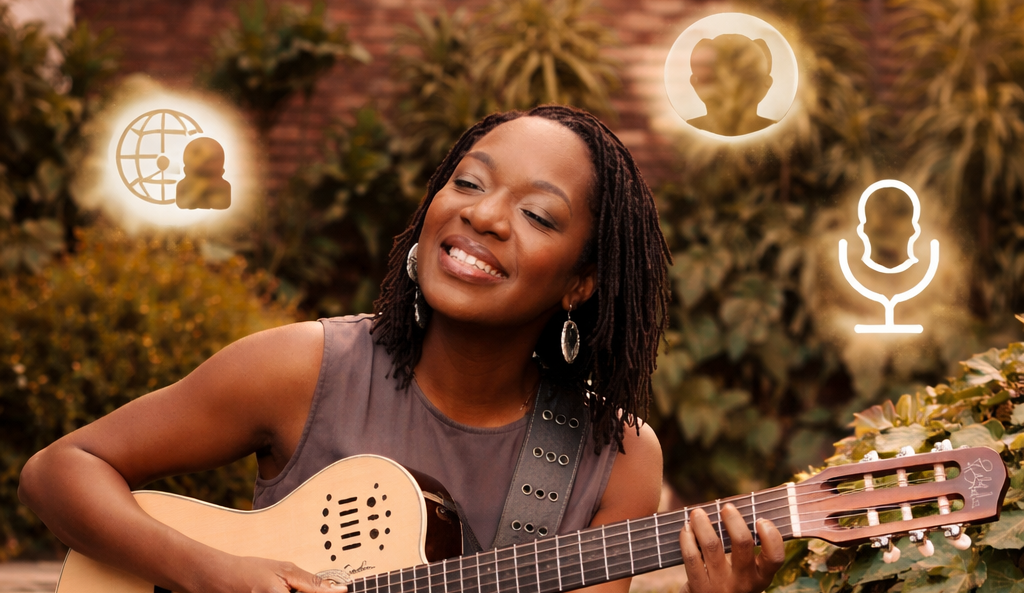
Artificial intelligence is rapidly entering the world of music. Today, AI tools can generate melodies, lyrics, harmonies, and even complete songs in seconds. Some AI-generated songs have already begun appearing on streaming platforms and even topping charts. For many musicians, this raises a pressing question: what happens to human songwriting in an age of machines?
While AI may transform how music is produced, a story connected to the great Zimbabwean writer Charles Mungoshi offers an important reminder about the deeper nature of creativity.
His surviving spouse, Jesesi Mungoshi, shared a remarkable moment from the night Mungoshi finished writing his first novel, Makunun’unu Maodzamwoyo.
He had been writing through the night in a single room in Kambuzuma. Around four in the morning, he finally placed the full stop at the end of the manuscript. Excited, he stood up. But as he looked outside, something felt strange. He almost expected to see a cattle kraal, the rural setting of the story he had just been writing.
Yet he was in the city of Harare.
In his own words he later explained what had happened:
“Ndakasimuka mubhuku.” (“I stood up inside the book.”)
His body was in Kambuzuma, but his mind and spirit were still in Manyene, Chivhu, the village where the story was set. He had been so deeply immersed in the world he was creating that it took a moment for him to fully return to his physical surroundings.
Eventually he sat quietly until he heard birds singing and saw the banana tree outside his home moving in the wind. Only then did he fully reconnect with where he actually was.
This story captures something profound about the creative process, something particularly relevant as we discuss artificial intelligence in music.
True creativity is not simply the assembly of words, chords, or melodies. The artist often enters a space of deep immersion where imagination, memory, emotion, and spirit meet. The work is not merely produced; it is inhabited.
For many musicians, songwriting feels like entering another place entirely. A melody arrives from somewhere deeper than technique. A lyric emerges from lived experience. A chord progression carries the emotional weight of a moment in life.
For some artists, like me; the process even feels like a form of communion with the Source, that mysterious well from which inspiration flows.
Artificial intelligence can assist in many ways. It can help structure ideas, suggest harmonies, generate lyrics, and accelerate production. In this sense, AI may become a powerful tool in the creative process. But tools do not replace the journey.
An AI can generate a thousand songs in minutes. Yet it does not wrestle with heartbreak, memory, faith, longing, or hope. It does not sit with a melody until it reveals its meaning. It does not disappear into the world of a song the way Mungoshi disappeared into the world of his novel.
And that difference matters.
In fact, as AI-generated music becomes more common, something interesting may happen. The market may become saturated with perfectly structured, technically correct songs. In that landscape, the music that truly stands out will likely be the music that carries the unmistakable imprint of human experience.
In other words, human-created art may become the true niche.
Not because machines cannot generate music, but because human beings create from a place machines cannot reach, the interior landscape of lived life.
The challenge for artists, then, is not to compete with machines on speed or volume. Machines will always win that race.
The real task is to go deeper. To write from memory. To sing from conviction. To create from the heart.
Because the audience may not always be able to explain why a song moves them, but they can feel the difference between something generated and something lived.
And that difference will always matter.
Source: Jesesi Mungoshi’s Facebook Post